

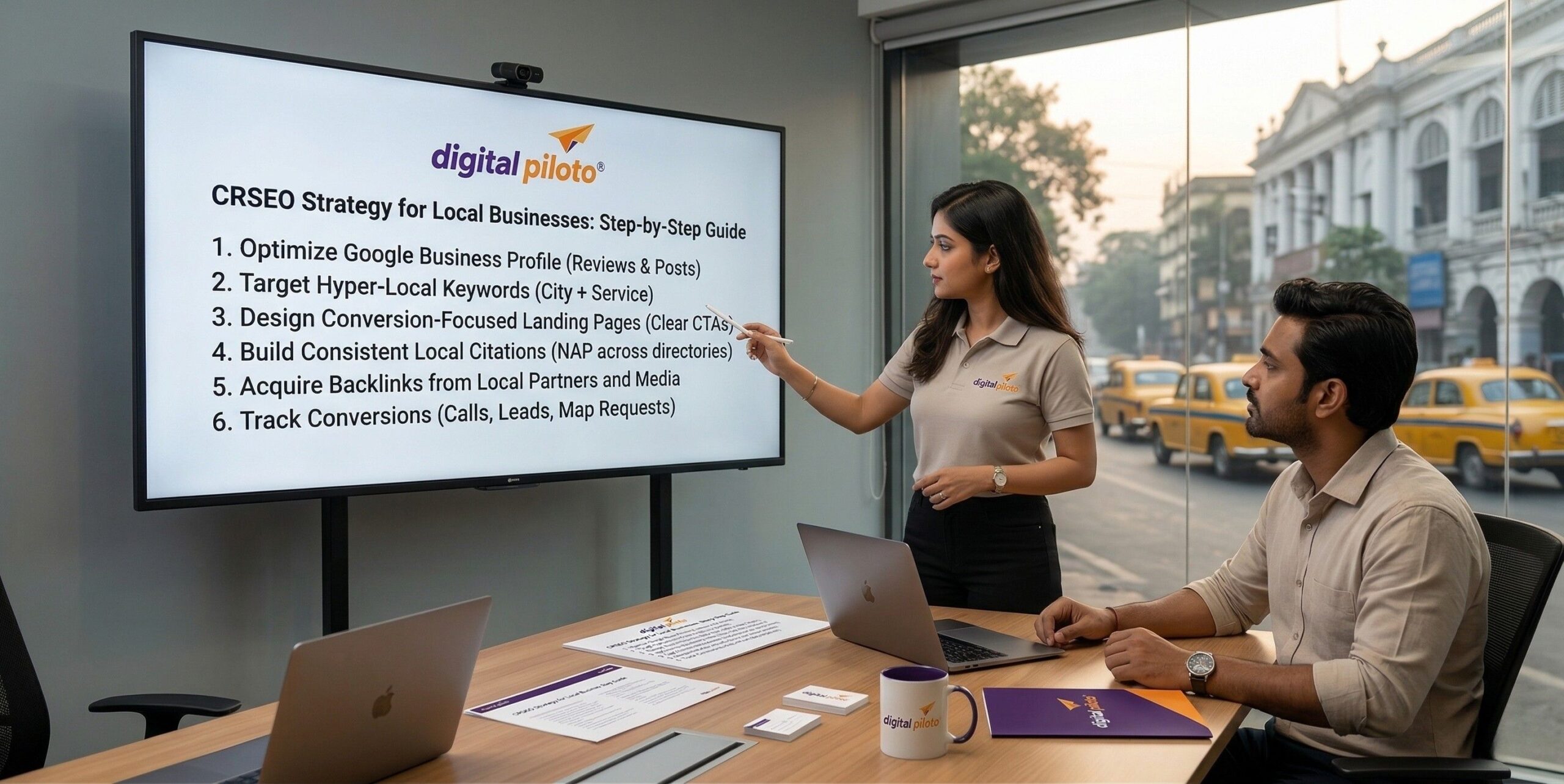
To build a CRSEO (Cognitive Ranking/Resonance SEO) strategy for local businesses, focus on aligning your content with how real customers think, search, and decide—combining intent clarity, local relevance, and measurable engagement signals. It’s not just about ranking; it’s about resonating with users so they trust, engage, and convert faster.
For any digital marketing service Kolkata, CRSEO is becoming essential because traditional SEO alone no longer guarantees visibility or conversions. Local businesses need to match both search algorithms and human psychology.
What Is CRSEO in Local Context?
Definition
CRSEO (Cognitive Ranking/Resonance SEO) is a strategy that optimizes content not just for search engines but for human understanding, emotional alignment, and decision-making patterns—especially in local, intent-driven searches.
It blends technical SEO, behavioral insights, and cognitive resonance—the ability of content to “feel right” instantly to the user.
Why Local Businesses Need CRSEO
Local search is highly intent-focused. When someone searches “near me,” they’re ready to act—not browse.
- Higher intent: Local users want immediate solutions.
- Trust-driven decisions: Reviews, clarity, and proximity matter.
- AI search evolution: Engines now prioritize helpful, human-aligned content.
Without CRSEO, even well-optimized sites may rank—but fail to convert.
Step-by-Step: How to Build a CRSEO Strategy
Step 1: Map Real User Intent
Start by understanding what your local audience is actually searching for—not just keywords, but intent behind them.
- Service-based queries (“plumber in Kolkata”)
- Problem-based queries (“leak repair urgent”)
- Trust-based queries (“best rated electrician near me”)
Group these into clear intent clusters before creating content.
Step 2: Build Hyper-Local Content Pages
Create pages that directly address local needs with specific context.
Example: Instead of “SEO services,” write “SEO services for small businesses in South Kolkata.”
This is where working with a reliable SEO service provider in Kolkata can help structure location-based relevance effectively.
Step 3: Optimize for Cognitive Resonance
Your content should instantly answer:
- Is this relevant to me?
- Can I trust this business?
- What should I do next?
Use simple language, clear CTAs, and relatable examples. Avoid jargon unless necessary.
Step 4: Structure Content for AI & AEO
Search engines now extract answers, not just rank pages.
- Use clear headings (H2, H3)
- Write direct answers in the first 2–3 lines
- Include bullet points for scannability
A skilled digital marketing specialist ensures your content is optimized for both users and AI-driven search systems.
Step 5: Strengthen Local Trust Signals
CRSEO isn’t just content—it’s credibility.
- Google Business Profile optimization
- Consistent NAP (Name, Address, Phone)
- Customer reviews and testimonials
These signals reinforce your relevance and authority in local search.
Step 6: Track Resonance Metrics (Not Just Rankings)
Traditional SEO tracks rankings. CRSEO tracks engagement and trust.
- Click-through rate (CTR)
- Time on page
- Conversion rate
- Call or inquiry volume
If users stay longer and convert faster, your content is resonating.
Key Components of a Strong CRSEO Framework
1. Intent Clarity
Every page should serve one clear purpose—no mixed messaging.
2. Entity Alignment
Define services, locations, and offerings clearly so search engines understand context—especially important during seo migrations.
3. Content Simplicity
Avoid overcomplication. Clear beats clever every time.
4. Conversion Path Optimization
Make it easy for users to take the next step—call, book, or inquire.
Common Mistakes in Local CRSEO
- Keyword stuffing without intent clarity
- Generic content with no local relevance
- Ignoring mobile user experience
- Overlooking trust signals like reviews
- Focusing only on rankings, not conversions
FAQs: CRSEO for Local Businesses
1. What is the difference between SEO and CRSEO?
SEO focuses on rankings, while CRSEO focuses on both rankings and how well content connects with user intent and drives action.
2. How long does CRSEO take to show results?
You may see engagement improvements within weeks, but consistent results typically take 2–3 months depending on competition.
3. Is CRSEO suitable for small local businesses?
Yes, it’s especially effective for local businesses because it focuses on high-intent users ready to convert.
4. What tools help implement CRSEO?
Google Search Console, analytics tools, heatmaps, and customer feedback tools are essential for tracking user behavior and resonance.
5. Can CRSEO help during website redesign or migration?
Absolutely. It ensures that during seo migrations, content clarity and user intent alignment are maintained or improved.
Conclusion
CRSEO is not a trend—it’s a shift in how SEO works. For local businesses, success now depends on how well you connect with your audience, not just how well you rank. When your content aligns with real human thinking, growth becomes a natural outcome.
Blog Development Credits:
This article was ideated through expert SEO insights, developed using advanced AI research tools, and refined with strategic optimization techniques to ensure clarity, accuracy, and high-performance digital outcomes.