

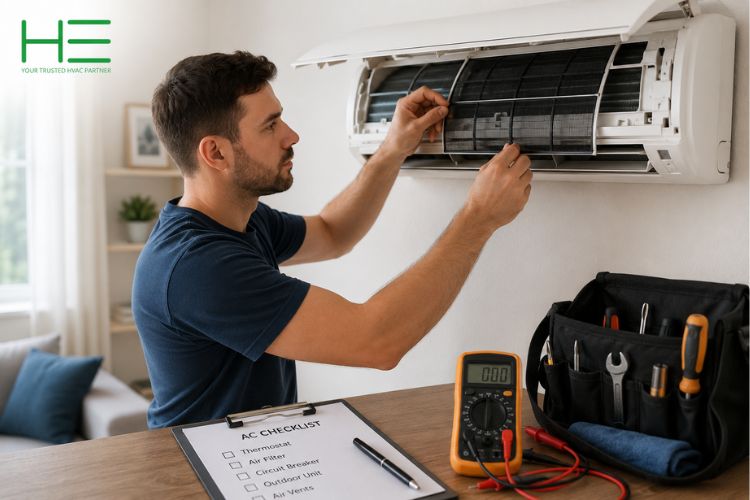
There’s something oddly frustrating about an air conditioner giving up on the hottest day of the year. One minute your home feels comfortable, and the next you’re standing under a ceiling fan wondering whether the AC unit is about to quit entirely. Before rushing to book a technician, though, a few simple checks can sometimes save time, money, and unnecessary stress.
Many homeowners schedule Air Conditioning Repair for problems that turn out to be surprisingly minor. A clogged filter, a tripped breaker, or even incorrect thermostat settings can mimic larger HVAC issues. The good news? You don’t need to be an expert to troubleshoot the basics safely.
Start With the Thermostat
It sounds obvious, but thermostats are responsible for more AC “failures” than most people realize. According to the U.S. Department of Energy, adjusting thermostat settings correctly can significantly improve cooling efficiency and reduce energy waste.
Source:
energy.gov
Before assuming your cooling system is broken, check the following:
- Make sure the thermostat is set to “Cool” mode.
- Lower the temperature by 3–5 degrees to test responsiveness.
- Replace batteries if the screen appears dim or blank.
- Verify programmable schedules haven’t overridden your settings.
Oddly enough, many households accidentally leave the fan setting on “On” instead of “Auto,” which causes warm air to circulate even when cooling isn’t active.
Inspect Your Air Filter
A dirty air filter quietly creates all kinds of trouble. Reduced airflow forces the system to work harder, and over time that strain can lead to frozen evaporator coils or uneven cooling.
Signs Your Filter Needs Replacement
- Rooms feel stuffy despite the AC running
- Dust buildup increases around vents
- Energy bills rise unexpectedly
- Weak airflow from registers
Most residential HVAC systems benefit from filter changes every one to three months, especially in homes with pets or heavy dust exposure.
In fact, the Environmental Protection Agency notes that improving airflow and indoor air quality can help HVAC systems operate more efficiently.
Source:
epa.gov
Check the Circuit Breaker and Power Supply
Sometimes the issue isn’t mechanical at all. Summer storms, voltage fluctuations, or overloaded electrical circuits can trip the breaker connected to your AC system.
Here’s a simple homeowner-safe checklist:
- Turn off the thermostat first.
- Locate your home’s electrical panel.
- Check whether the AC breaker has flipped.
- Reset it only once if necessary.
If the breaker trips repeatedly, stop troubleshooting and contact a professional HVAC technician immediately. Persistent electrical issues often point to compressor problems or wiring faults.
Look at the Outdoor Unit
The outdoor condenser unit needs breathing room to release heat properly. Unfortunately, leaves, dirt, overgrown plants, and even children’s toys can block airflow around it.
Walk outside and inspect the unit carefully. You’d be surprised how often poor airflow causes cooling problems that seem much bigger than they are.
Quick Outdoor Unit Maintenance Tips
- Clear debris within a two-foot radius
- Gently rinse dirt off condenser fins using a garden hose
- Check for visible ice buildup
- Listen for unusual grinding or buzzing noises
While researching new systems or upgrades, many homeowners also compare energy-efficient models from the Best Commercial Ac Supplier to improve long-term cooling performance and reduce repair frequency.
Pay Attention to Strange Sounds and Smells
Your AC system usually gives warning signs before major breakdowns happen. The trick is noticing them early.
A musty odor might indicate mold growth inside ducts, while rattling noises can suggest loose internal components. Meanwhile, a sharp burning smell should never be ignored because it could point to overheating electrical parts.
Think of your air conditioner like a car. Small warning signs rarely disappear on their own. They usually grow more expensive if ignored for too long.
When DIY Troubleshooting Isn’t Enough
There’s a clear line between homeowner maintenance and professional HVAC repair. If your system leaks refrigerant, freezes repeatedly, or refuses to cool after basic troubleshooting, it’s time to bring in an expert.
Delaying service can sometimes worsen compressor damage, which is often one of the costliest repairs in residential cooling systems.
Also Read: Why Choosing the Best AC Supplier Matters in 2026
Frequently Asked Questions
Q. Why is my AC running but not cooling?
A. This often happens because of dirty filters, thermostat issues, low refrigerant levels, or blocked outdoor condenser units. Start with the simplest checks before calling a technician.
Q. How often should AC filters be replaced?
A. Most homes should replace filters every 1–3 months. Homes with pets, allergies, or high dust levels may require more frequent changes.
Q. Can I clean my outdoor AC unit myself?
A. Yes, homeowners can safely remove debris and gently rinse condenser fins with water. However, electrical or refrigerant-related work should always be handled by professionals.
Q. When should I schedule professional HVAC maintenance?
A. Experts generally recommend servicing your AC system at least once a year, ideally before peak summer temperatures arrive.
Final Thoughts
Not every AC issue requires an emergency service appointment. Sometimes the solution is surprisingly simple — a fresh filter, a reset breaker, or a corrected thermostat setting. Taking a few minutes to troubleshoot basic HVAC problems can help homeowners avoid unnecessary repair bills and extend the life of their cooling system. And honestly, during a brutal summer afternoon, that peace of mind feels pretty valuable.
Blog Development Credit
This article was crafted using insights from advanced AI research platforms such as ChatGPT and Google Gemini to ensure up-to-date industry knowledge and valuable perspectives. The content strategy, optimization, and final publishing were managed by HVAC.