

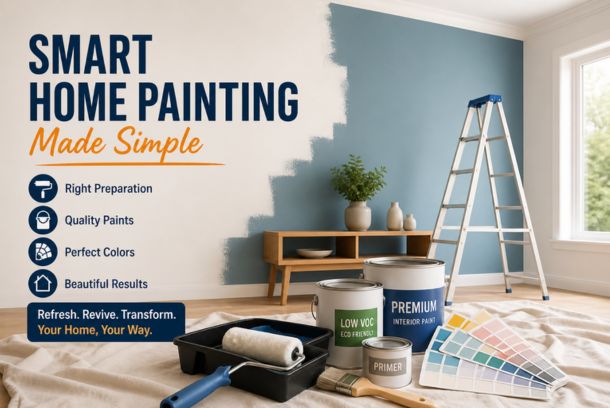
Ever noticed how a freshly painted home instantly feels lighter, cleaner, and somehow more “alive”? That’s not just design psychology—it’s everyday experience. Whether you’re planning a full makeover or just refreshing a tired corner, understanding the basics of Residential Painting can save you time, money, and a fair bit of frustration along the way.
And honestly, most homeowners underestimate how much planning goes into a good paint job. It’s not just about picking a color and rolling it on a wall—it’s preparation, timing, product choice, and a little bit of patience too.
Why Preparation Always Comes First
If there’s one rule professionals quietly swear by, it’s this: good painting is 70% preparation and 30% application. Before a single drop of paint touches your wall, the surface should already be telling a story of care.
Key preparation steps every homeowner should follow:
- Wall inspection: Look for cracks, damp patches, or uneven textures.
- Cleaning surfaces: Dust and grease can ruin adhesion over time.
- Priming: Especially important for older walls or color changes.
- Protecting spaces: Cover floors, furniture, and edges properly.
Skipping preparation might seem harmless in the moment, but it often leads to peeling paint, uneven finishes, or premature fading. And nobody wants to repaint a room twice within a year.
Also Read: How to Choose the Right Paint Color for Your Hallway
Choosing the Right Colors and Finish
Color selection is where most homeowners get both excited and overwhelmed. A soft beige might feel calming in one room but dull in another. Lighting, room size, and even furniture tone play a bigger role than most people expect.
According to design insights shared by Apartment Therapy, neutral tones still dominate residential interiors because they increase perceived space and resale value. But that doesn’t mean bold colors are out—they just need smarter placement.
Practical color tips from real painting projects:
- Use lighter shades in smaller rooms to create openness
- Try accent walls instead of full bold coverage
- Match paint undertones with flooring and furniture
- Test samples under both daylight and artificial lighting
A well-chosen color palette doesn’t just decorate a space—it defines how you feel inside it.
Picking the Right Paint Quality Matters More Than You Think
Not all paints are created equal, and this is where many homeowners unknowingly cut corners. High-quality paint tends to offer better coverage, durability, and washability. In the long run, it often reduces repaint frequency.
This is also where choosing the right House Paint becomes essential, especially if you’re aiming for long-lasting results rather than quick fixes.
A study by the U.S. Environmental Protection Agency notes that low-VOC (volatile organic compound) paints are increasingly preferred because they improve indoor air quality and reduce long-term health risks.
Types of finishes homeowners should know:
- Matte: Soft look, ideal for ceilings and low-traffic areas
- Eggshell: Balanced finish for living rooms and bedrooms
- Satin: Slight sheen, easy to clean
- Semi-gloss: Best for kitchens and bathrooms
Timing and Weather Conditions Matter
Even though interior painting happens indoors, timing still plays a surprising role. Humidity, ventilation, and temperature all affect drying time and finish quality.
For instance, painting during extremely humid conditions can slow drying and lead to uneven surfaces. On the other hand, well-ventilated spaces allow paint to settle smoothly and evenly.
Simple timing rules professionals follow:
- Paint during mild weather whenever possible
- Avoid painting right after heavy cleaning with water
- Ensure windows or fans support airflow
- Allow full curing time before moving furniture back
Small Mistakes That Can Ruin a Paint Job
Sometimes it’s not the big decisions but the small oversights that create disappointing results. A slightly rushed edge or skipped primer can affect the final finish more than expected.
Here are common mistakes homeowners often regret:
- Not using painter’s tape for clean edges
- Applying thick coats instead of multiple thin layers
- Ignoring surface cracks before painting
- Choosing paint without testing samples
A little patience here goes a long way. Paint is forgiving—but only up to a point.
FAQs
1. How often should residential walls be repainted?
Most homes benefit from repainting every 5–7 years depending on usage, sunlight exposure, and wall condition. High-traffic areas may need more frequent updates.
2. Is professional painting better than DIY?
While DIY painting is budget-friendly, professional Residential Painting often delivers better durability, cleaner finishes, and faster completion.
3. What is the best season for interior painting?
Mild, dry weather is ideal. Balanced temperature and low humidity help paint dry evenly and reduce surface imperfections.
4. How do I maintain freshly painted walls?
Use gentle cleaning methods, avoid harsh chemicals, and address stains quickly to preserve the finish and color quality.
Final Thoughts
Painting your home isn’t just a cosmetic upgrade—it’s a form of renewal. When done thoughtfully, it changes how a space feels and functions. From careful preparation to selecting the right finish, every step matters more than it seems at first glance.
In the end, a great paint job isn’t about perfection—it’s about intention, patience, and making your space feel like home again.
Also Read: Best Interior Paint Brands for Long-Lasting Results
Blog Development Credits:
This blog was envisioned by Soumyajit Sardar, created with research support from advanced AI platforms like ChatGPT, Gemini, and Copilot. Final editing and SEO expertise were provided by Mister Paint.