

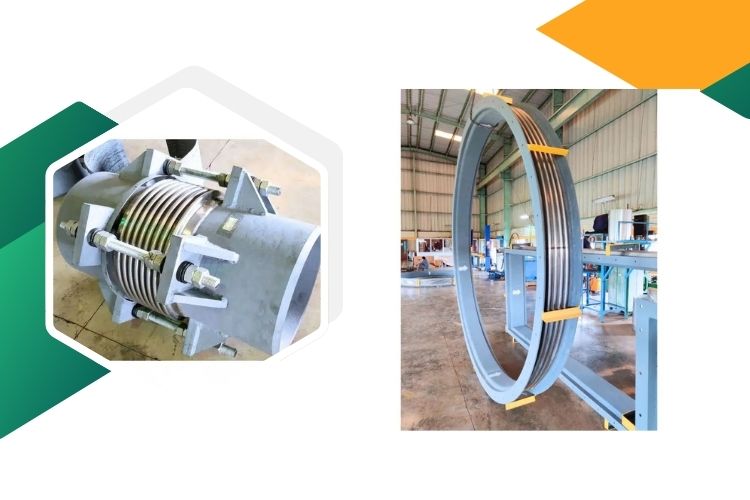
Axial expansion joints may look deceptively simple, yet their performance can decide the long-term health of an entire piping system. Whether in power plants, refineries, or process industries, small design or installation choices often make a big difference. Understanding what truly affects their performance helps engineers avoid failures, downtime, and costly repairs.
When sourcing from a reliable axial expansion joint manufacturer in India, these performance factors are usually addressed early but they’re still worth knowing from an end-user perspective.
Why Performance Matters More Than Specifications?
On paper, most axial expansion joints meet pressure and temperature ratings. In the real world, however, performance depends on how the joint behaves after thousands of thermal cycles, vibrations, and pressure fluctuations. According to guidance published by the U.S. Department of Energy (energy.gov), expansion-related stress is a major contributor to premature piping failures when not properly managed.
Key Factors That Influence Axial Expansion Joint Performance
1. Operating Temperature and Pressure
Thermal expansion is the primary reason axial expansion joints exist. Higher temperatures increase movement, while pressure adds stress to the bellows. When either exceeds design assumptions, fatigue accelerates. This is why accurate operating data not rough estimates matters during selection.
2. Material Selection
Not all stainless steels behave the same under cyclic loading. Corrosion resistance, temperature tolerance, and flexibility vary significantly between grades. Choosing the wrong material can quietly shorten service life, even if everything else looks “correct.”
3. Bellows Geometry and Design
- Number of convolutions
- Convolution height and pitch
- Wall thickness
These design elements directly affect flexibility and fatigue resistance. A well-designed bellow absorbs movement smoothly, rather than concentrating stress at weak points.
Installation Quality: The Often-Ignored Factor
Even the best-designed expansion joint can fail early if installed incorrectly. Misalignment, excessive preload, or improper anchoring forces the bellows to work outside its intended range.
Industry studies summarized by ASME (asme.org) repeatedly show that installation-related issues account for a large percentage of expansion joint failures not manufacturing defects.
Common Installation Mistakes
- Ignoring alignment tolerances
- Using the joint to correct piping errors
- Missing or undersized pipe anchors
Role of Movement Type and Frequency
Axial expansion joints are primarily designed for axial movement, but real systems rarely behave perfectly. Small lateral or angular movements, if repeated often, can significantly reduce fatigue life. Systems with frequent start-stop cycles place additional strain on bellows due to constant expansion and contraction.
Manufacturing Quality and Testing
Consistent forming, welding quality, and pressure testing play a huge role in real-world reliability. A seasoned axial expansion bellows manufacturer will typically validate designs through cycle life calculations and shop testing before delivery.
Equally important is early detection of wear. Resources like How to Detect Fatigue in Corrugated Pipe Components help maintenance teams spot warning signs before failure occurs.
Environmental and External Conditions
External factors are easy to overlook. Corrosive atmospheres, vibration from nearby equipment, and inadequate insulation can all degrade performance over time. In coastal or chemical environments, corrosion fatigue becomes a serious concern if not addressed during design.
FAQs: Axial Expansion Joint Performance
1. What is the most common cause of axial expansion joint failure?
Improper installation especially misalignment and lack of proper anchors is one of the most common causes of premature failure.
2. How does temperature cycling affect expansion joint life?
Frequent heating and cooling cycles increase fatigue stress on bellows, reducing their overall service life if not properly designed.
3. Can axial expansion joints handle lateral movement?
They can tolerate minor lateral movement, but excessive lateral loads should be handled by joints specifically designed for that purpose.
4. How often should axial expansion joints be inspected?
Inspection frequency depends on operating conditions, but most experts recommend visual checks during routine plant shutdowns.
Final Thoughts
Axial expansion joint performance is shaped by far more than just catalog specifications. Design choices, material selection, installation discipline, and operating conditions all work together over time. When these factors are aligned, expansion joints quietly do their job protecting piping systems and preventing costly failures.

