

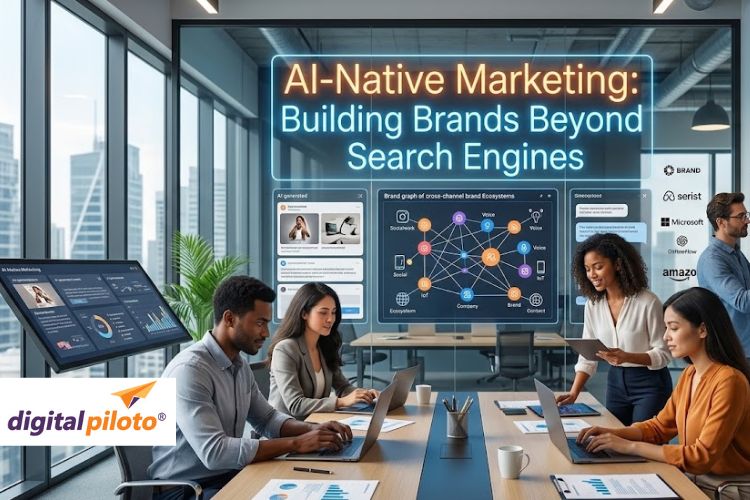
AI-native marketing is a modern marketing approach that builds brand visibility across AI-powered platforms, conversational assistants, recommendation engines, and intelligent discovery systems—not just traditional search engines. Instead of optimizing solely for rankings, businesses focus on becoming trusted, machine-readable sources that AI can confidently recommend. Forward-thinking organizations working with a Digital Marketing Agency in India are already adapting their strategies to thrive in this new era of AI-driven customer discovery.
The marketing landscape is evolving rapidly. Consumers no longer rely exclusively on search engines to find products or services. They ask AI assistants, compare recommendations through conversational platforms, and expect personalized answers instantly. Brands that understand this shift will gain a significant competitive advantage over those still optimizing only for traditional search results.
What Is AI-Native Marketing?
Definition: AI-native marketing is the practice of creating content, digital assets, and customer experiences specifically designed to be understood, interpreted, and recommended by artificial intelligence systems across multiple digital channels.
Unlike conventional digital marketing, which primarily targets search engine rankings, AI-native marketing focuses on building semantic authority, entity recognition, contextual relevance, and trustworthy digital signals that AI models use when generating responses.
The goal is simple: ensure your brand is discovered wherever intelligent systems help customers make decisions.
Why Marketing Must Move Beyond Traditional Search
Search engines remain valuable, but customer behavior is changing. People increasingly interact with AI chatbots, voice assistants, recommendation engines, and personalized discovery platforms before visiting a website.
These systems prioritize trustworthy information rather than simply displaying pages ranked by keywords. Businesses therefore need broader digital visibility built on expertise, credibility, and structured information.
In many cases, customers make purchase decisions based on AI-generated recommendations without ever browsing multiple websites.
How AI-Native Marketing Works
Step 1: Build a Strong Digital Entity
Create consistent business information, author profiles, structured data, and verified brand signals across trusted online platforms.
Step 2: Create Context-Rich Content
Develop comprehensive resources that answer customer questions naturally while demonstrating real expertise and experience.
Step 3: Optimize for AI Understanding
Use semantic SEO, structured schema, topic clusters, and entity relationships that help AI systems interpret your content accurately.
Step 4: Strengthen Brand Authority
Earn mentions, citations, customer reviews, expert references, and high-quality backlinks that reinforce trust across AI ecosystems.
Core Principles of AI-Native Marketing
- Entity-first optimization instead of keyword-first thinking.
- Topical authority built through comprehensive knowledge.
- Semantic search optimization for contextual understanding.
- AI-readable structured content with proper schema implementation.
- Consistent digital reputation across multiple platforms.
- Customer-centric content that answers real questions.
When these elements work together, AI platforms are more likely to recognize and recommend your brand during conversational searches.
Benefits for Modern Businesses
AI-native marketing creates long-term advantages that extend well beyond traditional SEO metrics.
- Improves visibility across AI-powered search experiences.
- Builds stronger brand trust and digital authority.
- Supports higher-quality customer acquisition.
- Creates more resilient marketing strategies.
- Enhances personalization across customer journeys.
- Future-proofs digital marketing investments.
Businesses increasingly complement these efforts by partnering with a generative engine optimization specialist to ensure their content is optimized not only for search engines but also for AI-generated answers and conversational discovery.
Real-World Applications of AI-Native Marketing
B2B Technology
Technology companies create knowledge hubs, implementation guides, and expert resources that AI systems recognize as authoritative references.
Healthcare
Healthcare providers publish medically reviewed educational content supported by structured data and verified expertise.
eCommerce
Online retailers optimize product information, reviews, FAQs, and buying guides so AI assistants can confidently recommend products.
Professional Services
Consultants and agencies establish topical authority by consistently publishing valuable educational content. An experienced India SEO Company often combines technical SEO, entity optimization, and AI-ready content strategies to maximize long-term discoverability.
Best Practices for AI-Native Marketing Success
- Create original, experience-driven content.
- Implement structured schema across important pages.
- Maintain consistent brand information everywhere online.
- Focus on solving customer problems rather than targeting isolated keywords.
- Develop interconnected topic clusters.
- Measure authority, engagement, and AI visibility alongside traditional SEO metrics.
The brands that consistently educate, demonstrate expertise, and build trust will become the preferred sources that AI platforms reference most often.
Will AI Replace Traditional Digital Marketing?
No. AI-native marketing doesn’t replace traditional digital marketing—it expands it.
SEO, content marketing, social media, email campaigns, and paid advertising remain important. However, these channels must now work together within an AI-first ecosystem where discoverability depends on context, authority, and semantic understanding rather than rankings alone.
Frequently Asked Questions
What is AI-native marketing?
AI-native marketing is a strategy that optimizes brands for AI-powered discovery, recommendations, and conversational search experiences rather than relying solely on traditional search engines.
How is AI-native marketing different from SEO?
SEO primarily targets search engine rankings, while AI-native marketing focuses on helping AI systems understand, trust, and recommend your brand across multiple digital environments.
Why is semantic SEO important for AI marketing?
Semantic SEO helps AI understand the relationships between topics, entities, and user intent, making your content more relevant in AI-generated responses.
Can small businesses adopt AI-native marketing?
Yes. Businesses of all sizes can improve AI visibility by publishing authoritative content, implementing structured data, and maintaining consistent digital profiles.
Does AI-native marketing improve long-term brand growth?
Absolutely. It builds sustainable visibility by strengthening authority, trust, and discoverability across both traditional search engines and AI-powered platforms.
Conclusion
AI-native marketing represents the next evolution of digital strategy. As customers increasingly rely on intelligent systems for recommendations and purchasing decisions, businesses must shift from simply chasing rankings to building trusted digital authority. Organizations that invest today in semantic relevance, entity optimization, and authentic expertise will be better positioned to thrive in an AI-driven future where discoverability extends far beyond search engines.
Blog development credits
This article was developed through extensive research supported by advanced AI technologies and subsequently refined with strategic SEO enhancements by Digital Piloto Private Limited, drawing upon the AI search expertise and strategic direction of Amlan Maiti.