

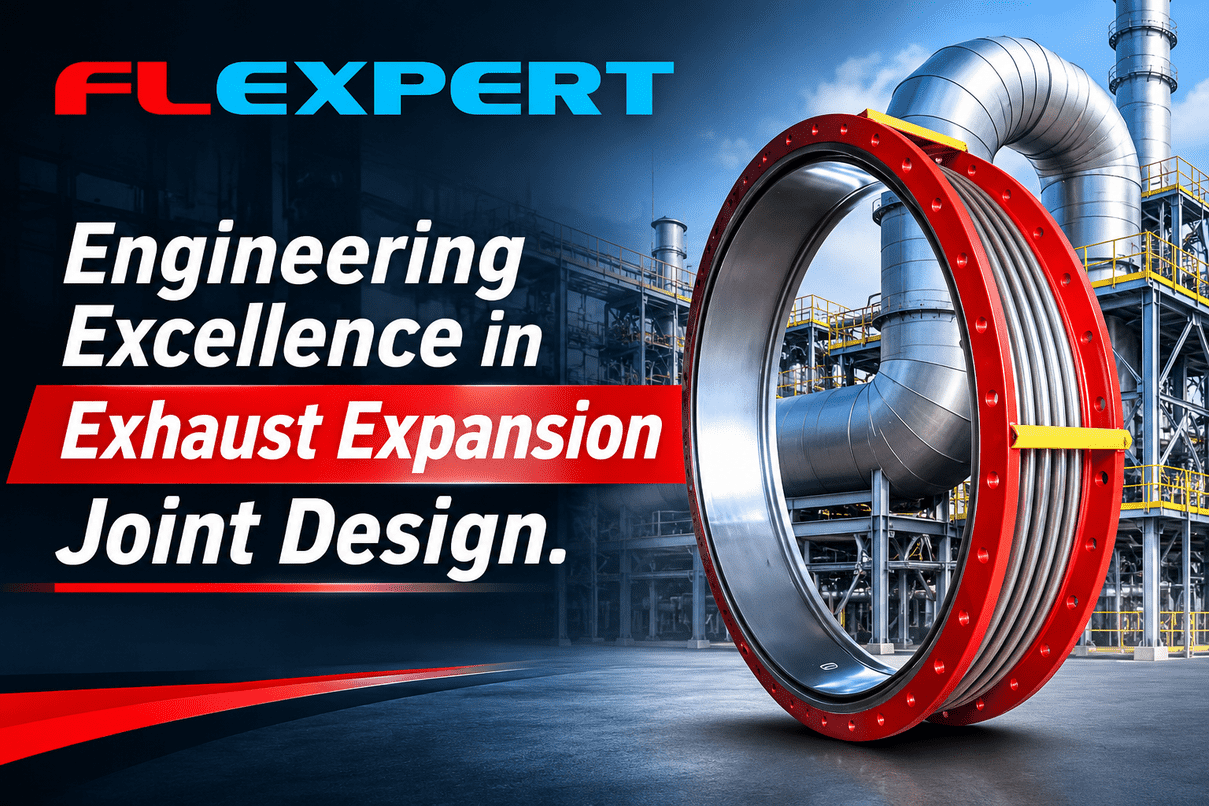
Industrial exhaust systems rarely operate under comfortable conditions. Constant temperature changes, vibration, pressure variations, and mechanical movement can gradually affect even well-designed pipelines. This is where expansion joints make a meaningful difference. But what separates an ordinary supplier from a dependable manufacturing partner? The answer goes beyond product quality and comes down to engineering, experience, and reliability.
A trusted exhaust expansion joints manufacturer understands that every industrial installation has different operating demands. From managing thermal expansion to reducing unwanted stress on connected equipment, the right manufacturing approach helps businesses maintain safer and more efficient operations.
Understanding the Role of Exhaust Expansion Joints
Exhaust expansion joints are flexible components installed in exhaust piping systems to accommodate movement caused by temperature fluctuations, vibration, and pressure changes. When hot gases travel through industrial pipelines, the connected metal components expand. As temperatures fall, they contract again.
Without a suitable arrangement for this movement, excessive stress may develop around pipe connections, supports, and nearby equipment. Expansion joints help absorb these movements, allowing the system to operate with greater flexibility.
They are particularly useful in applications involving:
- Industrial boilers and furnaces exposed to repeated temperature changes.
- Power generation facilities with high-temperature exhaust systems.
- Automotive and marine exhaust installations experiencing continuous vibration.
- Manufacturing plants using extensive gas transportation networks.
What Makes a Manufacturer Truly Stand Out?
Not every manufacturer approaches exhaust expansion joints with the same level of attention. Some focus primarily on production, while experienced manufacturers look at the complete operating environment before recommending a design. That difference can have a considerable impact on long-term performance.
1. Strong Engineering and Customisation Capabilities
Industrial requirements are rarely identical. One facility may need a joint that handles significant axial movement, while another may require better flexibility against lateral displacement and vibration.
A capable manufacturer considers essential design parameters such as operating temperature, pressure, movement direction, available installation space, and connection dimensions. Instead of relying entirely on standard configurations, the engineering team should be able to develop solutions suited to the actual application.
This customised approach helps reduce unnecessary mechanical stress and supports more dependable system performance.
2. Quality Materials and Manufacturing Standards
Material selection is another important factor. Exhaust systems often experience demanding temperatures and environmental conditions, so selecting an unsuitable material can shorten the service life of an expansion joint.
Depending on the application, manufacturers may use stainless steel grades such as SS304, SS316, or other suitable alloys. The final selection should consider temperature resistance, corrosion exposure, pressure conditions, and the nature of the exhaust gases.
Reliable manufacturing also involves attention to welding quality, dimensional accuracy, bellows formation, and inspection procedures. These details might not be obvious once a component is installed, but they matter considerably when the system starts operating.
3. Advanced Design for Movement and Vibration Control
Flexibility is not simply about making a component bend. It is about controlling movement without compromising the surrounding pipeline. A well-designed bellows assembly accommodates expected displacement while maintaining its structural integrity.
Experienced manufacturers evaluate the number of convolutions, bellows geometry, material thickness, and movement requirements before finalising a design. They also consider whether additional components, such as liners or external covers, are appropriate for the operating conditions.
For industrial applications where acoustic comfort matters, understanding How Expansion Joints Assist in Noise Reduction? can help engineers make more informed decisions about vibration and sound transmission within connected systems.
Why Technical Expertise Matters When Choosing a Supplier?
A product may look impressive in a catalogue, but its actual value becomes clear only after installation. This is why choosing an experienced exhaust pipe bellows expansion joints manufacturer is an important purchasing decision.
Look beyond product availability and evaluate the manufacturer’s ability to understand your operating conditions. A knowledgeable team should be comfortable discussing design limitations, installation requirements, and maintenance considerations.
Before making a decision, consider these practical checkpoints:
- Technical consultation: Does the manufacturer understand your temperature, pressure, and movement requirements?
- Product customisation: Can the company develop solutions for non-standard dimensions and operating conditions?
- Quality inspection: Are suitable inspection and testing procedures followed during production?
- Documentation: Are technical drawings, material details, and relevant product documentation available?
- After-sales support: Can the team assist with installation guidance and technical queries?
Important Applications of Exhaust Expansion Joints
These components support several industries where exhaust management and thermal movement control are essential. Their applications extend well beyond conventional industrial chimneys.
Power Plants and Heavy Industries
Power generation facilities use exhaust systems exposed to demanding temperatures and continuous operation. Properly selected expansion joints help accommodate thermal movement and minimise stress on connected ductwork.
Automotive and Marine Engineering
Engines generate heat, vibration, and exhaust pressure fluctuations. Flexible exhaust bellows help accommodate movement between connected components, particularly in installations where rigid connections may experience excessive stress.
Industrial Manufacturing Facilities
Factories operating furnaces, processing equipment, and gas-handling systems benefit from expansion joints designed around their individual operating requirements. Proper selection can also support more manageable maintenance planning.
Common Mistakes to Avoid When Selecting Expansion Joints
Even a well-established industrial facility can experience avoidable problems when expansion joints are selected without sufficient technical evaluation.
Some common mistakes include:
- Choosing products based only on price rather than suitability and expected service life.
- Ignoring the actual operating temperature and pressure conditions.
- Overlooking installation alignment and movement requirements.
- Selecting materials without considering corrosion and exhaust gas composition.
- Failing to follow recommended inspection and maintenance practices.
Remember, an expansion joint is only one part of a larger piping arrangement. Its performance depends on proper system design, suitable supports, correct installation, and operating conditions.
Frequently Asked Questions (FAQs)
1. What is the main purpose of an exhaust expansion joint?
Its primary purpose is to accommodate thermal expansion, contraction, vibration, and other mechanical movements in exhaust piping systems while helping reduce stress on connected components.
2. Which materials are commonly used for exhaust expansion joints?
Stainless steel grades such as SS304 and SS316 are commonly considered, depending on operating temperature, corrosion exposure, and application requirements. Other suitable alloys may also be specified.
3. How do I choose the right exhaust expansion joints manufacturer?
Evaluate the manufacturer’s engineering expertise, material quality, customisation capabilities, inspection procedures, technical documentation, and after-sales support before making a decision.
4. Do exhaust expansion joints require regular maintenance?
Yes. Periodic inspection helps identify visible damage, corrosion, leakage, unusual deformation, and installation-related problems. Inspection frequency should follow the manufacturer’s recommendations and site operating conditions.
Final Thoughts
What truly makes an exhaust expansion joints manufacturer stand out is the ability to combine engineering knowledge, dependable materials, manufacturing precision, and customer-focused support. The right partner does more than supply a component; they help businesses find practical solutions for demanding industrial environments. For companies seeking long-term reliability, investing time in choosing the right manufacturer can make a meaningful difference to overall system performance.
Listen Here: Click Now