

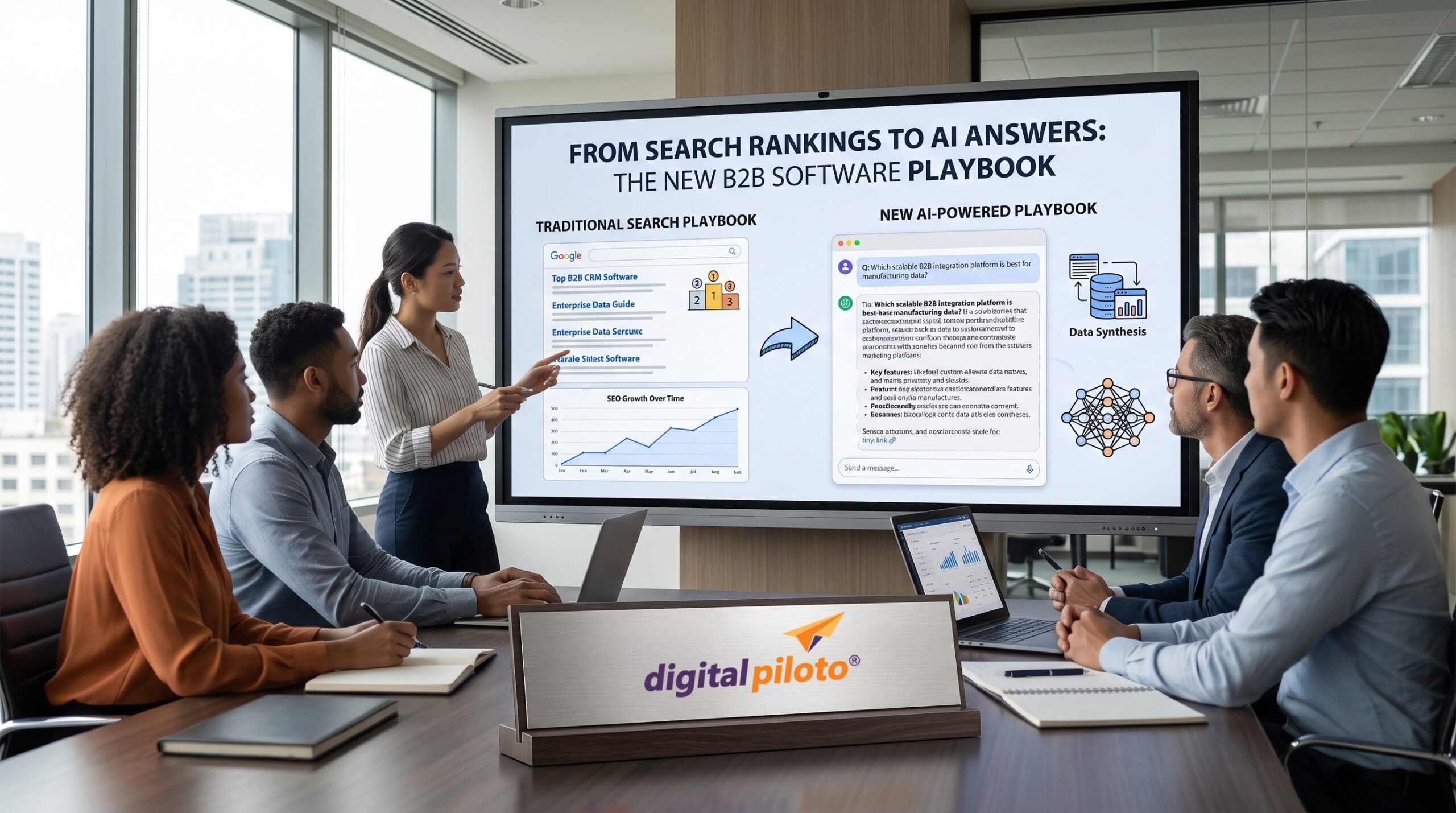
The future of B2B software marketing is shifting from optimizing for search rankings alone to becoming the preferred source for AI-generated answers. Modern AI search engines evaluate context, expertise, product relevance, and trustworthiness before recommending solutions. Companies that structure their content for both human decision-makers and AI systems will gain a significant competitive advantage as software buying journeys become increasingly conversational.
Businesses investing in strategic digital marketing services in Kolkata are already adapting their websites for this transition. Instead of publishing isolated keyword-focused pages, they are building interconnected knowledge hubs that help AI understand products, customer problems, and industry expertise while guiding prospects through every stage of the buying process.
What Is the AI-First B2B Software Playbook?
Definition
The AI-first B2B software playbook is a strategy that combines semantic SEO, entity optimization, structured data, technical excellence, and authoritative content to improve visibility across both traditional search engines and AI-powered answer engines.
Rather than competing only for page-one rankings, this approach positions software companies as trusted sources that AI assistants can confidently reference when answering complex business questions.
Why Traditional SEO Alone Is No Longer Enough
For years, software companies measured SEO success by keyword rankings and organic traffic. While these metrics remain useful, they no longer tell the full story.
Today’s buyers increasingly ask AI assistants detailed questions such as:
- Which CRM is best for manufacturing businesses?
- What ERP software integrates with Salesforce?
- Which project management platform supports remote engineering teams?
- What is the most secure HR software for enterprises?
Instead of returning ten blue links, AI platforms evaluate multiple sources and generate a direct recommendation. If your website lacks context, authority, or structured information, it may never become part of those answers.
The Four Pillars of AI Visibility
1. Entity Authority
AI understands entities better than isolated keywords. Your software, company, founders, products, and services should all be consistently represented across your website, documentation, customer stories, and authoritative external sources.
Consistency builds confidence, both for users and AI systems.
2. Intent-Focused Content
Every page should solve a genuine customer problem instead of targeting a single keyword.
For example, instead of publishing a page optimized only for “CRM software,” create content that answers:
- Who should use the platform?
- What business problems does it solve?
- How quickly can it be implemented?
- Which integrations are available?
- How does it compare with competing tools?
This richer context gives AI more information to evaluate and recommend your product.
3. Technical Excellence
Even exceptional content struggles if the website performs poorly. AI-ready websites prioritize fast loading speeds, responsive design, accessibility, structured data, logical internal linking, and excellent Core Web Vitals.
These technical improvements benefit both human users and intelligent search systems.
4. Trust Signals
B2B buyers rarely purchase software without validation. AI recognizes many of the same trust indicators that humans value.
- Customer case studies
- Verified testimonials
- Industry certifications
- Expert-written documentation
- Implementation guides
- Transparent pricing and support information
These assets strengthen your authority while increasing the likelihood of appearing in AI-generated recommendations.
How to Transition from Rankings to AI Answers
Step 1: Understand Decision-Maker Intent
Identify the questions prospects ask before purchasing software. Build content around those real-world scenarios rather than relying exclusively on keyword research.
Step 2: Build Topic Clusters
Create interconnected pages covering features, integrations, pricing, implementation, industry applications, comparisons, FAQs, and customer success stories.
This content architecture helps AI understand relationships between topics and reinforces topical authority.
Step 3: Align Development with Search Strategy
Modern B2B websites should be designed with discoverability in mind from the beginning. Businesses investing in professional software development in Kolkata increasingly integrate SEO, structured data, performance optimization, and scalable information architecture directly into the development process rather than adding them later.
Best Practices for the New B2B Software Playbook
Winning visibility in AI-powered search requires consistency rather than isolated optimization efforts. Every piece of content should strengthen your product’s authority and help AI understand how your solution fits specific business needs.
- Create dedicated pages for every product feature and integration.
- Implement structured data such as SoftwareApplication, Organization, Product, and FAQ schema.
- Publish comparison pages that objectively explain differences between competing solutions.
- Develop industry-focused landing pages for different customer segments.
- Keep product documentation, pricing, and release notes current.
- Support product pages with tutorials, implementation guides, and knowledge-base articles.
- Use descriptive internal links that connect related topics naturally.
- Monitor AI search visibility alongside traditional organic performance metrics.
These practices help software companies become authoritative knowledge sources instead of simply competing for rankings.
Where SEO Fits into the AI Era
Traditional SEO hasn’t disappeared—it has evolved. Technical optimization, crawlability, page speed, and keyword research remain important foundations, but they now work alongside semantic search, entity optimization, structured content, and AI readability.
Partnering with the best SEO company in Kolkata enables businesses to combine proven SEO strategies with AI-first optimization, ensuring software products remain visible across search engines, AI assistants, and emerging discovery platforms.
Frequently Asked Questions
What is an AI-first B2B software SEO strategy?
It is an optimization approach that combines technical SEO, semantic content, structured data, and entity authority to improve visibility across search engines and AI-powered answer platforms.
Why are AI answers becoming important for software companies?
Many business buyers now begin research using conversational AI tools that recommend products directly instead of displaying only traditional search results.
Does traditional SEO still matter?
Yes. Technical SEO remains essential, but it should be enhanced with AI-friendly content, structured information, topical authority, and trust signals.
How can SaaS businesses improve AI visibility?
They should create comprehensive product content, implement structured schema, strengthen internal linking, publish expert resources, and continuously update documentation.
What role does structured data play?
Structured data helps AI systems understand products, organizations, FAQs, reviews, and software features, improving the chances of accurate recommendations.
Conclusion
The future of B2B software marketing is no longer defined solely by where a website ranks—it is determined by whether AI systems trust it enough to recommend it. Companies that invest in semantic content, technical excellence, topical authority, and authentic expertise will be positioned to influence both traditional search results and AI-generated answers. The organizations that educate first and optimize intelligently will shape the next era of software discovery.
Blog Development Credits
This article was envisioned by Amlan Maiti, researched with assistance from advanced AI technologies including ChatGPT, Google Gemini, and Copilot, and professionally refined through editorial review and SEO optimization by Digital Piloto Private Limited.