

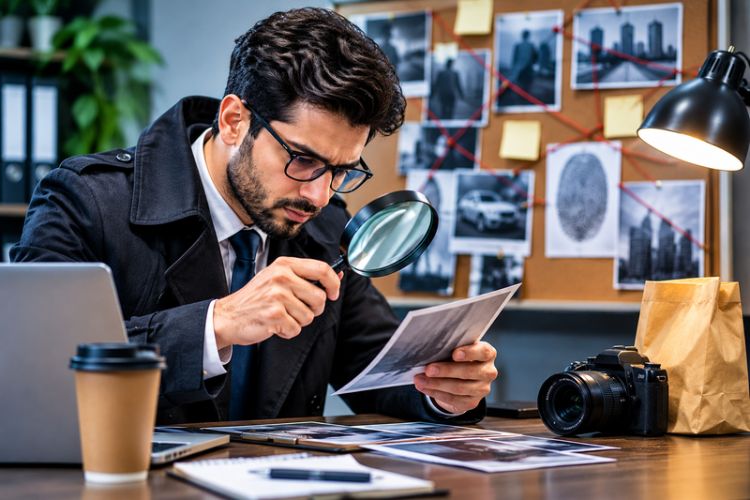
In this article, we explore how private detectives approach sensitive investigations, the methods they may use, and why confidentiality and lawful evidence collection matter.
1. Understanding the Role of Private Detectives in Sensitive Investigations
Private detectives help clients establish facts when a situation requires independent observation, verification, or documentation. Their role is to collect relevant information through appropriate investigative methods and present findings in an organized manner.
Sensitive investigations may involve:
- Matrimonial and relationship-related concerns.
- Background and identity verification.
- Suspected financial or corporate fraud.
- Employee misconduct and workplace concerns.
- Missing-person inquiries.
- Personal disputes requiring factual clarification.
Every investigation has different requirements. A responsible detective first understands the client’s concerns, identifies the information that needs verification, and determines which investigative methods are appropriate.
2. Initial Consultation and Understanding the Case
Evidence collection begins with understanding the situation. Before starting an investigation, detectives generally discuss the client’s concerns, available information, relevant dates, and expected outcomes.
This initial assessment helps establish a clear investigative direction. For example, someone concerned about a spouse’s unexplained activities may need factual verification, while a business owner suspecting employee misconduct may require a different approach.
During this stage, investigators may:
- Collect relevant background information supplied by the client.
- Understand the timeline of events.
- Identify specific concerns and questions.
- Review available documents and records.
- Establish the investigation’s scope and limitations.
Clear objectives help prevent unnecessary investigation and keep the process focused on relevant facts.
3. Observation and Field Investigation
Observation is one of the methods private detectives may use to verify information. Depending on the circumstances and applicable laws, investigators can conduct discreet observations in appropriate public settings to document relevant activities.
Field investigations may involve observing publicly visible activities, recording relevant timelines, and noting details that help establish a sequence of events.
Professional investigators should avoid trespassing, harassment, unauthorized access to private spaces, or any activity that violates an individual’s legal rights.
The objective is not to invade someone’s privacy but to verify specific concerns through lawful and proportionate investigative methods.
4. Collecting Photographic and Video Documentation
Photographs and video recordings can help document events when collected lawfully. Visual material may provide context about a particular incident, location, or sequence of activities.
However, collecting images is only one part of evidence documentation. Investigators must also maintain accurate records explaining when, where, and under what circumstances the material was obtained.
Important considerations include:
- Recording the date and time of observations.
- Preserving original files whenever possible.
- Avoiding unnecessary editing or alteration.
- Maintaining relevant contextual information.
- Protecting collected material from unauthorized access.
A photograph or video should never be presented as proof of something it does not actually establish. Context and authenticity are essential when evaluating visual evidence.
5. Background Verification and Document Examination
Background verification helps establish whether information provided by an individual or organization is accurate. Depending on the investigation, detectives may examine lawfully accessible records and documents supplied by the client.
These checks may help verify employment details, business information, professional claims, identity-related information, or other relevant facts.
Document examination can also help identify inconsistencies between statements and available records.
For instance, if a company suspects irregularities in a business transaction, investigators may review relevant invoices, communications, transaction documents, and timelines that the client is authorized to provide.
The findings should distinguish verified information from assumptions or unconfirmed allegations.
6. Digital Evidence and Electronic Records
Digital information has become increasingly relevant to modern investigations. Emails, messages, photographs, transaction records, and other electronic documents may help establish timelines or clarify disputed events.
Private detectives may examine digital material voluntarily supplied by clients or information they are lawfully authorized to access.
In India, the Bharatiya Sakshya Adhiniyam, 2023, recognizes electronic and digital records. Sections 61–63 address their legal recognition and the requirements for admissibility of electronic records. Section 63 includes specific conditions and certification requirements for relevant electronic records.
Responsible digital evidence handling includes:
- Preserving original electronic files.
- Recording the source of collected information.
- Avoiding unauthorized account access.
- Maintaining relevant timestamps and metadata.
- Preventing unnecessary modification or deletion.
- Seeking appropriate technical assistance when required.
It is important to understand that collecting a screenshot or message does not automatically make it admissible in court. Its authenticity, origin, integrity, and compliance with applicable evidentiary requirements may need to be established.
7. Maintaining Confidentiality During Investigations
Confidentiality is particularly important when an investigation involves family matters, relationships, financial concerns, or corporate information.
A professional investigation should restrict access to collected information and share findings only with authorized recipients.
Good confidentiality practices include:
- Keeping client information secure.
- Limiting access to investigation records.
- Avoiding unnecessary disclosure of personal details.
- Using secure methods to transfer reports.
- Maintaining discretion during communication.
India’s Digital Personal Data Protection Act, 2023, and the Digital Personal Data Protection Rules, 2025, provide an important framework for personal-data protection, with provisions subject to their notified commencement timelines.
Clients should discuss how their information will be collected, handled, stored, and shared before an investigation begins.
8. Organizing Evidence and Preparing Investigation Reports
Collecting information is not enough. Investigators must organize their findings so that clients can understand what was discovered and how the information relates to the original concern.
A structured investigation report may include:
- Investigation objectives and scope.
- Relevant dates and timelines.
- Observations and documented findings.
- Photographic or electronic material, where lawfully collected.
- Supporting documents.
- Limitations and unresolved questions.
A good report separates direct observations from interpretations. It should not exaggerate findings or make conclusions that the available material cannot support.
This is especially important when investigation findings may later be reviewed by legal professionals.
9. Why Proper Documentation Matters in Sensitive Cases
Proper documentation helps preserve the reliability and context of investigative findings. Without accurate records, even potentially useful information can become difficult to verify.
For matrimonial matters, for example, organized documentation may help individuals understand the circumstances surrounding their concerns and discuss relevant information with their lawyers.
Read more about Divorce Evidence Collection: Why Proper Documentation Matters to understand why accuracy and proper record-keeping are important in sensitive cases.
People seeking professional investigative assistance should evaluate an agency based on its confidentiality practices, communication, methodology, and commitment to lawful evidence collection. Those looking for a top detective agency in Bangalore should discuss the investigation’s objectives and documentation process before proceeding.
10. Choosing the Right Private Investigation Agency
Selecting an investigation agency requires more than comparing service prices. Clients should consider whether the agency understands their concerns and follows responsible investigative practices.
Before hiring an agency, consider the following:
- Confidentiality: Does it explain how personal information is protected?
- Transparency: Are investigative methods and limitations clearly discussed?
- Communication: Does the agency provide understandable updates?
- Documentation: Will findings be presented in an organized report?
- Professional conduct: Does it avoid unlawful surveillance and unauthorized access?
- Clear expectations: Are service scope, costs, and deliverables explained beforehand?
Silent Clue Detective provides private investigation-related services for individuals seeking clarity about sensitive personal and other investigative concerns. Clients can discuss their requirements and understand the appropriate next steps before beginning an investigation.
Frequently Asked Questions (FAQs)
1. How do private detectives gather evidence during sensitive investigations?
Private detectives may use lawful observation, background verification, document examination, and authorized digital information to establish relevant facts. They organize the findings into reports supported by available documentation.
2. Can private detectives collect photographic and video evidence?
Yes. Investigators may collect photographs and video recordings where legally permitted. The material should be authentic, relevant, and supported by accurate details about when and how it was obtained.
3. Are private investigation reports useful in legal matters?
Investigation reports may help clients and their lawyers understand relevant facts. However, the admissibility and evidentiary value of individual materials depend on applicable laws and the circumstances of collection.
4. How do detectives maintain confidentiality?
Professional detectives can maintain confidentiality through restricted access to investigation records, secure information handling, discreet communication, and responsible reporting.
5. Can a private detective investigate matrimonial concerns?
Private detectives may assist with matrimonial investigations by verifying specific concerns through appropriate and lawful investigative methods. The scope should be discussed clearly before the investigation begins.
6. Why is evidence documentation important?
Proper documentation helps establish the source, context, and timeline of collected information. It also makes findings easier to review and assess.
7. How can I choose a reliable private investigation agency in Bangalore?
Consider the agency’s experience, confidentiality practices, investigative approach, transparency, reporting methods, and commitment to lawful procedures before making a decision.
FINAL THOUGHTS
Sensitive investigations require more than simply gathering information. They demand discretion, accuracy, patience, and responsible evidence-handling practices. From background verification and field observations to digital documentation and investigation reports, every stage contributes to understanding the actual facts.
Choosing a professional investigation agency can help individuals approach difficult situations with greater clarity. Silent Clue Detective aims to support clients seeking answers through confidential and responsible investigative assistance. When dealing with sensitive personal or professional concerns, prioritize accurate information, lawful methods, and proper documentation before making important decisions.