

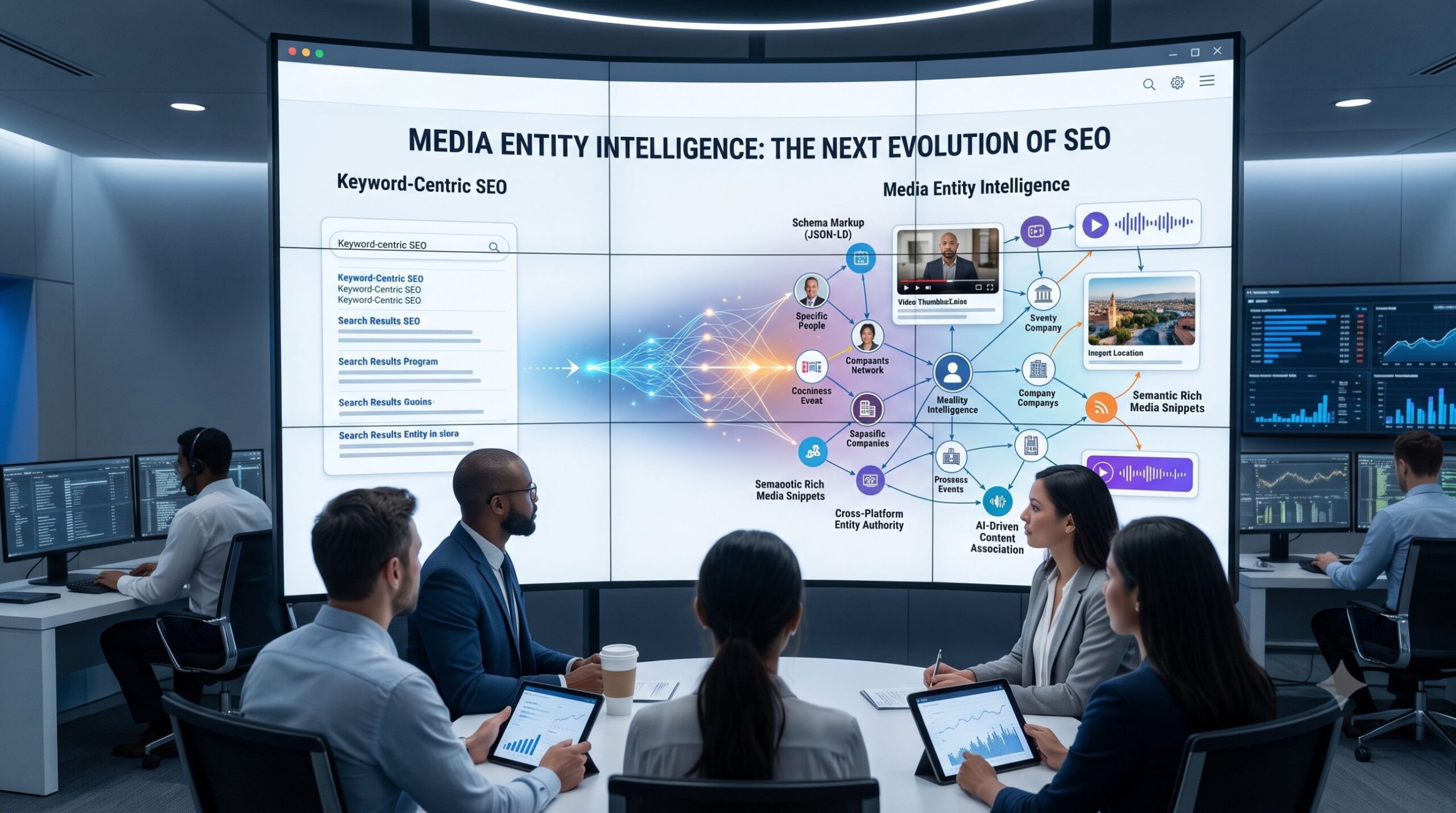
Media Entity Intelligence is redefining SEO by helping search engines and AI platforms understand not just keywords, but the people, brands, products, and ideas behind content. As AI-generated answers become more common than traditional search results, businesses that build clear, trustworthy entity relationships are better positioned to earn visibility, credibility, and long-term organic growth.
This shift is particularly valuable for businesses looking to establish a sustainable digital presence. Whether you’re a startup or the best digital marketing company in Kolkata, building recognizable media entities can significantly improve how AI-powered search engines interpret and recommend your content.
What Is Media Entity Intelligence?
Definition
Media Entity Intelligence is the strategic process of organizing digital content around identifiable entities—such as brands, people, products, services, and locations—so search engines and AI systems can understand their relationships, authority, and context.
Instead of optimizing individual keywords, this approach focuses on building a connected ecosystem of trusted information that machines can confidently interpret.
Why Traditional Keyword SEO Is No Longer Enough
For years, SEO revolved around matching search queries with relevant keywords. While keywords still matter, AI search engines now evaluate the broader meaning behind content.
Modern search systems ask questions like:
- Who created this content?
- Is this brand consistently mentioned across trusted sources?
- How is this topic connected to other recognized entities?
- Can this information be trusted enough to generate an AI answer?
This represents a significant evolution from keyword matching to knowledge understanding.
How Media Entity Intelligence Works
Step 1: Identify Your Core Entities
Begin by listing every important entity connected to your business.
- Brand name
- Products and services
- Leadership team
- Industry expertise
- Geographic locations
- Customer solutions
Each entity should have a clear identity and consistent representation across all digital channels.
Step 2: Connect Related Information
AI models understand relationships better than isolated facts. Instead of publishing disconnected articles, create content that naturally links your expertise, services, customer problems, and industry trends.
For example, an article about AI-powered SEO can reference your services, case studies, industry research, and subject matter experts within the same content ecosystem.
Step 3: Strengthen Structured Signals
Schema markup, author information, organization details, FAQs, and consistent metadata help search engines confirm entity relationships.
Structured information reduces ambiguity and improves machine understanding.
Benefits of Media Entity Intelligence
Businesses investing in entity-driven optimization often experience benefits that extend beyond traditional rankings.
- Higher visibility in AI-generated search responses
- Improved knowledge graph recognition
- Greater topical authority
- Stronger brand trust signals
- Better long-term search stability
- Enhanced semantic search performance
Rather than chasing algorithm updates, businesses build authority that remains valuable regardless of ranking fluctuations.
A Practical Framework for Building Entity Authority
Definition Framework
Think of every important topic as part of a connected knowledge network rather than an isolated webpage.
The framework includes:
- Identify important entities.
- Create authoritative content around each entity.
- Build relationships between related topics.
- Support every entity with original media, research, and expert insights.
- Maintain consistency across websites, social platforms, and business profiles.
This layered approach gives AI systems stronger confidence when referencing your content.
The Role of Multimedia in Entity Intelligence
Entity intelligence extends far beyond written articles. Videos, podcasts, webinars, interviews, infographics, presentations, and original research all strengthen entity recognition.
When multiple media formats consistently reinforce the same expertise, search engines develop a more complete understanding of your authority.
This is one reason many businesses combine organic optimization with campaigns managed by a trusted PPC agency in Kolkata. Paid campaigns often reveal high-performing audience interests that can later become authoritative content hubs.
Common Mistakes That Weaken Entity Signals
- Publishing unrelated content simply for traffic.
- Using inconsistent business names across platforms.
- Ignoring author credibility.
- Creating duplicate or thin content.
- Failing to connect related pages through internal linking.
- Missing structured data implementation.
These inconsistencies make it harder for AI systems to build confidence in your digital identity.
Why Entity Intelligence Will Shape the Future of SEO
Search is becoming increasingly conversational. AI assistants don’t simply retrieve pages—they generate answers by combining trusted information from multiple sources.
Brands with strong entity relationships are more likely to appear in those answers because their expertise is easier to verify.
Forward-thinking businesses are already combining semantic SEO, knowledge graph optimization, structured data, and comprehensive SEO services in Kolkata to prepare for this evolving search landscape.
Frequently Asked Questions
1. What is Media Entity Intelligence in SEO?
Media Entity Intelligence is the practice of organizing content around clearly defined entities such as brands, people, products, and topics. It helps search engines and AI platforms understand relationships, improving visibility in both traditional and AI-powered search results.
2. How does entity-based SEO differ from keyword-based SEO?
Keyword SEO focuses on matching search terms, while entity-based SEO emphasizes context, relationships, and authority. AI search systems rely more on entity understanding to deliver accurate and trustworthy answers.
3. Why is Media Entity Intelligence important for AI search?
AI search engines prioritize content they can confidently interpret. Strong entity signals, consistent branding, structured data, and authoritative content increase the likelihood of being cited in AI-generated responses.
4. Can small businesses benefit from entity optimization?
Yes. Even small businesses can strengthen their digital presence by creating high-quality topical content, maintaining consistent business information, using structured data, and building authority around their niche.
5. Which SEO practices support Media Entity Intelligence?
Structured schema markup, semantic internal linking, topical clusters, expert author profiles, multimedia content, and consistent brand mentions all contribute to stronger entity recognition.
Conclusion
Media Entity Intelligence represents the next major evolution of SEO because it aligns content with the way modern AI systems interpret information. Instead of optimizing for isolated keywords, businesses should focus on building trustworthy entities, meaningful relationships, and comprehensive topical authority. Organizations that invest in this strategy today will be better positioned for the future of AI-driven search visibility.
Blog Development Credits
This article was planned by Amlan Maiti, developed with research support from AI platforms including ChatGPT, Google Gemini, and Copilot, and professionally refined with SEO enhancements by Digital Piloto Private Limited.