

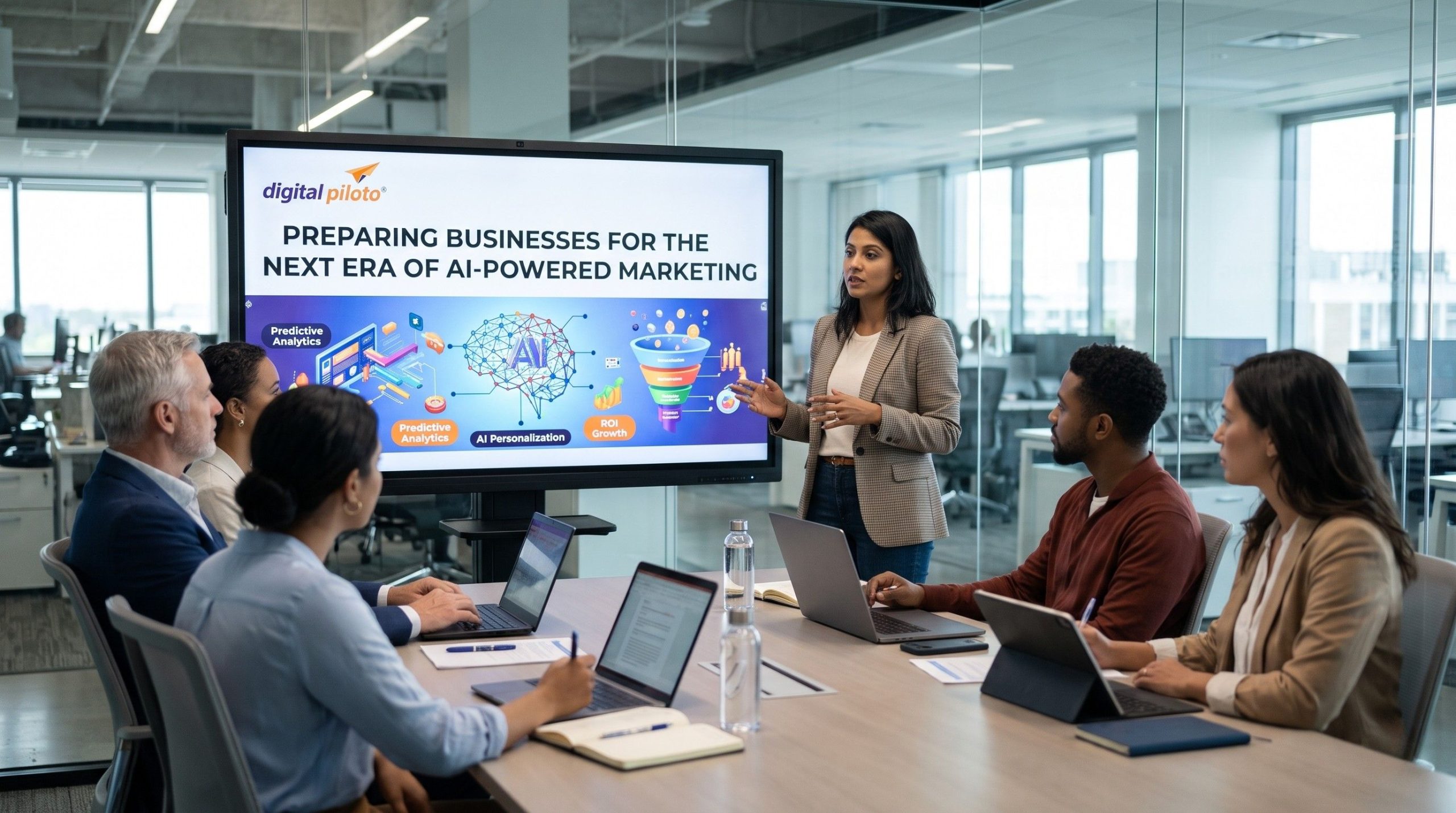
Marketing is entering a period where technology can do far more than schedule posts or automate emails. AI can analyse customer behaviour, support creative decisions, and help businesses respond to changing demand. But adopting new tools is only part of the challenge. Companies must also rethink their strategies, data, and skills to stay competitive.
For organisations exploring growth through a digital marketing agency India, the next era of AI-powered marketing offers an opportunity to build smarter customer journeys. The real advantage will not come from using the most tools. It will come from knowing where AI can make marketing more relevant, efficient, and measurable.
Why Businesses Need to Prepare Now
Customer expectations are changing. People want useful recommendations, quick answers, consistent communication, and experiences that reflect their needs. Meanwhile, marketing teams are managing more channels and larger volumes of information than ever before.
AI can help connect these moving parts. It can identify patterns in campaign data, suggest audience segments, assist with content creation, and support predictive analysis. However, businesses that adopt it without clear objectives may simply automate existing problems.
Preparation means understanding the business challenges first, then choosing technology that addresses them.
Five Priorities for AI-Ready Marketing
1. Build a Reliable Customer Data Foundation
AI systems depend on information. If customer records are incomplete, duplicated, or outdated, automated recommendations may be unreliable. Businesses should organise data from their websites, CRM platforms, sales interactions, and campaign analytics while respecting privacy requirements.
Useful first steps include:
- Reviewing the quality and accuracy of existing customer records.
- Connecting relevant marketing and sales data sources.
- Establishing clear consent and data-access practices.
- Removing unnecessary or outdated information.
2. Use AI for Personalisation, Not Just Automation
Sending automated messages is convenient, but intelligent personalisation goes further. It uses relevant customer signals to shape communication around interests and buying stages.
For example, a visitor researching accounting software may need an educational guide, while someone comparing pricing plans may be ready for a product demonstration. AI can help identify these differences and support more relevant follow-ups.
3. Strengthen Content and Search Visibility
AI is changing how people discover information. Search engines increasingly provide richer answers, while conversational tools help users explore products and services through questions. Businesses therefore need content that is accurate, clearly structured, and genuinely useful.
Strong SEO marketing in India should continue to focus on search intent, technical accessibility, helpful content, and brand credibility. AI tools can assist research and optimisation, but they should not replace subject expertise or editorial judgement.
4. Connect Marketing Technology
When advertising platforms, websites, CRM systems, and analytics tools operate separately, customer information becomes fragmented. Integrating these systems can help teams understand interactions across the customer journey.
A digital solutions company in India can help businesses assess their technology environment and develop a more connected digital foundation. The goal is not to buy every available platform, but to make essential systems communicate effectively.
5. Develop AI Skills Across the Team
AI adoption is also a people challenge. Marketers need to understand how to write useful prompts, evaluate generated content, interpret analytics, and recognise inaccurate outputs. Managers need to establish clear rules for responsible use.
Training should focus on practical tasks rather than technology jargon. Teams could learn to use AI for campaign research, reporting summaries, content drafts, and audience analysis while retaining responsibility for final decisions.
Measure Business Outcomes, Not AI Activity
Using AI does not automatically mean marketing is improving. Businesses should measure whether the technology contributes to better results.
Useful indicators include:
- Qualified leads and conversion rates.
- Customer acquisition cost and campaign efficiency.
- Repeat purchases and customer retention.
- Engagement with personalised content.
- Time saved on repetitive marketing tasks.
Compare results with a reliable baseline before expanding an AI initiative. A small pilot campaign can reveal whether a tool delivers genuine value without exposing the business to unnecessary cost or risk.
Keep Human Judgement at the Centre
AI can generate ideas and identify patterns, but it does not automatically understand a brand’s values, customer sensitivities, or commercial responsibilities. Human review remains essential for accuracy, originality, privacy, and tone.
Businesses should establish rules covering approved tools, confidential information, content review, and automated decisions. This is particularly important when campaigns use personal data or generate messages at scale.
Frequently Asked Questions
1. What is AI-powered marketing?
AI-powered marketing uses artificial intelligence to support activities such as customer analysis, content creation, personalisation, campaign optimisation, and performance measurement.
2. How can small businesses prepare for AI marketing?
Small businesses can begin with manageable applications such as email automation, customer segmentation, AI-assisted content research, and campaign reporting. They can expand as their skills and data capabilities improve.
3. Will AI replace marketing professionals?
AI can automate repetitive tasks and support analysis, but strategy, creativity, relationship building, and ethical judgement still require human involvement. It is more useful as a capable assistant than a complete replacement.
4. What is the first step toward AI marketing adoption?
Start by identifying a specific business problem, such as inefficient lead follow-up or disconnected customer data. Then test an appropriate AI solution and measure its results.
Final Thoughts
The next era of marketing will reward businesses that combine intelligent technology with clear thinking. Start with reliable data, useful customer experiences, connected systems, and trained teams. AI can accelerate progress, but the direction must come from people who understand the business and its customers. Preparation today can create a stronger foundation for tomorrow’s opportunities.
Blog Development Credits
The concept was developed by Amlan Maiti, supported by research and AI-assisted drafting, then refined and SEO-enhanced by Digital Piloto Private Limited.