

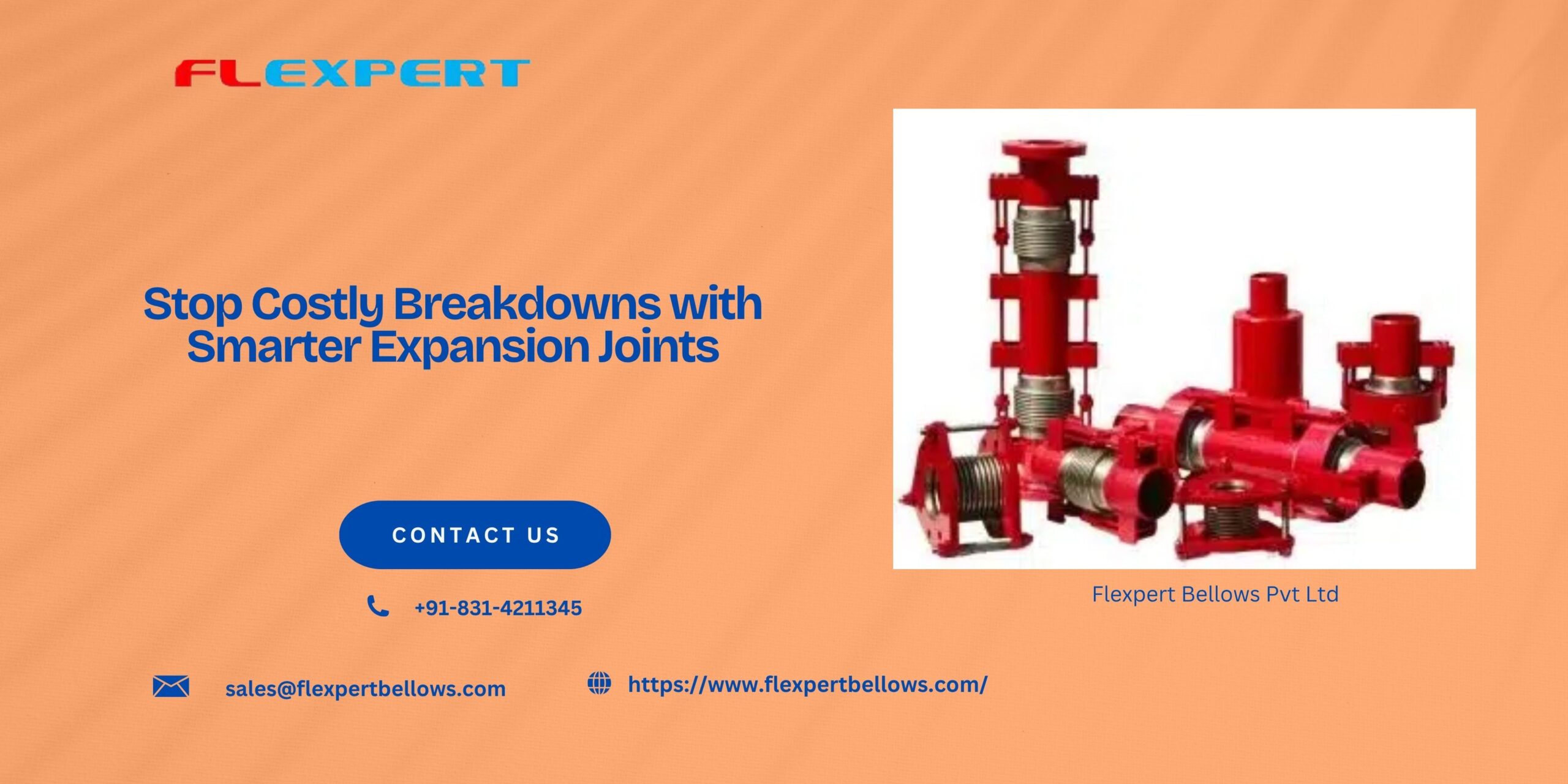
Unexpected equipment failure rarely happens without warning. In most industrial piping systems, stress quietly builds from heat, pressure, vibration, and movement until something eventually gives way. The good news? A well-designed expansion joint can absorb these forces before they become expensive problems, extending system life while improving overall reliability.
One of the most effective solutions is Metal Bellows Expansion Joints. These engineered components are designed to compensate for thermal expansion, vibration, and mechanical movement, helping protect pipelines, pumps, valves, and other critical equipment from premature damage. Whether in power plants or chemical processing facilities, they quietly perform one of the industry’s most important jobs.
Why Do Industrial Piping Systems Fail?
Pipelines operate under demanding conditions every day. As temperatures rise and fall, metal expands and contracts. Pumps generate vibration, while pressure fluctuations create additional mechanical stress. Without a flexible component to absorb these forces, the strain transfers directly to connected equipment.
According to guidance from the American Society of Mechanical Engineers (ASME), thermal expansion and improper stress management are among the leading contributors to piping system fatigue and equipment failure. Designing for movement is therefore an essential part of long-term system reliability.
Common Causes of Pipeline Failure
- Thermal expansion caused by temperature fluctuations
- Continuous vibration from rotating equipment
- Pressure surges and water hammer effects
- Pipe misalignment during installation
- Fatigue resulting from repeated movement cycles
How Metal Bellows Expansion Joints Reduce System Stress?
Think of a metal bellows as a flexible shock absorber for industrial piping. Instead of allowing thermal movement to stress rigid components, the bellows safely flexes while maintaining a leak-tight seal. This simple engineering principle prevents excessive force from reaching pumps, valves, heat exchangers, and connected piping.
Properly engineered expansion joints can absorb:
- Axial movement from thermal growth
- Lateral movement caused by structural shifts
- Angular movement due to equipment alignment changes
- Mechanical vibration from compressors and pumps
The result is lower maintenance costs, fewer shutdowns, and longer equipment life.
Why Material Selection Makes a Difference?
Choosing the correct expansion joint isn’t simply about size. Material compatibility, operating temperature, pressure rating, and movement requirements all determine long-term performance. Stainless steel remains one of the most popular materials because it offers excellent corrosion resistance while maintaining flexibility under demanding operating conditions.
Many engineers also specify metal expasion bellows for applications involving steam lines, chemical plants, HVAC systems, and refineries where continuous movement is unavoidable.
What Experienced Engineers Evaluate Before Selection?
- Maximum operating temperature
- Pressure ratings and safety margins
- Expected movement in every direction
- Corrosive properties of transported media
- Installation space and support design
Installation Is Just as Important as Design
Even the highest-quality expansion joint cannot compensate for poor installation practices. Incorrect anchoring, inadequate pipe guides, or improper alignment may significantly reduce service life. That’s why experienced system designers evaluate the complete piping layout rather than focusing on a single component.
If you’re planning a new installation or upgrading an existing system, this guide on How to Optimize Piping Layouts for Better Performance provides practical insights into improving long-term efficiency and reducing unnecessary stress.
Long-Term Benefits Beyond Failure Prevention
Preventing leaks is only one advantage. Expansion joints also contribute to smoother plant operations by reducing vibration transfer, protecting expensive machinery, and minimizing maintenance interruptions. Over the lifespan of an industrial facility, these benefits often outweigh the initial investment many times over.
Research published by the National Institute of Standards and Technology (NIST) highlights that proactive maintenance and well-designed infrastructure significantly reduce lifecycle operating costs across industrial facilities.
Additional SEO-relevant considerations include industrial expansion joints, thermal expansion compensation, and stainless steel bellows, all of which play an important role in reliable piping system design.
Frequently Asked Questions
1. What is the main purpose of a metal bellows expansion joint?
Its primary function is to absorb thermal expansion, vibration, and mechanical movement while protecting piping systems and connected equipment from excessive stress.
2. Where are metal bellows expansion joints commonly used?
They are widely used in power plants, oil and gas facilities, chemical processing units, HVAC systems, marine applications, and manufacturing plants.
3. How long do metal bellows expansion joints last?
Service life depends on operating conditions, material selection, installation quality, and maintenance. Properly specified units can provide reliable performance for many years.
4. Can expansion joints reduce maintenance costs?
Yes. By minimizing stress, vibration, and equipment wear, they help reduce unexpected repairs, downtime, and replacement expenses.
Final Thoughts
Industrial failures often begin with small, unnoticed stresses that gradually grow into major problems. Selecting the right expansion joint—and installing it correctly—helps eliminate those risks before they escalate. Investing in high-quality engineered solutions today can improve safety, reduce downtime, and deliver dependable performance for years to come.
Full Audio Version: Click Here