

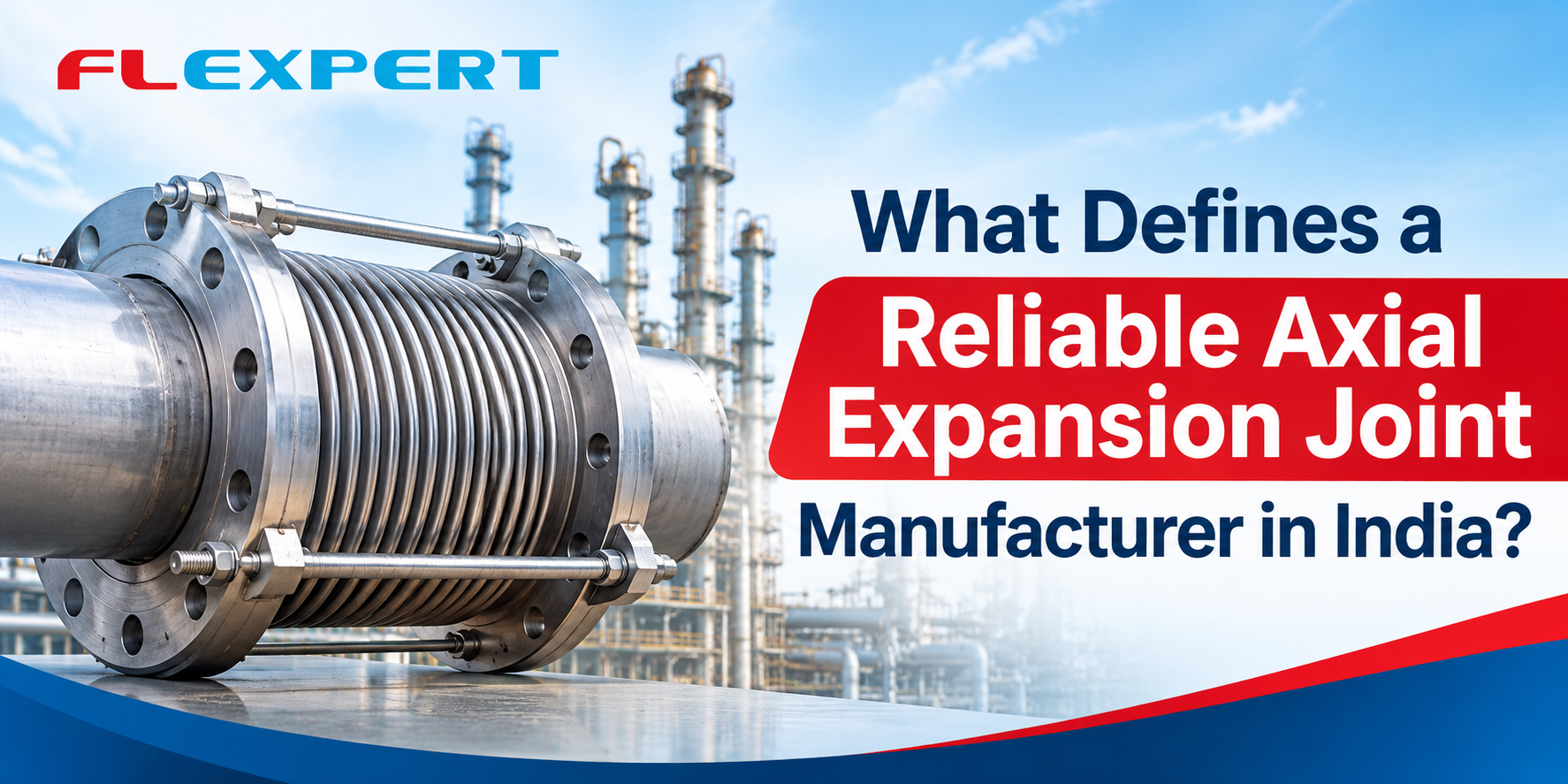
Industrial piping systems rarely operate under perfectly stable conditions. Temperature changes, pressure fluctuations, vibration, and continuous movement can gradually put stress on even well-designed pipelines. This is where expansion joints become essential. But what separates an ordinary supplier from a dependable axial expansion joint manufacturer in india? The answer goes far beyond product availability.
Understanding What Makes a Manufacturer Reliable
An axial expansion joint may look like a relatively simple component, but its role in an industrial system is anything but small. It absorbs axial movement caused by thermal expansion and contraction, helping reduce unwanted stress on connected pipes, equipment, and supporting structures.
A reliable manufacturer understands that every installation has its own operating conditions. A joint designed for a low-temperature utility line may not be suitable for a high-temperature process pipeline. Good manufacturing begins with asking the right questions rather than offering the same product to every customer.
Important considerations include operating temperature, design pressure, movement requirements, fluid characteristics, installation space, and the expected service environment. These details help determine the appropriate design, materials, and construction method.
1. Strong Engineering and Design Capabilities
Engineering expertise should be one of the first things to evaluate when selecting an expansion joint manufacturer. A dependable company does not simply manufacture according to dimensions supplied by a buyer. It also understands how the component will behave once installed in a working pipeline.
For example, excessive axial movement, poor alignment, or inadequate support arrangements can affect the performance of an expansion joint. A manufacturer with sound technical knowledge can help identify these concerns before production begins.
What to Look for in the Design Process?
- Movement calculations: Proper assessment of expected axial compression and extension.
- Material selection: Choosing suitable alloys based on temperature, pressure, and corrosion exposure.
- Pressure considerations: Evaluating operating and design pressure requirements.
- Installation compatibility: Checking dimensions, connections, anchors, and guiding arrangements.
These checks may seem routine, but they can make a significant difference to long-term performance. Good engineering is often most valuable in the problems it prevents.
2. Material Quality and Manufacturing Standards
Material selection directly influences durability, flexibility, and resistance to operating conditions. Stainless steel is commonly used in metal bellows applications, although the correct grade depends on the actual service environment. Temperature, corrosion, pressure, and cyclic movement must all be considered.
Equally important is manufacturing consistency. Bellows forming, welding, dimensional accuracy, and finishing should follow controlled processes. Even a small manufacturing variation can affect how a component responds to repeated movement.
Buyers should ask whether the manufacturer follows relevant engineering requirements, maintains material traceability, and provides inspection documentation. Standards such as the ASME Boiler and Pressure Vessel Code and applicable EJMA design guidance can offer useful technical reference points, depending on the product and project requirements.
3. Quality Testing Should Never Be an Afterthought
A product that looks perfect on the factory floor still needs to prove its suitability for service. This is why inspection and testing are essential parts of responsible manufacturing.
Before approving a supplier, consider whether its quality-control process covers:
- Raw material verification and identification.
- Dimensional inspection of finished components.
- Weld quality checks and relevant non-destructive examination.
- Pressure or leak testing where specified by the design and applicable requirements.
- Inspection records and documentation before dispatch.
Not every expansion joint requires the same testing programme. A competent manufacturer should explain which inspections are appropriate for the particular design instead of making broad promises about testing.
4. Product Range and Customisation Flexibility
Industrial projects rarely follow a one-size-fits-all approach. Different applications may require different configurations, materials, end connections, and movement capacities. A capable manufacturer should be able to understand these variations and recommend a suitable solution.
This is particularly important when comparing bellows expansion joints for different pipeline layouts. The right design depends on how movement occurs, what loads are present, and how the piping system is supported.
For instance, an installation with limited space may require a compact configuration, while a system exposed to demanding operating conditions may need a carefully selected bellows material and reinforcement arrangement. Customisation should be based on engineering calculations, not guesswork.
5. Technical Support and Industry Experience
Manufacturing quality is only one part of the relationship. Technical support before and after delivery can be just as important, especially for complex industrial installations.
An experienced supplier should be willing to discuss application details, clarify installation requirements, review technical drawings, and help resolve product-related questions. This collaborative approach can prevent misunderstandings between the design, procurement, and installation teams.
For a broader understanding of pipeline movement and system design, readers can explore Exploring the Importance of Flexibility in Piping Design for Industrial Applications.
6. Consistent Delivery and Transparent Communication
Even a technically excellent product can create project delays if delivery commitments are unreliable. A professional manufacturer should communicate realistic production schedules, material availability, inspection timelines, and dispatch details.
Look for suppliers who provide clear quotations, technical specifications, delivery commitments, and after-sales assistance. Transparent communication makes procurement easier and helps project managers plan with greater confidence.
Frequently Asked Questions
1. What is the primary function of an axial expansion joint?
An axial expansion joint absorbs movement along the length of a pipeline, usually caused by temperature-related expansion and contraction. It helps reduce excessive stress on piping components and connected equipment.
2. Which materials are commonly used in axial expansion joints?
Stainless steel is widely used for metal bellows because of its flexibility and resistance to various operating environments. However, the appropriate material grade depends on temperature, pressure, corrosion exposure, and process conditions.
3. How can buyers evaluate an expansion joint manufacturer?
Buyers should review engineering capabilities, manufacturing processes, material traceability, quality inspection procedures, relevant industry experience, technical support, and delivery performance before making a decision.
4. Are customised axial expansion joints better than standard products?
Not necessarily in every situation. Standard products can work well when their specifications match the application. Customised designs are useful when movement requirements, dimensions, materials, or operating conditions demand a specialised solution.
Final Thoughts
Choosing the right expansion joint manufacturer is ultimately about protecting the performance of an entire piping system, not simply purchasing a component. Engineering knowledge, dependable materials, consistent quality checks, and responsive technical support all contribute to that confidence. A reliable manufacturing partner takes the time to understand the application and delivers a solution designed around real operating requirements. That is what makes the difference between a product that merely fits and one that performs reliably over time.
Listen Here: Click Now