

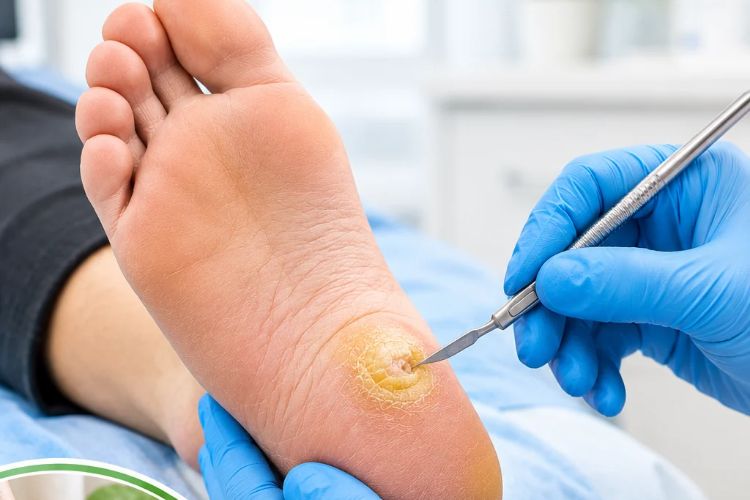
A painful heel corn can make ordinary activities such as walking, standing, and wearing shoes uncomfortable. While mild cases may improve with simple home-care measures, some heel corns need professional assessment and treatment. The right approach depends on the level of pain, the thickness of the hardened skin, the cause of repeated pressure, and your overall foot health.
Understanding foot corn causes and treatment can help you recognise when self-care may be suitable and when a foot specialist should examine the problem.
What Is a Heel Corn?
A heel corn is a small, concentrated area of thickened skin that develops when one part of the foot experiences repeated pressure or friction. The skin becomes thicker as a protective response. However, when the hardened area presses into deeper tissues, it can cause tenderness or pain.
Heel corns may develop because of:
-
Shoes that rub against the heel or do not fit properly.
-
Repeated pressure while standing or walking.
-
Foot structure or alignment that places extra weight on one area.
-
Inadequate cushioning or worn-out footwear.
-
Activities that involve prolonged standing.
A heel corn is not usually a serious condition, but persistent pain should not be ignored. Other skin conditions, including plantar warts and calluses, can sometimes look similar. A correct diagnosis helps determine suitable care.
When Can Home Care Help?
Home care may be appropriate for a mild corn when the skin is intact, discomfort is limited, and the person has no medical condition that increases the risk of foot complications.
Some practical measures include:
1. Choose comfortable footwear: Wear well-fitting shoes with adequate cushioning and enough room around the heel. Avoid footwear that repeatedly rubs or puts pressure on the affected area.
2. Reduce pressure: A suitable non-medicated protective pad or heel cushion may help reduce friction. Make sure it does not create additional pressure elsewhere.
3. Keep the skin moisturised: Regular use of an appropriate moisturiser can help reduce dryness and keep surrounding skin supple. Avoid applying cream between the toes.
4. Monitor the affected area: Check whether pain, redness, swelling, or skin damage develops. If symptoms persist or worsen, seek professional advice.
For people without underlying health risks, gentle skin care may sometimes help. However, do not cut, shave, or dig into a corn yourself. Aggressive filing can damage healthy skin and increase the risk of bleeding or infection. The NHS also advises people with diabetes, circulation problems, or a weakened immune system not to treat corns themselves.
When Is Professional Heel Corn Treatment Better?
Professional heel corn treatment is a better option when home care is not improving the problem, pain affects daily activities, or there are signs that the foot needs medical attention.
Consider consulting a qualified foot-care professional in the following situations:
1. The Pain Makes Walking Difficult
If every step causes discomfort, the corn may be putting significant pressure on sensitive tissue. Continuing to walk without addressing the cause can make daily movement difficult. A professional can examine the affected area and recommend appropriate pressure-relief measures.
2. The Corn Keeps Returning
A corn may return when the underlying cause, such as repeated friction, unsuitable footwear, or uneven pressure distribution, remains unchanged. Simply reducing the thickened skin may not provide lasting relief.
A foot specialist can assess footwear, foot structure, and pressure points. Depending on the findings, treatment may include protective padding, suitable insoles, footwear advice, or other interventions.
3. The Hardened Skin Is Thick or Deep
Thick corns can be difficult to manage safely at home. A trained healthcare professional may carefully reduce the excess hardened skin using appropriate instruments. This should not be attempted with blades, scissors, or sharp household tools.
4. You Notice Bleeding, Discharge, or Signs of Infection
Bleeding, pus, increasing redness, warmth, swelling, or worsening pain requires medical assessment. These symptoms should not be treated as an ordinary corn. If you notice an open wound or signs of infection, seek prompt medical attention.
5. You Have Diabetes or Poor Circulation
People with diabetes, reduced sensation, poor circulation, or a weakened immune system should seek professional guidance rather than attempting corn removal at home. Reduced sensation can make it difficult to notice injuries, while poor blood flow can affect healing.
The National Institute of Diabetes and Digestive and Kidney Diseases warns that corns and calluses in people with nerve damage can develop into ulcers. It advises discussing their care with a foot doctor and avoiding self-removal products or cutting.
Home Care vs Professional Treatment: What Is the Difference?
Home care mainly focuses on reducing friction, protecting the skin, and preventing further thickening. It may be suitable for a mild problem in an otherwise healthy person.
Professional treatment goes further by assessing the corn, checking for possible complications, and identifying the pressure or friction responsible for its development. A specialist may carefully remove excess hardened skin, recommend pressure-relieving pads, or suggest footwear changes and customised support where appropriate.
Neither approach is automatically right for everyone. The safest choice depends on the symptoms and individual health risks. Persistent or painful corns deserve professional assessment rather than repeated attempts at home removal.
How Does a Foot Specialist Treat a Heel Corn?
Treatment usually begins with an examination of the heel and a discussion of symptoms, footwear, activity, and medical history. The specialist may check whether the thickened skin is a corn, callus, wart, or another condition.
Depending on the assessment, care may involve:
-
Professional reduction: Carefully removing excess hardened skin using appropriate clinical instruments.
-
Pressure relief: Recommending pads, cushioning, or insoles to reduce pressure on the affected area.
-
Footwear guidance: Identifying shoes that may be contributing to repeated rubbing.
-
Foot assessment: Checking alignment, walking patterns, and pressure distribution when needed.
-
Further medical referral: Arranging additional evaluation if infection, an ulcer, or an underlying structural problem is suspected.
People seeking foot corn treatment in Kolkata can explore CuraFoot’s corns and calluses care information. The clinic’s stated services include foot assessment, footwear advice, and related foot-care support.
Preventing Heel Corns from Returning
Long-term prevention means reducing the pressure and friction that caused the corn in the first place. Consider these habits:
-
Choose shoes that fit comfortably and provide suitable heel cushioning.
-
Avoid footwear that rubs against the same area repeatedly.
-
Replace worn-out shoes when their cushioning or support deteriorates.
-
Keep feet clean and moisturise dry skin.
-
Use recommended insoles or protective padding when advised.
-
Seek assessment if the corn repeatedly returns or changes.
Appropriate footwear can make a meaningful difference to daily comfort. Read The Comfort of Orthopaedic Footwear in Daily Life for more information about footwear support.
Frequently Asked Questions
1. Can a heel corn go away without treatment?
A mild corn may improve when the repeated pressure or friction causing it is removed. However, persistent or painful corns should be assessed by a foot-care professional.
2. Is it safe to cut a heel corn at home?
No. Cutting a corn with a blade, scissors, or other sharp object can cause bleeding, infection, and skin injury. People with diabetes or circulation problems face additional risks.
3. When should I see a podiatrist for a heel corn?
Seek professional advice if the corn is painful, keeps returning, affects walking, or does not improve with appropriate care. People with diabetes or poor circulation should seek guidance before attempting home treatment.
4. Can footwear cause heel corns?
Yes. Shoes that rub, fit poorly, or create repeated pressure can contribute to corn formation. Properly fitted footwear and suitable cushioning may help reduce recurrence.
5. Are heel corns and heel calluses the same?
No. A corn is generally a more localised area of thickened skin, while a callus is usually broader and more spread out. A specialist can help distinguish between them.
FINAL THOUGHTS
Home care may be enough for a mild heel corn, but persistent pain, recurring thickened skin, bleeding, or signs of infection call for professional attention. People with diabetes, poor circulation, or reduced foot sensation should avoid self-treatment and seek appropriate medical guidance.
CuraFoot provides foot-care services, including assessment and footwear advice, to support healthier movement and better foot comfort. If heel pain is affecting your routine, consider a professional foot assessment to identify the cause and discuss suitable treatment.