

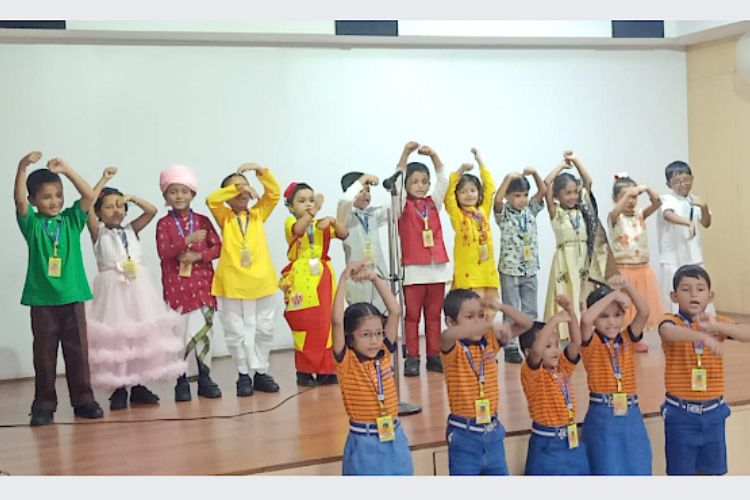
For many parents, play group admission feels like the first big step into their child’s school journey. It is more than filling out a form and choosing a uniform, though. These early years shape how children communicate, explore, share, and respond to new experiences. The right learning environment can make that transition feel natural and joyful.
What Makes Early Learning So Important?
Think about a child learning to build a tower with blocks. It looks like ordinary play, but there is plenty happening underneath: balance, coordination, problem-solving, patience, and perhaps a little negotiation when another child reaches for the same block.
Early education gives children repeated opportunities to practise these small but meaningful skills. UNICEF notes that early childhood development is strongly connected with later learning, health, and well-being. UNICEF
1. Builds Communication Skills
A good play-based classroom naturally encourages children to speak, listen, ask questions, and express feelings. A child may begin with a shy “hello” and, over time, become comfortable telling a teacher about a favourite toy or joining a group conversation. Those little moments matter.
2. Encourages Social Confidence
Home is a child’s first social world, but school introduces a wider circle. Children meet classmates with different personalities and learn that not everyone wants the same toy at the same time. With gentle guidance, they begin understanding sharing, cooperation, turn-taking, and empathy.
3. Develops Curiosity
Young children are naturally curious. They want to know why rain falls, where ants go, and what happens when colours are mixed together. Early learning should protect that curiosity rather than rush past it. Teachers can turn ordinary questions into simple learning experiences.
What Should Parents Look for During Play Group Admission?
Choosing a school during play group admission can feel overwhelming because every school brochure seems to promise something wonderful. Instead of getting caught up in impressive words, observe the everyday experience a child is likely to have.
- A warm atmosphere: Teachers should appear approachable, patient, and comfortable around young children.
- Age-appropriate activities: Look for storytelling, art, music, movement, puzzles, pretend play, and hands-on exploration.
- Safe spaces: Classrooms, play areas, entrances, and child-accessible facilities should be thoughtfully designed.
- Balanced routines: Young children need learning opportunities as well as time to move, rest, play, and settle down.
Parents often search online for schools near me for nursery admission, but location should not be the only deciding factor. Visit shortlisted schools if possible. Watch how teachers talk to children. Notice whether children look engaged rather than simply quiet. Those details can tell you a surprising amount.
Learning Through Play Is Still Learning
There is sometimes a misconception that play-based education means children are “just playing.” In reality, purposeful play can involve several developmental areas at once. A pretend shop, for instance, can introduce conversation, counting, decision-making, imagination, and social interaction without turning the experience into a formal lesson.
The ICSE schools near me search may help parents create a shortlist, but the curriculum philosophy deserves equal attention. Ask how the school balances structured activities with child-led exploration.
Simple Benefits Children Can Gain
- Better independence: Children gradually learn to put away toys, manage simple belongings, and attempt tasks themselves.
- Stronger motor skills: Drawing, building, climbing, cutting, and movement activities support coordination.
- Greater emotional awareness: Guided classroom interactions help children name and manage everyday feelings.
- Positive attitudes toward learning: When learning feels enjoyable, children are more likely to approach new activities with confidence.
How Parents Can Make the Transition Easier?
School readiness does not mean teaching a child an entire alphabet before the first day. It can be much simpler. At home, encourage your child to talk about their day, practise basic routines, look at picture books, tidy toys, and make small choices independently.
- Keep a predictable morning routine.
- Let your child practise simple self-help tasks.
- Read together every day, even for ten minutes.
- Talk positively about meeting teachers and classmates.
- Avoid comparing your child’s development with another child’s.
Most importantly, stay patient. Some children walk into school confidently on day one; others need a little time to warm up. Neither response automatically tells you how successful their school experience will be.
Frequently Asked Questions
1. What age is suitable for play group admission?
The appropriate age can vary by school and local admission policies. Parents should check the specific age criteria of the school they are considering.
2. What should children learn in play group?
Play group typically focuses on early communication, social interaction, motor development, creativity, basic concepts, independence, and positive classroom habits through age-appropriate activities.
3. How can parents prepare children for play group admission?
Parents can establish simple routines, encourage independent tasks, read regularly, practise sharing and communication, and talk positively about the upcoming school experience.
4. Is play-based learning effective for young children?
Yes. Purposeful play can support cognitive, physical, language, social, and emotional development while allowing young children to learn in a way that feels natural to them.
Final Thoughts
Play group admission is not simply the beginning of formal schooling; it can be the beginning of a child’s relationship with learning itself. Choose an environment where curiosity is welcomed, mistakes are treated gently, and children have room to discover things at their own pace. After all, the best early lessons are often the ones children do not realize they are learning.