

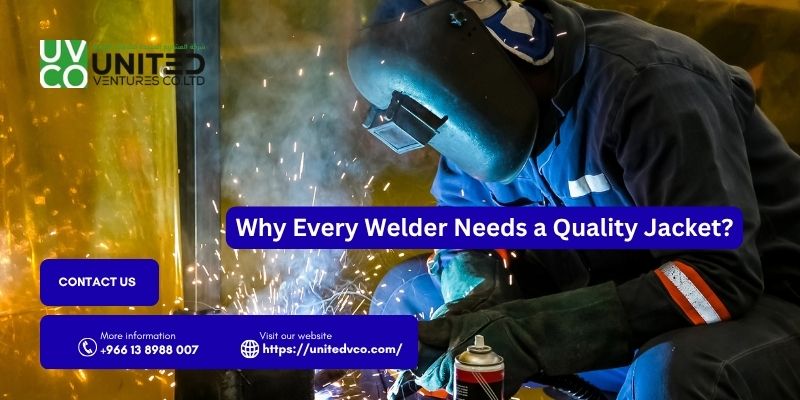
A quality welding jacket is essential because it helps protect a welder’s skin and clothing from sparks, spatter, heat, and other workplace hazards. The right Welding Jacket also supports comfortable movement during long jobs. For professionals, choosing suitable protective clothing is not an optional upgrade; it is a basic part of working responsibly.
Welding involves intense heat, flying particles, bright radiation, and unpredictable spatter. Even an experienced welder can be exposed to these hazards in seconds. A properly selected jacket creates an important protective barrier while allowing the worker to concentrate on producing a clean, accurate weld.
What Is a Welding Jacket?
A welding jacket is specialized protective workwear designed to reduce exposure to welding-related heat, sparks, molten metal spatter, and other hazards. It is typically made from materials selected for their resistance to heat, flame, or ignition.
Unlike an ordinary work shirt, a welding jacket is designed around the realities of welding. Details such as material, stitching, cuffs, closures, fit, and coverage can make a meaningful difference in practical protection.
Why Is a Welding Jacket So Important?
1. It Helps Protect Against Sparks and Spatter
Welding sparks can travel farther than expected, while hot metal spatter can land on exposed clothing or skin. A suitable jacket helps create a protective layer between these hazards and the welder.
This becomes particularly important during processes where spatter levels are higher. The jacket should be selected according to the welding process and the risks present in the work environment.
2. It Provides Better Heat Protection
Welding generates significant heat, and workers may also operate close to heated components or freshly welded metal. Protective clothing can reduce direct exposure to these sources.
However, a jacket should never be treated as unlimited heat protection. Its performance depends on its material, construction, condition, and the specific hazard involved.
3. It Reduces Clothing-Related Risks
Loose, unsuitable, or easily ignited clothing can create additional hazards around welding equipment. Purpose-designed protective workwear is constructed with welding conditions in mind.
For example, secure cuffs and appropriate closures can help reduce openings through which sparks might reach ordinary clothing underneath.
What Should You Look for in a Welding Jacket?
Not every welding jacket is suitable for every job. The right choice depends on the welding process, working environment, exposure level, climate, and required protective standards.
- Heat and flame resistance: Choose materials appropriate for the expected exposure.
- Coverage: Look for sufficient protection across the torso, arms, and other exposed areas.
- Durability: Strong stitching and quality construction matter in demanding workshops.
- Comfort: A jacket should allow necessary movement without being excessively loose.
- Closures: Secure fasteners can help prevent gaps where sparks could enter.
- Breathability: For hot environments, comfort can influence whether workers consistently wear the garment correctly.
How to Choose the Right Welding Jacket Step by Step?
- Identify the welding process. Different processes can produce different levels and types of heat, sparks, and spatter.
- Assess the work environment. Consider indoor workshops, outdoor sites, confined spaces, ventilation, and nearby heat sources.
- Determine the required protection. Check applicable workplace requirements and the manufacturer’s specifications.
- Choose an appropriate material. Select fabric based on the hazards rather than appearance alone.
- Check the fit. The jacket should provide coverage while allowing safe movement and operation of equipment.
- Inspect the garment before use. Look for holes, severe wear, damaged closures, contamination, or other defects.
- Replace damaged protective clothing. Once a jacket can no longer provide its intended protection, continuing to use it is a poor safety trade-off.
How Does Comfort Affect Welding Safety?
Comfort is sometimes treated as a secondary concern, but experienced workers know it can affect safety. A jacket that is excessively heavy, restrictive, or uncomfortable in hot conditions may encourage workers to loosen or remove it.
That is why protective clothing needs to balance protection with practical wearability. When selecting Wholesale Industrial Equipment, businesses should consider protective clothing as part of the overall work system rather than as an isolated purchase.
A comfortable fit also matters for tasks requiring precise positioning. Welders need enough freedom of movement to control their tools properly without having sleeves or loose fabric interfere with their work.
Common Mistakes When Buying Welding Jackets
- Choosing based only on the lowest price
- Assuming every jacket offers the same level of protection
- Ignoring manufacturer care and maintenance instructions
- Buying an overly loose jacket that can interfere with work
- Continuing to use garments with significant damage
- Failing to consider the specific welding process and workplace hazards
Another common mistake is treating a welding jacket as complete personal protective equipment. A jacket protects only the areas it covers and does not replace appropriate eye, face, hand, foot, respiratory, or hearing protection when those hazards are present.
How Should a Welding Jacket Be Maintained?
Protective clothing needs regular inspection and appropriate care. Follow the manufacturer’s cleaning instructions and avoid practices that could compromise the fabric’s protective characteristics.
Before each use, check for burn marks, holes, frayed seams, damaged fasteners, excessive contamination, or other signs of deterioration. If the garment has suffered serious damage, it should be evaluated according to workplace procedures and manufacturer guidance.
Frequently Asked Questions (FAQs):
1. Can I use a normal cotton shirt instead of a welding jacket?
Ordinary clothing is not automatically suitable for welding. A purpose-designed welding jacket should be selected according to the hazards and protective requirements of the job.
2. What material is best for a welding jacket?
There is no single best material for every situation. The appropriate material depends on the welding process, heat exposure, spatter level, environment, and applicable safety requirements.
3. Should a welding jacket fit tightly?
A welding jacket should provide adequate coverage without restricting necessary movement. It should not be excessively loose or create openings that increase exposure to sparks and spatter.
4. How often should I replace a welding jacket?
Replacement depends on use and condition rather than a universal time period. Replace or remove a jacket from service when damage or deterioration compromises its intended protective function.
5. Is a welding jacket enough for complete protection?
No. Welding jackets protect covered areas from specific hazards but should be used alongside other appropriate PPE, such as welding helmets, gloves, safety footwear, and respiratory protection where required.
Final Thoughts
A quality welding jacket is a small part of a welder’s equipment, but its role is far from minor. The right garment provides a practical protective barrier against sparks, spatter and heat while supporting comfortable, controlled work. Choose it based on the actual hazards, maintain it properly, and treat protective clothing as an essential part of professional welding not an afterthought.
Full Audio Version:- Click Here