

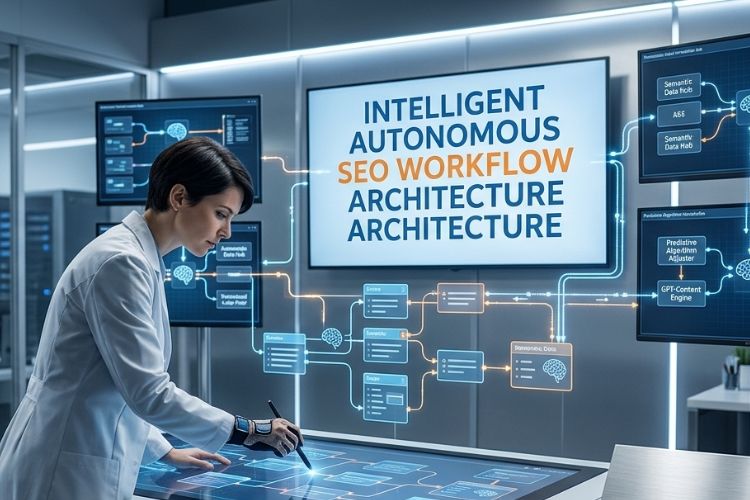
Intelligent autonomous SEO workflows combine artificial intelligence, automation, and human expertise to streamline repetitive optimization tasks while improving content quality and search visibility. Instead of replacing SEO professionals, these workflows automate data-driven decisions, allowing marketers to focus on strategy, creativity, and long-term growth in an increasingly AI-powered search landscape.
Businesses looking to scale organic growth are increasingly integrating automation into their marketing operations. Whether you’re a startup or an established digital marketing company in Kolkata, building intelligent SEO workflows helps reduce manual effort, improve consistency, and respond faster to evolving search engine algorithms and user behavior.
What Is an Intelligent Autonomous SEO Workflow?
Definition
An intelligent autonomous SEO workflow is a structured system where AI-powered tools automatically perform routine SEO activities, analyze data, recommend optimizations, and trigger predefined actions while keeping human experts in control of strategic decisions.
Unlike traditional automation, autonomous workflows continuously learn from new data, adapt to changing search trends, and prioritize tasks based on performance rather than static rules.
Why Traditional SEO Workflows Are No Longer Enough
SEO has evolved beyond manual keyword research and occasional content updates. Modern websites publish hundreds of pages, monitor thousands of keywords, and compete in rapidly changing search environments.
Managing all these tasks manually often leads to delayed updates, inconsistent optimization, and missed opportunities. Autonomous workflows solve this challenge by connecting data, analysis, and execution into one continuous process.
Instead of reacting to ranking losses, businesses can proactively identify content gaps, technical issues, and optimization opportunities before they affect performance.
Core Components of an Autonomous SEO Framework
1. Intelligent Data Collection
Every workflow starts with reliable data. AI gathers information from search analytics, user behavior, crawl reports, content performance, competitor monitoring, and keyword trends to create a unified picture of website health.
2. Automated Opportunity Detection
Rather than manually reviewing reports, AI identifies pages with declining rankings, outdated information, missing internal links, duplicate content, or changing search intent.
This allows SEO teams to focus only on high-impact improvements.
3. AI-Assisted Content Optimization
Modern AI can recommend semantic keywords, improve content structure, identify missing entities, optimize headings, and suggest stronger answers to common user questions.
These recommendations help create content that aligns with both traditional search engines and AI-powered search experiences.
4. Automated Technical Monitoring
Autonomous systems continuously monitor crawl errors, broken links, indexing issues, Core Web Vitals, structured data problems, and mobile usability without requiring constant manual audits.
5. Continuous Performance Learning
Perhaps the most valuable feature is continuous learning. Instead of running isolated campaigns, intelligent workflows evaluate results, learn from successful pages, and improve future recommendations automatically.
How to Build an Intelligent Autonomous SEO Workflow
Step-by-Step Framework
- Define measurable SEO objectives.
- Connect analytics, search console, and technical audit tools.
- Automate keyword and content monitoring.
- Use AI to prioritize optimization opportunities.
- Create approval checkpoints for human editors.
- Monitor performance after every update.
- Continuously refine workflows using new search data.
This approach ensures automation improves efficiency without sacrificing quality or editorial control.
Where Human Expertise Still Matters
AI excels at processing large datasets, identifying patterns, and accelerating repetitive work. However, it cannot fully replace strategic thinking, industry expertise, or creative storytelling.
Experienced SEO professionals still make the final decisions about content quality, brand messaging, user experience, and business priorities. The strongest workflows combine machine efficiency with human judgment.
Practical Applications Across SEO Teams
Autonomous workflows deliver measurable benefits across multiple SEO activities, including:
- Content refresh prioritization.
- Automated internal linking suggestions.
- Technical SEO monitoring.
- Competitor content analysis.
- Search intent clustering.
- Content gap identification.
- Performance reporting.
Many organizations also integrate insights from their PPC agency Kolkata campaigns to identify high-converting search queries that deserve stronger organic coverage.
Best Practices for Sustainable Autonomous SEO
Automation works best when guided by clear governance and consistent quality standards. Businesses investing in professional SEO services should ensure every automated recommendation is reviewed within an established editorial process.
- Maintain human approval before publishing major updates.
- Review AI-generated recommendations for factual accuracy.
- Build workflows around user intent instead of keywords alone.
- Schedule recurring audits for both technical and content quality.
- Measure outcomes and refine automation rules continuously.
Common Challenges and How to Overcome Them
Even the most advanced autonomous SEO workflows can encounter obstacles if they rely too heavily on automation. AI is exceptional at recognizing patterns and processing large volumes of information, but it still requires strategic oversight to maintain accuracy and brand consistency.
Some common challenges include:
- Publishing AI-generated content without expert review.
- Automating repetitive tasks that actually require human judgment.
- Using disconnected SEO tools that create fragmented workflows.
- Ignoring user intent while focusing only on ranking metrics.
- Failing to update automation rules as search algorithms evolve.
- Overlooking content quality in favor of publishing speed.
Organizations that regularly audit their workflows and refine automation rules are more likely to achieve sustainable improvements rather than short-term ranking gains.
Why Autonomous SEO Is the Future
Search engines are becoming more intelligent, and SEO operations must evolve alongside them. Businesses can no longer rely on manual reporting, occasional content updates, or isolated optimization campaigns.
Autonomous workflows enable continuous improvement by connecting analytics, AI-driven recommendations, technical monitoring, and editorial decision-making into one integrated system. This creates faster responses to search changes while allowing SEO professionals to focus on innovation instead of repetitive execution.
Frequently Asked Questions
1. What is an intelligent autonomous SEO workflow?
An intelligent autonomous SEO workflow is an AI-assisted system that automates repetitive SEO tasks, analyzes performance, identifies optimization opportunities, and supports human decision-making.
2. Can autonomous SEO completely replace SEO professionals?
No. AI automates data analysis and repetitive processes, but human expertise remains essential for strategy, creativity, quality control, and business decisions.
3. Which SEO tasks are best suited for automation?
Keyword monitoring, technical audits, content gap analysis, internal linking suggestions, reporting, crawl monitoring, and content refresh identification are excellent candidates for automation.
4. How does AI improve SEO workflow efficiency?
AI reduces manual work by continuously monitoring website performance, identifying issues early, prioritizing optimization opportunities, and generating actionable recommendations.
5. Is autonomous SEO suitable for small businesses?
Yes. Even smaller businesses can benefit by automating repetitive SEO tasks, allowing limited marketing teams to focus on high-impact strategic initiatives.
Conclusion
Building intelligent autonomous SEO workflows is not about replacing human expertise—it is about making that expertise more effective. By combining AI-driven automation with strategic oversight, businesses can create scalable, efficient, and future-ready SEO operations. As search continues to evolve, organizations that embrace intelligent workflows will be better positioned to maintain visibility, improve user experience, and achieve sustainable organic growth.
Blog Development Credits
This article was strategically developed by Amlan Maiti using extensive research supported by advanced AI platforms including ChatGPT, Google Gemini, and Copilot, followed by comprehensive editorial refinement and SEO optimization from Digital Piloto Private Limited.