

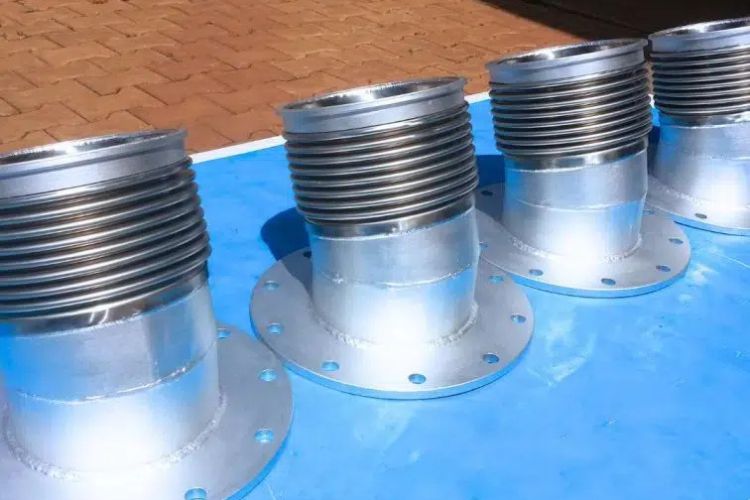
Heavy-duty diesel engines work under relentless pressure. From mining operations to marine generators, these systems endure extreme heat, vibration, and continuous mechanical movement. Yet, one overlooked component often determines whether the exhaust system survives years of punishment or fails prematurely the expansion joint. A reliable diesel exhaust expansion joints manufacturer understands that industrial environments rarely offer “perfect conditions,” which is exactly why customization matters.
In large-scale industrial setups, standard exhaust connectors frequently struggle with thermal growth, alignment shifts, and vibration stress. Custom diesel exhaust expansion joints are designed to absorb those forces before they damage surrounding equipment. Think of them as shock absorbers for an exhaust line flexible enough to move with the system, yet strong enough to withstand punishing operating conditions day after day.
Why Custom Expansion Joints Matter in Industrial Engines?
Industrial diesel engines generate enormous amounts of heat. As exhaust piping expands and contracts during operation, rigid systems can crack, loosen, or create damaging pressure points. According to data shared by the U.S. Department of Energy, thermal stress remains one of the leading contributors to mechanical fatigue in industrial piping systems.
That’s where custom-engineered exhaust bellows become invaluable. Instead of forcing the piping system to “fight” natural movement, expansion joints allow controlled flexibility. The result? Reduced downtime, fewer maintenance headaches, and longer equipment life.
Common Problems Solved by Custom Exhaust Joints
- Thermal Expansion: Exhaust temperatures can exceed several hundred degrees Celsius, causing pipes to grow and shift during operation.
- Engine Vibration: Heavy-duty engines naturally vibrate, especially under fluctuating loads or rough operating conditions.
- Misalignment Compensation: In older industrial plants, piping alignment is rarely perfect, and custom joints help absorb those inconsistencies.
- Noise Reduction: Flexible joints can reduce transmitted vibration noise across connected systems.
Interestingly, many maintenance teams discover expansion joint problems only after repeated flange leaks or pipe cracking occurs. By then, the hidden costs downtime, labor, and production delays have already piled up quietly in the background.
The Advantage of Custom Engineering
Not every industrial engine operates the same way. A marine diesel generator faces different environmental pressures than a backup power system in a manufacturing plant. That’s why custom-built exhaust solutions outperform generic replacements in demanding applications.
An experienced exhaust pipe bellows expansion joints manufacturer typically evaluates several critical variables before fabrication:
- Operating temperature range
- Pressure levels within the exhaust line
- Required movement capability
- Material compatibility with corrosive gases
- Space constraints and installation conditions
Stainless steel bellows, for example, are commonly used in high-temperature diesel exhaust systems because they offer corrosion resistance along with strong fatigue performance. In coastal or marine settings, that corrosion resistance becomes especially important due to humidity and salt exposure.
Materials Play a Bigger Role Than Many Realize
One subtle but important detail in expansion joint design is material selection. Inferior alloys may initially look identical, but under constant heat cycling, they weaken surprisingly fast. Premium-grade stainless steel and multi-ply bellows designs tend to last longer because they distribute stress more evenly across the component.
The engineering behind these systems also connects closely with broader movement-control strategies. In fact, understanding How Expansion Bellows Help with Abnormal Mechanical Moves? provides useful insight into why flexibility is essential in industrial piping systems.
Industries That Depend on Diesel Exhaust Expansion Joints
You’ll find custom exhaust bellows in more places than most people expect. They are widely used across industries where diesel-powered systems operate continuously under heavy loads.
- Power Generation Plants – Backup and continuous generators require vibration isolation.
- Marine Applications – Ship engines face constant movement and corrosive conditions.
- Mining Equipment – Harsh environments demand durable exhaust flexibility.
- Construction Machinery – Heavy-duty equipment experiences constant motion and temperature shifts.
- Manufacturing Facilities – Industrial engines often operate around the clock.
According to reports from ASME, improper thermal movement management remains a recurring issue in industrial piping failures. That statistic alone explains why customized expansion solutions are becoming less of an optional upgrade and more of a long-term operational necessity.
Choosing the Right Manufacturer
Not all manufacturers approach expansion joint design with the same level of engineering expertise. Some suppliers simply modify catalog products, while others create fully application-specific solutions backed by movement calculations, pressure analysis, and fatigue testing.
When evaluating a supplier, industrial buyers often prioritize:
- Custom fabrication capability
- Experience with diesel exhaust systems
- Material traceability and testing standards
- Pressure and movement calculation support
- Fast replacement turnaround times
In real-world industrial operations, reliability almost always outweighs initial cost savings. A poorly designed expansion joint might save money upfront, but repeated shutdowns quickly erase those savings — and then some.
Frequently Asked Questions
1. What is the primary purpose of a diesel exhaust expansion joint?
A diesel exhaust expansion joint absorbs thermal expansion, vibration, and mechanical movement within exhaust piping systems, preventing stress-related damage.
2. How long do industrial exhaust expansion joints typically last?
Service life depends on temperature, pressure, operating cycles, and material quality. High-grade custom joints can often perform reliably for several years under demanding conditions.
3. Why are stainless steel bellows commonly used?
Stainless steel offers strong resistance to heat, corrosion, and fatigue, making it ideal for high-temperature diesel exhaust applications.
4. Can custom expansion joints reduce maintenance costs?
Yes. Properly engineered expansion joints reduce pipe stress, minimize leakage risks, and help prevent costly equipment downtime and repairs.
Final Thoughts
Industrial diesel engines are built for endurance, but even the toughest systems need flexibility somewhere in the line. Custom diesel exhaust expansion joints quietly protect critical equipment from heat stress, vibration, and structural fatigue every single day. While they may not grab attention like engines or turbines do, their role in long-term system reliability is difficult to overstate.