

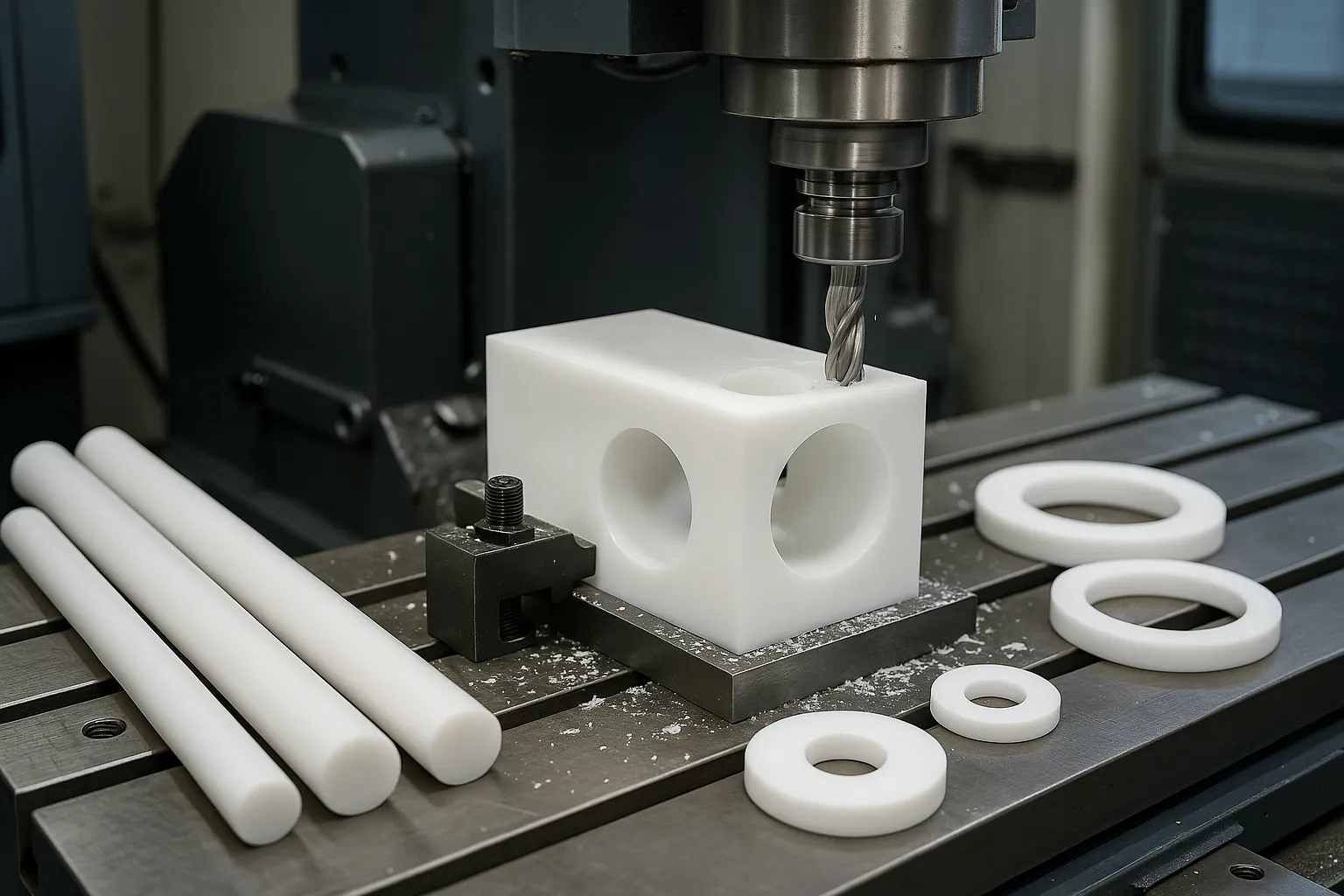
In Saudi Arabia’s fast-moving industrial landscape, heat is more than just a climate factor-it’s a daily operational challenge. From petrochemical plants to desalination facilities, equipment runs hot, fast, and nonstop. So how do you choose a gasket that won’t quietly fail under pressure? Let’s talk honestly about what really matters when selecting a PTFE gasket for high-temperature environments.
For many engineers and maintenance teams, high temperature teflon gaskets Saudi Arabia have become the go-to solution. But choosing “PTFE” isn’t enough. The real difference lies in how well you match the material to your operating conditions.
Why PTFE Dominates High-Heat Sealing Applications?
PTFE, often known as Teflon, has earned its reputation through consistency. It doesn’t melt easily, doesn’t corrode, and rarely reacts with aggressive chemicals. According to data from the National Institute of Standards and Technology (nist.gov), PTFE maintains structural stability at temperatures approaching 260°C under continuous use.
In practical terms, this means fewer shutdowns, fewer leaks, and fewer midnight emergency calls.
Key Benefits of PTFE in Harsh Environments
- Thermal endurance: Handles prolonged exposure to extreme heat.
- Chemical resistance: Stands up to acids, solvents, and fuels.
- Low friction: Reduces wear on flanges and bolts.
- Long service life: Minimizes replacement cycles.
Think of PTFE like a reliable desert vehicle—it’s built for harsh terrain and keeps moving when others stall.
Understanding Your Operating Conditions First
Before browsing catalogs or calling suppliers, pause and assess your real-world conditions. Many gasket failures happen not because the material was “bad,” but because it was poorly matched.
Ask Yourself These Critical Questions
- What is the maximum operating temperature?
- Is the pressure constant or fluctuating?
- Which chemicals or gases are present?
- How often is maintenance scheduled?
For example, refineries and pipeline systems dealing with PTFE for oil and gas Saudi Arabia must consider not just heat, but vibration, corrosion, and pressure surges.
The U.S. Department of Energy (energy.gov) reports that sealing failures contribute significantly to unplanned downtime in high-temperature systems—often due to improper material selection.
Types of PTFE Gaskets for High-Heat Use
Not all PTFE gaskets are created equal. Understanding the variations can save you both time and money.
Common PTFE Gasket Options
- Virgin PTFE: Pure, clean, and ideal for sensitive applications.
- Expanded PTFE (ePTFE): Flexible and excellent for uneven flanges.
- Filled PTFE: Reinforced with glass, carbon, or graphite for strength.
In Saudi power plants and desalination facilities, filled PTFE gaskets are often preferred due to their improved creep resistance and mechanical stability.
Performance Factors That Truly Matter
When temperatures rise, small weaknesses become major liabilities. Focus on these technical parameters before making a final decision.
What to Evaluate in High-Temperature Gaskets?
- Creep resistance: Prevents deformation over time.
- Compression recovery: Maintains sealing after pressure changes.
- Thermal cycling tolerance: Handles repeated heating and cooling.
- Dimensional stability: Keeps its shape under stress.
The Occupational Safety and Health Administration (osha.gov) emphasizes that gasket degradation is a leading contributor to industrial leaks—especially in high-temperature piping systems.
Installation and Maintenance: The Hidden Game-Changers
Even the best gasket can fail if installed poorly. Over-tightening, misalignment, or dirty flange surfaces can sabotage performance.
From experience, many Saudi maintenance teams have found success by implementing standardized torque procedures and routine thermal inspections. These small habits dramatically extend gasket lifespan.
Best Practices for Long-Term Reliability
- Clean flange faces thoroughly.
- Use calibrated torque tools.
- Follow cross-pattern tightening.
- Recheck after thermal cycling.
It’s not glamorous work—but it’s what separates reliable plants from problematic ones.
Frequently Asked Questions
1. Can PTFE gaskets handle continuous high temperatures?
Yes. Most high-quality PTFE gaskets can operate continuously up to around 260°C, depending on pressure and formulation.
2. Are filled PTFE gaskets better for industrial use?
In many cases, yes. Filled PTFE offers better strength, creep resistance, and durability under heavy loads.
3. How often should PTFE gaskets be replaced?
Replacement depends on operating conditions. In stable systems, they may last years, while high-stress environments may require annual inspections.
4. Do PTFE gaskets work in desert climates?
Yes. PTFE performs well in hot, dry climates and is widely used across Saudi Arabia’s industrial sectors.
Final Thoughts
Choosing the right PTFE gasket isn’t about picking the most expensive option—it’s about understanding your system, respecting the operating environment, and investing in long-term reliability. In Saudi Arabia’s high-heat industries, smart gasket selection quietly protects productivity, safety, and reputation.
Full Audio: Listen Here

