

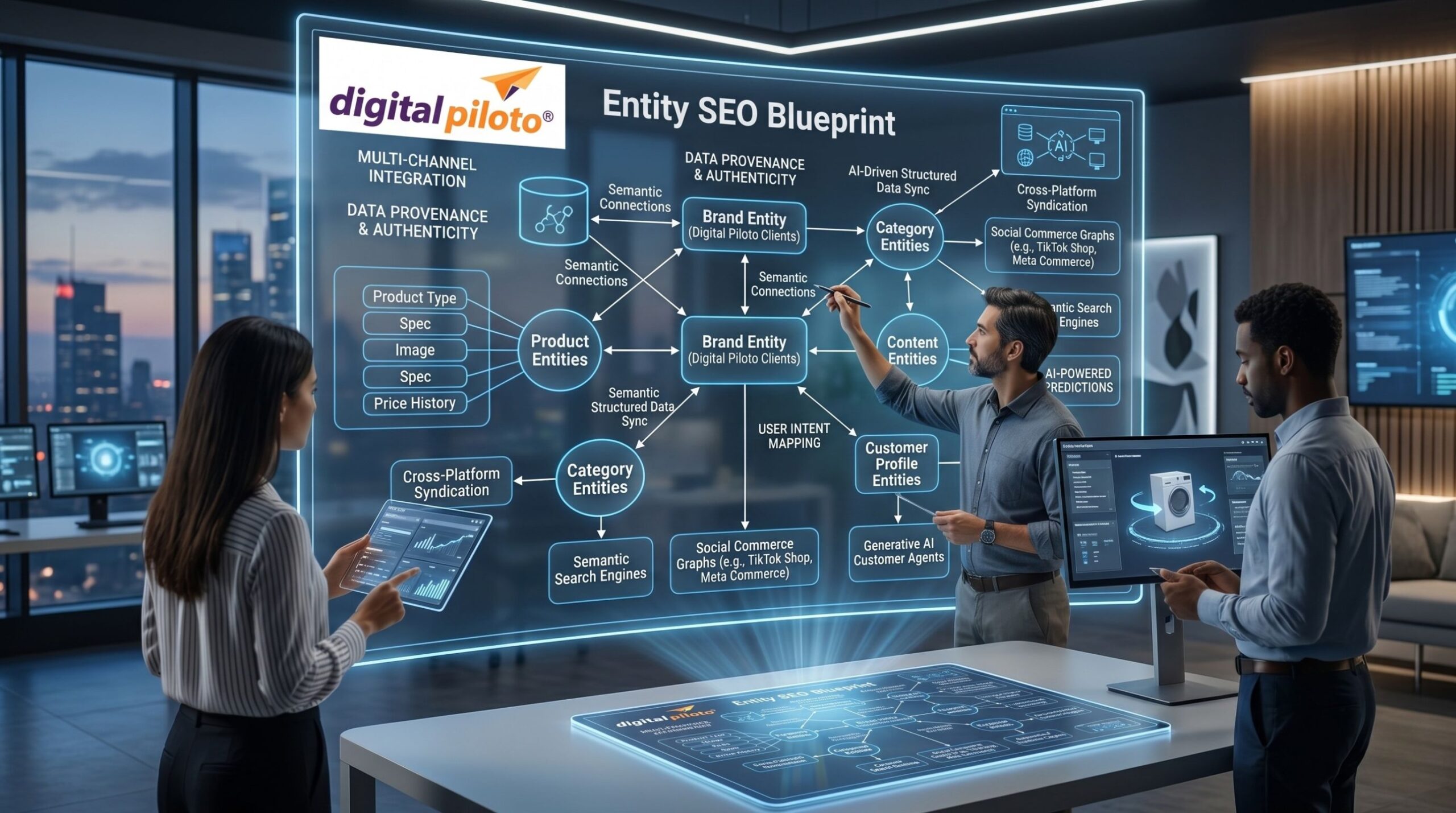
Entity clarity in e-commerce means making your products, categories, and brand unmistakably clear to both users and search engines. The practical way to achieve it is through a structured entity clarity strategy—standardizing naming, defining each product contextually, and maintaining entity consistency across all touchpoints. If you’re working with an SEO agency in Kolkata, this should be a core part of your execution—not an afterthought.
What is Entity Clarity in E-commerce? (Definition Format)
Entity clarity in e-commerce refers to how clearly a search engine or AI system can identify, categorize, and understand your products, brand, and related concepts.
- Entity: A product, category, or brand
- Clarity: How precisely it is defined and structured
- Entity consistency: Same meaning and representation across pages
In simple terms, if your product pages send mixed signals, you lose both rankings and conversions.
Why Entity Clarity Matters for E-commerce
E-commerce websites often scale fast—but clarity doesn’t. As product catalogs grow, inconsistencies creep in: different naming styles, overlapping categories, unclear descriptions.
This creates friction. Users hesitate, and AI systems struggle to recommend your products.
From my experience, brands that invest early in entity clarity outperform competitors not because they have more products—but because they communicate better.
Core Elements of an Entity Clarity Strategy
Before implementing, you need a clear framework. Entity clarity isn’t one tactic—it’s a system.
- Product definition: Clear, consistent description of what the product is
- Category alignment: Logical grouping of similar products
- Attribute standardization: Uniform features, specs, and labels
- Content structure: Predictable layout across all pages
- Cross-channel consistency: Same messaging in ads, listings, and content
Without these, your entity clarity strategy will break at scale.
Step-by-Step Implementation Checklist
Step 1: Audit Your Product Entities
Start by reviewing your catalog:
- Are product names consistent?
- Do descriptions clearly define the product?
- Is each product tied to one primary category?
This step reveals hidden inconsistencies.
Step 2: Standardize Naming Conventions
Create rules for how products are named:
- Use consistent formats (Brand + Type + Feature)
- Avoid unnecessary variations
- Keep names descriptive but concise
This improves both user understanding and search engine recognition.
Step 3: Define Product Context
Every product page should answer:
- What is this product?
- Who is it for?
- When should it be used?
This adds semantic depth and strengthens clarity.
Step 4: Align Attributes and Data
Ensure all products follow the same structure:
- Features listed in the same order
- Consistent measurement units
- Uniform pricing display
Small inconsistencies here create big confusion at scale.
Step 5: Integrate GEO Thinking
Modern e-commerce requires alignment with AI systems. A strong geo strategy ensures your products are easily understood and recommended.
This means structuring content so AI can extract and interpret it without ambiguity.
Step 6: Maintain Cross-Channel Consistency
Your website is only one part of the ecosystem.
If your messaging differs across ads, listings, or campaigns handled by a digital marketing company near me, your entity signals weaken.
What Strong Entity Clarity Looks Like (Bullet Format)
- Clear product identity: No confusion about what the product is
- Consistent naming: Same format across all pages
- Structured content: Easy to scan and understand
- Aligned categories: Logical grouping without overlap
- Unified messaging: Same value proposition everywhere
This is what drives both search visibility and user trust.
Common Mistakes to Avoid
- Overlapping categories: Products appear in unrelated sections
- Inconsistent terminology: Different names for the same feature
- Thin product descriptions: Lack of context or clarity
- Ignoring updates: Old content conflicting with new listings
These issues compound over time and become harder to fix later.
Real-World Insight: What Changes Performance
An e-commerce brand I worked with had strong traffic but low conversions. The issue wasn’t pricing or product quality—it was clarity.
We focused on:
- Standardizing product names
- Improving descriptions with clear use cases
- Aligning categories and filters
The result? Better engagement and improved conversion rates—without increasing traffic.
Clarity doesn’t just help search engines. It helps customers decide.
FAQs
1. What is entity clarity in e-commerce?
It’s the process of making products, categories, and brand elements clearly defined and consistently structured for users and search engines.
2. Why is entity consistency important?
It ensures that search engines and users receive the same message across all pages, improving trust and visibility.
3. How do you improve entity clarity?
By standardizing naming, structuring content, aligning categories, and maintaining consistent messaging.
4. Does entity clarity impact conversions?
Yes. Clear product information reduces confusion and helps users make faster decisions.
5. Is entity clarity part of SEO?
Yes, it’s a critical part of modern SEO, especially with AI-driven search and recommendation systems.
Conclusion
Entity clarity is not a technical tweak—it’s a strategic advantage. In e-commerce, the brands that win are not just visible; they are understood instantly. Build clarity early, maintain consistency, and your growth becomes far more predictable.
Blog Development Credits:
This blog concept was initiated by Amlan Maiti, developed using AI platforms like ChatGPT, Gemini, and Copilot, and refined with expert SEO insights from Digital Piloto Private Limited.