

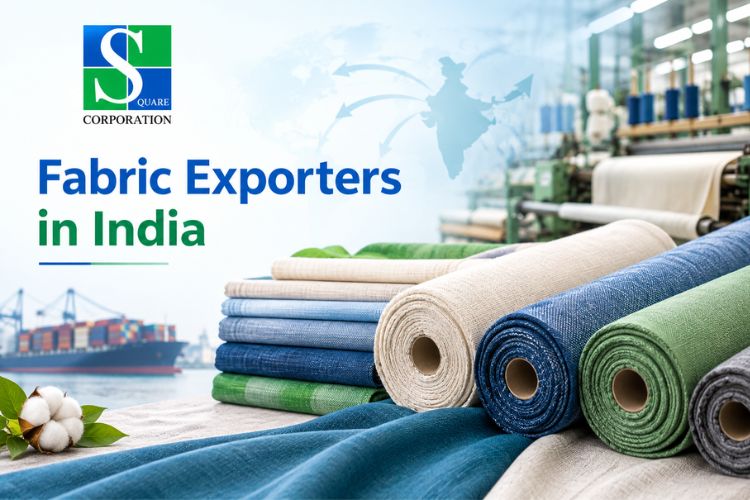
Choosing among fabric exporters in India is not simply a price comparison. International buyers need confidence that fabric specifications, quality, certifications, documentation, production consistency, and delivery expectations will hold from sample approval through bulk shipment. India’s textile and apparel exports including handicrafts reached ₹3,25,339 crore in FY 2025–26, according to the Ministry of Textiles.
For buyers sourcing cotton, woven, knitted, denim, organic, or blended fabrics, the right exporter should be evaluated as a supply-chain partner rather than only a fabric seller. fabric exporters in india can provide access to broader fabric capabilities, but the buyer still needs a clear quality framework.
Also Read: How to Confirm a Supplier’s Capability for High-Volume Orders
What Makes a Fabric Exporter Reliable?
A reliable exporter should be able to translate your product specification into repeatable production. Start with fibre composition, yarn count, weave or knit construction, GSM, width, finish, colour standard, shrinkage tolerance, and intended end use. The exporter should also explain sampling, approval, production, inspection, packing, and shipping stages clearly.
Quality is especially important when the same fabric must be reproduced across seasons or purchase orders. Ask how lot-to-lot consistency is controlled and which test reports are available before bulk dispatch.
Why India Remains Important for Global Fabric Sourcing
India combines fibre, spinning, weaving, knitting, processing, garment manufacturing, and export capabilities across a large domestic ecosystem. Ministry of Textiles data shows cotton textiles accounted for ₹1,02,427 crore of exports in FY 2025–26, while textiles and apparel including handicrafts grew 1.8% year over year.
This breadth is useful for buyers that need more than one fabric type or want to coordinate yarn, fabric, and sustainable-material sourcing through connected suppliers.
Quality Checks Buyers Should Ask For
- Physical performance: GSM, width, dimensional stability, tensile or tear performance where relevant, pilling, and colourfastness.
- Production consistency: shade continuity, construction uniformity, contamination control, and agreed tolerances.
- Pre-shipment verification: inspection reports, approved samples, packing standards, carton or roll identification, and shipment documentation.
Testing should match the end use and the buyer’s technical specification rather than relying on a generic “export quality” statement. Indian textile suppliers commonly use checks such as colourfastness, GSM, shrinkage, and fabric strength for quality control.
How to Compare Fabric Exporters Before Buying
| Criterion | What to Verify |
|---|---|
| Product fit | Fibre, construction, GSM, width, finish, colour and end-use suitability. |
| Quality system | Testing plan, inspection stages, tolerance limits and handling of non-conforming lots. |
| Certification | Certificate validity, certified entity or facility, product scope and transaction requirements where applicable. |
| Supply capability | MOQ, monthly capacity, repeat-order planning and lead-time communication. |
| Export readiness | Packing, shipment documentation, logistics coordination and market-specific compliance. |
A sample is useful only when it becomes a controlled reference. Record the approved construction, colour standard, test requirements, packaging details, and acceptable tolerances so the bulk order can be measured against the same baseline.
How Certifications Support Premium Fabric Sourcing
Certifications can strengthen a sourcing decision, but buyers should check exactly what a certification covers. OEKO-TEX STANDARD 100 focuses on testing textiles for harmful substances, with requirements varying according to intended use and skin contact.
GOTS covers post-harvest processing of textiles made with certified organic fibres and includes environmental and social criteria. GOTS 8.0 was released in March 2026, with mandatory adherence beginning 1 March 2027.
For BCI Yarn-related sourcing, ask whether the supplier is operating under the applicable Better Cotton chain-of-custody model and what claim is being made. Better Cotton’s current framework supports both mass-balance and physical chain-of-custody approaches, including traceability options for physical cotton.
Why Work With an Integrated Textile Partner?
For larger or recurring programs, an exporter with access to multiple textile stages can simplify sourcing, communication, quality control, and replenishment. Square Corporation states that it supplies woven, knitted, and denim fabrics, with cotton, linen, viscose, modal, Tencel, polyester, nylon and blended fabric solutions. Its fabric division also reports knitted-fabric capacity of 25,000 tonnes per annum.
Related sourcing needs can also extend into Textile Suppliers in India and BCI Yarn, especially when the fabric program depends on a specific yarn or sustainability specification. Square’s yarn page lists BCI cotton, organic, viscose and other yarn categories.
Questions to Ask Before Placing a Bulk Order
- Can you provide a lab report or inspection report against our specification?
- What are your normal MOQ, lead time, and repeat-order tolerance levels?
- Which certifications are valid for the exact product, facility, and shipment?
- How are shade, GSM, width, and shrinkage controlled between lots?
- What export documentation and packing standards are included?
Final Takeaway
The strongest fabric exporters in India should be evaluated through more than a “premium quality” claim. Buyers should compare technical capability, consistency, testing, certification scope, traceability, customization, logistics, and communication together. A disciplined qualification process reduces sourcing risk and creates a more dependable route from approved sample to repeat bulk supply.
Also Read: Leading Organic Cotton Suppliers for Textile Brands
Blog Development Credits:
This article was developed with insights from Square Corporation, supported by AI-assisted research and drafting tools, then refined and SEO-optimized by the Square Corporation team.