

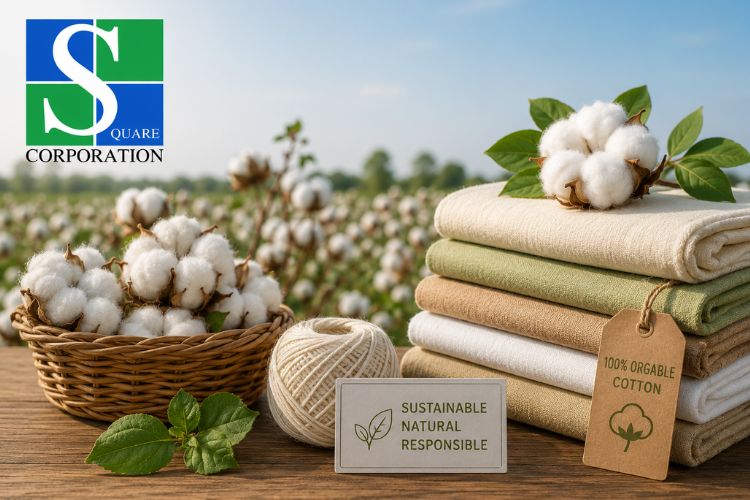
For textile brands, cotton is more than a raw material—it shapes quality, comfort, sourcing stories, and customer trust. But how do you find a supplier that can deliver dependable organic cotton without compromising consistency? Choosing experienced organic cotton suppliers in india can make that decision much easier.
Also Read: Moisture-Wicking Fabrics: A Must-Have for Modern Sportswear
Why Brands Are Choosing Organic Cotton
Organic cotton has moved well beyond being a niche fabric choice. Today, fashion labels, home-textile companies, and private brands are paying closer attention to how cotton is grown, processed, and sourced. The reason is fairly simple: customers increasingly want products that feel good while also having a more responsible supply story.
Organic production also comes with defined certification requirements. For example, the USDA explains that certified organic crop land must generally remain free from prohibited substances for at least three years before harvest, while genetic engineering and several prohibited inputs are not permitted. USDA organic standards provide further details.
For a textile brand, this means sourcing is not simply about finding a lower price per kilogram. It is about finding a partner who understands certification, fibre quality, documentation, and delivery expectations.
What Makes a Leading Supplier Different?
A reliable organic cotton supplier should feel less like a one-time vendor and more like an extension of your sourcing team. The strongest suppliers understand that a fabric collection can be ruined by small inconsistencies in fibre quality, moisture, colour, or yarn performance.
1. Verified Organic Sourcing
Certification and traceability deserve close attention. A supplier should be able to explain where the cotton originates, which certification applies, and how the material moves through the supply chain. Textile Exchange’s Organic Cotton Market Report is specifically designed to track production data and sourcing developments across producing countries.
- Check certification: Ask for current certificates rather than relying on a verbal claim.
- Review traceability: Understand how cotton moves from farm to ginning, spinning, and manufacturing.
- Confirm documentation: Make sure the paperwork supports the organic claims used for your products.
2. Consistent Fibre Quality
Organic does not automatically mean every batch will perform identically. Textile brands should discuss fibre length, strength, cleanliness, moisture, and intended application before placing large orders.
A good supplier will also ask questions. Are you producing premium apparel? Knitted basics? Bedding? Lightweight summer fabrics? Those details affect the most suitable cotton specification. In practice, that conversation can save a brand from an expensive sampling mistake.
India’s Role in Organic Cotton Supply
India remains an important sourcing destination for cotton and textile products, supported by a broad agricultural and manufacturing ecosystem. For overseas buyers and domestic brands alike, working with established suppliers can simplify communication between raw material sourcing and finished textile production.
This is particularly useful when brands need more than raw cotton. A sourcing partner with textile-sector experience may also help buyers move toward yarn and finished fabrics. For brands looking at broader textile procurement, Cotton Fabric Exporters in India can offer another route for building a connected supply chain.
Textile Exchange reported that total global cotton production declined slightly from 25.1 million tonnes in 2022 to 24.4 million tonnes in 2023, while cotton produced under sustainability programmes represented 28% of global cotton production. This broader movement makes responsible sourcing increasingly relevant for brands planning long-term collections.
3. Supply Reliability Matters
Imagine launching a new clothing line and discovering that your next cotton shipment will arrive weeks late. The fabric mill waits, production waits, and suddenly the marketing calendar is in trouble. This is why experienced organic cotton fabric suppliers should be evaluated on operational reliability as much as product quality.
- Discuss minimum order quantities before sampling.
- Confirm production and dispatch timelines in writing.
- Ask how the supplier handles repeat orders and seasonal demand.
- Clarify packaging, shipping, inspection, and documentation procedures.
How Textile Brands Can Choose the Right Partner
Price naturally matters, but it should not become the only filter. A supplier offering the cheapest quotation may create higher costs later through inconsistent quality, delayed deliveries, or incomplete documentation.
- Start with samples: Test the material in your actual production process.
- Compare specifications: Look beyond price and evaluate fibre, construction, finish, and consistency.
- Assess communication: Fast, clear responses are valuable when orders become complicated.
- Think long term: A dependable supplier can become a strategic sourcing advantage as your brand grows.
It is also worth remembering that organic certification is a controlled process rather than simply a marketing phrase. USDA guidance notes that organic certification involves approved standards and oversight by authorized certifying agents. Brands should therefore verify the claims associated with the specific material they purchase.
Frequently Asked Questions
What should I check before choosing an organic cotton supplier?
Check certification, fibre quality, traceability, minimum order quantities, production capacity, lead times, documentation, and the supplier’s ability to maintain consistent quality across repeat orders.
Is organic cotton suitable for premium textile brands?
Yes. Organic cotton can be used across apparel, home textiles, yarns, and other applications. The final suitability depends on the fibre specification, spinning or weaving process, and quality requirements of the finished product.
Why is certification important when buying organic cotton?
Certification provides a framework for verifying that production follows defined organic standards. Brands should request relevant documentation and confirm that the certification applies to the material and supply chain they are purchasing.
Can Indian suppliers provide organic cotton for international brands?
Yes. India has a large cotton and textile ecosystem, and established suppliers can support domestic as well as international sourcing requirements. Buyers should evaluate each supplier individually for certification, capacity, quality, and export documentation.
Also Read: Trusted Textile Suppliers Across India 2026
Final Thoughts
Finding the right organic cotton supplier is ultimately about building confidence into your textile supply chain. Look beyond the label and examine certification, consistency, traceability, communication, and delivery performance. With the right sourcing partner, organic cotton can become more than a material choice—it can become a dependable part of your brand’s long-term product strategy.
Blog Development Credits:
This article was developed with insights from Square Corporation, supported by AI-assisted research and drafting tools, then refined and SEO-optimized by the Square Corporation team.