

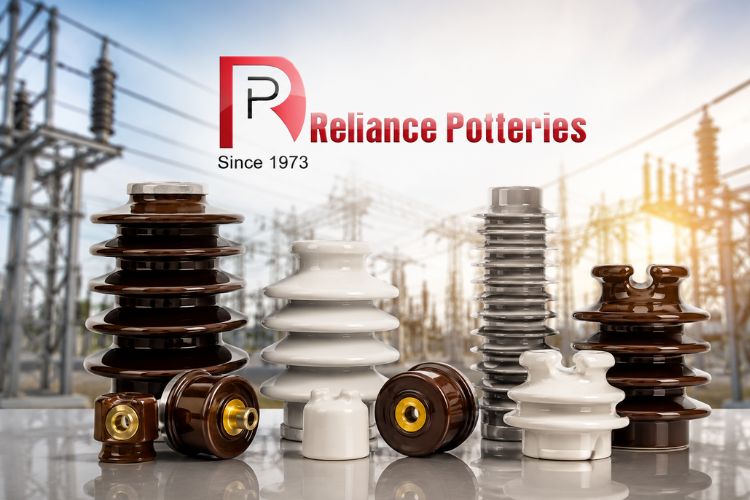
When you see a power transmission network stretching across cities and rural landscapes, it’s easy to overlook one of its most critical components—the insulator. Yet every dependable electrical system relies on products manufactured with remarkable precision. The journey from raw materials to a finished insulator is far more fascinating than many people imagine.
Leading Insulators Manufacturers understand that exceptional performance starts long before an insulator reaches a transmission line or substation. Every production stage, from material selection to final testing, contributes to long-term electrical safety, mechanical strength, and environmental durability. Whether manufacturing porcelain insulators, electrical insulation products, or high-voltage components, consistency is the true measure of quality.
Also Read: Choosing the Right Industrial Insulator for Better Plant Performance
Why Manufacturing Quality Makes All the Difference
An insulator does much more than separate electrical conductors. It must withstand mechanical loads, sudden temperature changes, moisture, pollution, and years of continuous outdoor exposure. A small flaw during production can eventually become a major operational risk.
According to the International Energy Agency (IEA), global electricity demand continues to grow steadily, increasing the importance of reliable grid infrastructure. That growing demand places greater responsibility on manufacturers to maintain exceptionally high production standards.
The Step-by-Step Quality Insulators Manufacturing Process
1. Careful Selection of Raw Materials
Everything begins with carefully chosen raw materials. Premium porcelain insulators typically combine high-grade clay, feldspar, and quartz in precise proportions. Even slight variations in composition may influence electrical resistance and mechanical performance.
Experienced manufacturers continuously inspect incoming materials before production begins, ensuring uniformity from batch to batch.
2. Accurate Mixing and Material Preparation
Raw ingredients are blended into a homogeneous mixture under carefully controlled conditions. Moisture content, particle size, and mixing duration all influence the final product.
Think of it like preparing high-quality concrete—even premium ingredients cannot compensate for inconsistent mixing.
3. Precision Forming Techniques
Once prepared, the material is shaped using specialized forming methods designed for the intended application.
- Isostatic pressing for excellent density.
- Extrusion for uniform cylindrical products.
- Slip casting for intricate shapes.
Each technique aims to minimize internal stress while maintaining dimensional accuracy.
4. Controlled Drying Process
Freshly formed insulators still contain moisture that must be removed gradually. Drying too quickly may create hidden cracks, while drying too slowly affects production efficiency.
Modern factories monitor humidity and temperature carefully throughout this stage.
5. High-Temperature Firing
The drying stage is followed by kiln firing at extremely high temperatures. During firing, the ceramic body transforms into a dense, vitrified structure with excellent dielectric properties.
This stage largely determines:
- Mechanical strength
- Electrical insulation capability
- Water absorption resistance
- Long-term weather durability
Quality Control Never Stops
Manufacturing doesn’t end after firing. Reliable producers conduct extensive inspections throughout production rather than relying only on final checks.
As a trusted HV Bushing Manufacturer in India, quality-focused companies perform multiple validation procedures before products leave the factory.
Typical Testing Procedures Include
- Visual inspection for surface imperfections.
- Dimensional accuracy verification.
- Mechanical load testing.
- Electrical withstand testing.
- Glaze quality examination.
- Thermal shock resistance testing.
Organizations such as the International Electrotechnical Commission (IEC) establish internationally recognized testing standards that many manufacturers follow for high-voltage equipment.
Modern Manufacturing Relies on Continuous Improvement
Today’s leading facilities increasingly integrate automation with skilled craftsmanship. Digital monitoring systems help detect process variations long before they become production defects, while experienced engineers continue making critical decisions that machines alone cannot.
Some manufacturers also adopt statistical quality control, predictive maintenance, and continuous process optimization to improve production efficiency without sacrificing product reliability.
This balanced approach delivers consistent porcelain insulators, power transmission insulators, and electrical insulation products that perform reliably under demanding operating conditions.
What Buyers Should Look For
If you’re sourcing industrial insulators, manufacturing quality deserves more attention than price alone.
- Documented quality testing procedures.
- Compliance with international standards.
- Modern production infrastructure.
- Experienced engineering support.
- Consistent manufacturing history.
Choosing a supplier with robust manufacturing controls often reduces long-term maintenance costs and improves operational reliability.
Frequently Asked Questions
What materials are commonly used for porcelain insulators?
High-quality porcelain insulators are generally manufactured using refined clay, feldspar, and quartz to achieve excellent electrical insulation and mechanical strength.
Why is kiln firing so important?
High-temperature firing vitrifies the ceramic body, improving strength, durability, moisture resistance, and electrical performance.
How are insulators tested before delivery?
Manufacturers perform visual inspections, dimensional verification, mechanical load testing, electrical testing, and thermal shock evaluations before shipment.
What makes a quality insulator manufacturer reliable?
Reliable manufacturers maintain strict raw material control, advanced production processes, internationally recognized testing standards, and consistent quality assurance throughout manufacturing.
Also Read: High-Quality Electrical Insulators Explained
Final Thoughts
Outstanding insulators are never the result of chance. They are created through disciplined manufacturing, careful testing, and continuous improvement at every production stage. Investing in quality manufacturing ultimately supports safer electrical infrastructure, longer service life, and dependable performance across power transmission networks.
Blog Development Credits:
This article was developed through detailed industry research and refined with advanced AI technologies, including ChatGPT, Google Gemini, and Microsoft Copilot. Final editorial review, technical validation, and SEO enhancement were completed by Reliance Potteries.