

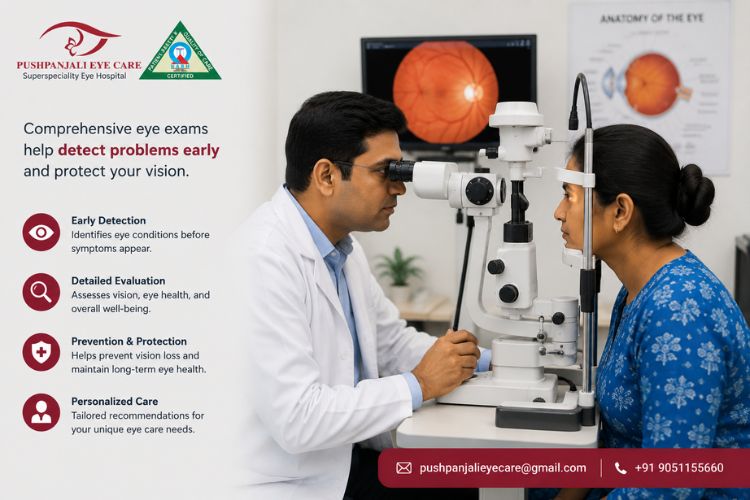
Pushpanjali Eye Care believes that good vision is about much more than seeing clearly—it is about protecting your long-term eye health. Many people only visit an eye doctor when they notice blurry vision or discomfort. However, comprehensive eye exams can reveal hidden problems long before symptoms appear, helping preserve sight and overall well-being.
Have you ever wondered whether your eyes are as healthy as they seem? A comprehensive eye examination does much more than update your prescription. It evaluates the overall health of your eyes and can even uncover signs of broader health conditions. Consulting the Best Ophthalmologist in Kolkata regularly can make a significant difference in detecting issues early and maintaining healthy vision throughout life.
What Is a Comprehensive Eye Exam?
A comprehensive eye exam is a detailed assessment of your vision and eye health. Unlike a simple vision screening, it examines multiple aspects of eye function and structure to identify potential concerns before they become serious.
These examinations typically include vision testing, eye pressure measurement, retinal evaluation, and assessments for conditions such as cataracts, glaucoma, and macular degeneration.
Key Components of a Comprehensive Eye Exam
- Visual Acuity Testing: Measures how clearly you can see at various distances.
- Refraction Assessment: Determines whether corrective lenses are needed.
- Eye Pressure Check: Screens for glaucoma risk.
- Retinal Examination: Evaluates the health of the retina and optic nerve.
- Eye Movement Testing: Assesses coordination and muscle function.
Why Regular Eye Exams Are So Important
Many eye diseases develop gradually and silently. By the time symptoms become noticeable, irreversible damage may already have occurred. This is especially true for glaucoma, often referred to as the “silent thief of sight.”
According to the World Health Organization (WHO), millions of people worldwide experience preventable vision impairment because conditions are diagnosed too late. Regular eye examinations help identify issues when treatment is most effective.
Benefits Beyond Better Vision
Eye exams can provide valuable clues about your overall health. In some cases, eye specialists may detect signs of:
- Diabetes
- High blood pressure
- High cholesterol
- Autoimmune disorders
- Neurological conditions
The eyes often reveal health changes before other symptoms emerge, making routine eye care an important part of preventive healthcare.
Who Should Schedule Comprehensive Eye Exams?
Although everyone benefits from routine eye care, some individuals should be particularly proactive.
- Adults over the age of 40
- People with diabetes or hypertension
- Individuals with a family history of eye disease
- Children experiencing learning or vision difficulties
- People who spend long hours using digital screens
With increasing screen exposure, digital eye strain has become a growing concern. Symptoms such as headaches, dry eyes, and blurred vision can often be addressed through proper diagnosis and personalized recommendations.
Detecting Glaucoma Before It Causes Damage
One of the most important reasons to undergo regular eye examinations is early glaucoma detection. Because glaucoma often progresses without noticeable symptoms, many patients remain unaware until vision loss occurs.
A consultation with a qualified Glaucoma Specialist in Kolkata can help identify risk factors early and establish a monitoring plan that protects long-term vision.
Modern diagnostic tools allow specialists to detect subtle changes in the optic nerve long before significant vision impairment develops.
Choosing the Right Eye Care Provider
Not all eye examinations are the same. The quality of equipment, expertise of specialists, and thoroughness of evaluations play a major role in ensuring accurate diagnosis.
Choosing the Best Eye Hospital in Kolkata provides access to advanced diagnostic technologies, experienced specialists, and personalized treatment plans tailored to individual needs.
When evaluating an eye care center, consider factors such as:
- Experience of ophthalmologists
- Availability of advanced imaging technologies
- Comprehensive diagnostic services
- Patient reviews and reputation
- Continuity of care and follow-up support
Keywords such as eye health checkup, vision screening, and preventive eye care are becoming increasingly relevant because more people now understand the value of proactive eye health management.
Also Read: Why Early Detection Is Important for Long-Term Eye Health
Frequently Asked Questions
Q. How often should I get a comprehensive eye exam?
A. Most adults should have an eye examination every one to two years. Individuals with existing eye conditions or risk factors may require more frequent visits.
Q. Do I need an eye exam if I have perfect vision?
A. Yes. Many eye diseases develop without affecting vision initially. Regular examinations help detect these conditions early.
Q. Can eye exams detect health problems outside the eyes?
A. Yes. Eye specialists can often identify signs of diabetes, hypertension, and other systemic health conditions during routine examinations.
Q. Are comprehensive eye exams painful?
A. No. Most tests are simple, non-invasive, and comfortable for patients of all ages.
Final Thoughts
Comprehensive eye exams are one of the simplest yet most effective ways to protect your vision and overall health. Early detection, preventive care, and regular monitoring can help avoid serious complications in the future. Rather than waiting for symptoms to appear, making eye examinations a routine part of your healthcare journey is a smart investment in lifelong visual wellness.
Blog Development Credit
This blog was developed with the support of advanced AI research tools, including ChatGPT and Google Gemini, to gather relevant insights and current industry information. The content was carefully reviewed, refined, optimized, and published by Pushpanjali Eye Care to ensure accuracy, readability, and value for readers.