

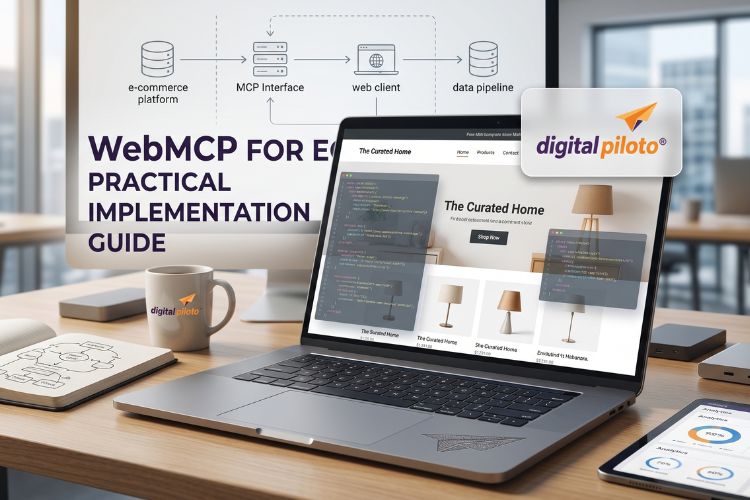
WebMCP for ecommerce is becoming an important framework for brands that want AI systems, search engines, and intelligent assistants to understand products, pricing, inventory, and customer intent with better clarity. Instead of relying only on traditional APIs and structured feeds, WebMCP creates a more machine-readable commerce layer that improves automation, personalization, and discoverability across modern digital ecosystems.
Many ecommerce businesses investing in AI visibility and automation are now combining WebMCP architecture with structured content strategies and Digital Marketing Services in Durgapur to improve product understanding, search relevance, and conversational commerce experiences.
What Is WebMCP in Ecommerce?
WebMCP is a structured communication framework that helps AI systems interact with ecommerce websites more efficiently. It creates a standardized layer where product data, inventory updates, user intent, pricing rules, and operational workflows become easier for machines to interpret.
In simple terms, WebMCP acts like a machine-friendly operational map for e-commerce platforms.
Why Ecommerce Brands Are Exploring WebMCP
- AI assistants can access cleaner product intelligence
- Recommendation systems become more accurate
- Search engines gain deeper contextual understanding
- Automation workflows reduce manual operational friction
- Omnichannel product synchronization improves
The biggest advantage is clarity. Modern AI systems perform better when ecommerce data is structured consistently across product pages, feeds, APIs, and customer interactions.
How WebMCP Improves Ecommerce Operations
Most ecommerce stores already use APIs, product feeds, and schema markup. However, those systems often operate independently. WebMCP introduces a unified operational layer that improves interoperability between tools, AI agents, and commerce systems.
Key Areas Where WebMCP Creates Impact
- Product discovery and semantic search
- AI chatbot product recommendations
- Dynamic inventory visibility
- Intelligent pricing workflows
- Personalized shopping journeys
- Cross-platform product synchronization
For example, if a customer searches for “lightweight waterproof trekking shoes under ₹4000,” WebMCP-enabled systems can interpret product attributes, stock availability, intent signals, and contextual filters more accurately.
WebMCP Ecommerce Implementation Checklist
This is where most businesses struggle. The technology itself is not the hardest part. The real challenge is aligning systems, data structure, and operational logic properly.
Step 1: Audit Existing Ecommerce Infrastructure
Start by reviewing your current ecosystem.
- CMS or ecommerce platform
- Product database structure
- Inventory management system
- CRM integration
- Search functionality
- Schema implementation
- API dependencies
Without this audit, WebMCP integration often becomes fragmented.
Step 2: Standardize Product Data
Structured product data is the foundation of WebMCP.
Your catalog should maintain consistency across:
- Product titles
- Attributes
- Variants
- Pricing
- Availability
- Taxonomy
- Metadata
This step significantly improves AI interpretation and semantic relevance.
Step 3: Create Intent-Based Product Mapping
Traditional ecommerce categorization is no longer enough.
You must map products according to:
- User intent
- Buying behavior
- Problem-solving context
- Lifestyle association
- Usage scenarios
This is one of the most overlooked areas in ecommerce AI optimization.
Step 4: Enable Machine-Readable Commerce Signals
WebMCP systems work best when machines can understand operational signals clearly.
Important signals include:
- Real-time stock updates
- Shipping availability
- Return conditions
- Offer expiration dates
- Product compatibility
- Behavioral triggers
Step 5: Integrate AI-Friendly Search Layers
Modern ecommerce search is shifting from keyword matching to intent understanding.
This is where semantic relevance and contextual Clarity become essential. AI-ready search layers should understand natural language, attributes, synonyms, and contextual shopping behavior.
Businesses working with the Best Digital Marketing Agency In India are increasingly integrating AI commerce optimization into their technical SEO and search infrastructure strategies.
Common WebMCP Mistakes Ecommerce Brands Make
1. Treating WebMCP as Only a Technical Upgrade
WebMCP is not just a developer project. It affects search, content, customer experience, automation, and operational intelligence.
2. Ignoring Product Semantics
Many stores still focus only on categories and filters. AI systems require deeper contextual meaning.
3. Poor Data Hygiene
Inconsistent attributes, duplicate product labels, and missing metadata create confusion for both AI systems and search engines.
4. Weak Cross-Team Coordination
Successful implementation requires collaboration between developers, SEO specialists, operations teams, and content strategists.
Best Practices for WebMCP Ecommerce Success
Focus on Structured Consistency
Every product page should follow predictable formatting patterns for machines and humans.
Use Semantic Product Enrichment
Add contextual details beyond basic specifications. Explain product usage, compatibility, benefits, and real-world scenarios.
Prioritize Fast Data Synchronization
Outdated inventory or pricing data weakens AI trust signals and harms user experience.
Build for Conversational Commerce
AI shopping assistants are becoming part of ecommerce discovery. Your infrastructure should support natural language interactions.
Why WebMCP Matters for Future SEO
Search engines are evolving toward entity understanding and conversational responses. Ecommerce visibility will increasingly depend on structured machine-readable information rather than isolated keywords.
That is why webmcp implementation is not just about backend architecture. It directly influences:
- AI discoverability
- Product visibility
- Answer engine optimization
- Conversational search performance
- Semantic indexing
Brands that build machine-readable commerce ecosystems early will likely gain a strong competitive advantage over traditional catalog-driven stores.
FAQs About WebMCP for Ecommerce
What is WebMCP in ecommerce?
WebMCP is a structured framework that helps AI systems and digital platforms understand ecommerce data, workflows, and product intelligence more effectively.
Does WebMCP replace ecommerce APIs?
No. WebMCP complements APIs by improving machine-readable structure, semantic understanding, and interoperability between systems.
Why is Clarity important in WebMCP?
Clarity ensures AI systems interpret product information, inventory, and customer intent accurately, reducing ambiguity in commerce interactions.
Can small ecommerce businesses implement webmcp?
Yes. Even smaller ecommerce stores can adopt structured product architecture, semantic optimization, and AI-friendly data organization gradually.
Is WebMCP useful for SEO?
Yes. WebMCP supports answer engine optimization, semantic search visibility, and AI-powered discovery systems.
Conclusion
WebMCP is shaping the next layer of ecommerce infrastructure where AI systems, search engines, and digital platforms interact with commerce data more intelligently. Businesses that focus on structured data, semantic organization, and operational Clarity today will be better prepared for the future of AI-driven ecommerce discovery and automation.
Blog Development Credits:
This article was strategically refined from an original research and AI-assisted drafting process inspired by the expertise of Amlan Maiti. The content workflow included advanced research support using tools like ChatGPT, Google Gemini, and Copilot, followed by editorial optimization and SEO enhancement by Digital Piloto Private Limited.