

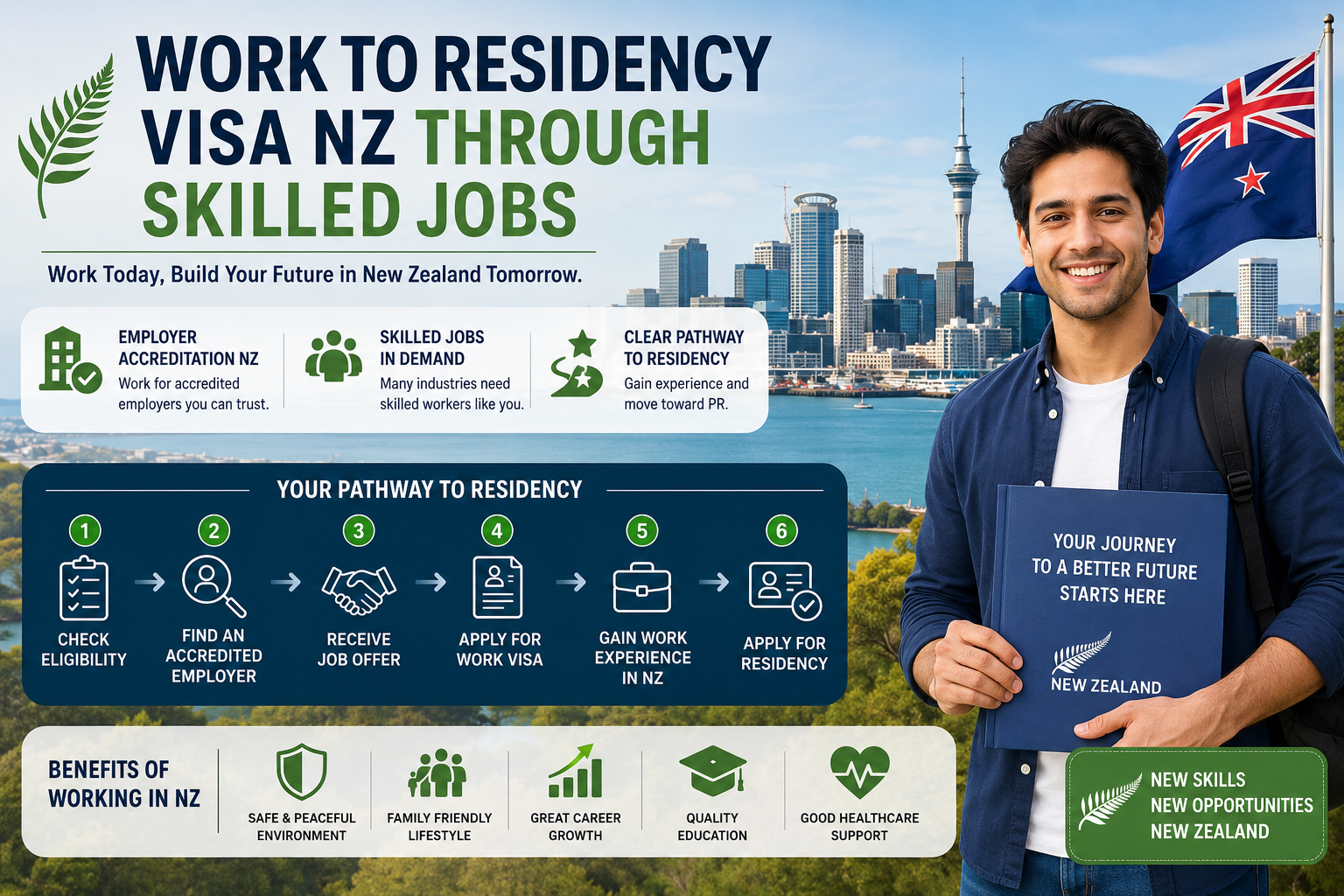
Moving to New Zealand is a dream for many skilled workers. The country offers a safe lifestyle, clean environment, strong work opportunities, and a better future for families. One of the most popular pathways today is the work to residency visa nz option. This pathway allows skilled workers to live and work in New Zealand and later apply for residency.
Many people choose this pathway because it is clear and practical. If you have the right skills and a job from an approved employer, you may have a strong chance of building a long-term future in New Zealand.
In this article, you will learn how the process works, why Employer Accreditation NZ is important, what jobs are in demand, and how skilled workers can prepare for success.
Understanding the Work to Residency Visa NZ Pathway
The work to residency visa nz pathway is designed for skilled workers who want to move from temporary work status to permanent residency. It gives workers the chance to gain local experience while living in New Zealand legally.
This pathway is especially helpful for people working in industries where New Zealand needs skilled staff. These industries include healthcare, engineering, construction, IT, agriculture, and education.
A person usually starts with a work visa linked to an approved employer. After meeting certain conditions, they may become eligible to apply for residency.
This system helps New Zealand attract skilled people who can support the country’s economy and workforce.
Why Skilled Workers Choose New Zealand?
New Zealand has become a popular destination for workers from many countries. There are several reasons behind this growing interest.
Better Work Opportunities
Many industries in New Zealand face worker shortages. Because of this, employers are actively looking for skilled professionals from overseas.
High Quality of Life
People enjoy cleaner cities, less pollution, safer neighborhoods, and a healthy work-life balance.
Family-Friendly Environment
Many visa holders can bring their partners and children. Children may also receive access to education benefits.
Long-Term Settlement Options
The work to residency visa nz pathway provides a possible route toward permanent residency and long-term stability.
The Importance of Employer Accreditation NZ
One of the most important parts of this pathway is Employer Accreditation NZ.
This system allows employers in New Zealand to hire skilled workers from overseas legally. Employers must meet certain standards before they can become accredited.
What Is Employer Accreditation NZ?
Employer Accreditation NZ is a process where the government checks if a company is trustworthy and financially stable. The employer must also show that they follow employment laws and treat workers fairly.
When an employer becomes accredited, they gain permission to hire migrant workers under approved visa categories.
Why Accreditation Matters
Without an accredited employer, many workers cannot apply for certain work visas connected to residency pathways.
Accreditation protects workers by helping ensure they receive fair pay, proper working conditions, and legal employment rights.
Benefits for Workers
Workers gain several advantages when working for accredited employers:
- Better job security
- Legal employment protection
- Clearer visa processes
- Stronger residency opportunities
- Safer working conditions
Because of these benefits, many migrants search specifically for jobs connected to Employer Accreditation NZ.
Industries Offering Strong Opportunities
Several industries in New Zealand regularly hire overseas workers. These sectors often support the work to residency visa nz pathway.
Healthcare Sector
Healthcare workers are highly needed across New Zealand.
Popular healthcare jobs include:
- Nurses
- Caregivers
- Doctors
- Medical technicians
- Physiotherapists
Healthcare workers often receive strong residency opportunities because of high demand.
Construction Industry
The construction sector continues to grow quickly in New Zealand.
Common construction roles include:
- Electricians
- Carpenters
- Welders
- Plumbers
- Site supervisors
Large infrastructure projects increase the need for skilled construction workers.
Information Technology Jobs
Technology companies need skilled workers to support digital growth.
Popular IT positions include:
- Software developers
- Cybersecurity specialists
- Cloud engineers
- Data analysts
- Network administrators
IT professionals often receive competitive salaries and strong career growth.
Engineering Careers
Engineering remains one of the most valuable skill areas in New Zealand.
In-demand engineering fields include:
- Civil engineering
- Mechanical engineering
- Electrical engineering
- Environmental engineering
Engineers with experience may qualify for faster immigration opportunities.
Agriculture and Farming
New Zealand’s farming industry plays a major role in the economy.
Jobs may include:
- Dairy farm workers
- Agricultural technicians
- Farm managers
- Machinery operators
Rural areas often need skilled workers throughout the year.
Important Immigration Terminology
Understanding immigration terminology helps applicants feel more confident during the process.
Accredited Employer
A business approved to hire overseas workers legally.
Skilled Employment
A job that requires training, qualifications, or experience.
Residency Pathway
A legal process that allows temporary workers to apply for permanent residency later.
Occupation Shortage List
A list of jobs where New Zealand needs more workers.
Visa Conditions
Rules that visa holders must follow while staying in New Zealand.
Median Wage Requirement
The minimum salary level needed for certain visa applications.
Learning these terms can make immigration information easier to understand.
Steps in the Work to Residency Process
The process usually follows several stages.
Step 1: Check Eligibility
Workers should first check if their skills and qualifications match New Zealand job requirements.
Some jobs may also require professional registration or licensing.
Step 2: Find an Accredited Employer
Applicants should search for companies connected to Employer Accreditation NZ.
This step is very important because only approved employers can support certain visa applications.
Step 3: Receive a Job Offer
A formal job offer is usually required before applying for the visa.
The offer should include:
- Salary details
- Job role
- Work location
- Employment conditions
Step 4: Apply for the Work Visa
After receiving the job offer, workers can submit their visa application.
Applicants may need:
- Passport
- Medical reports
- Police clearance
- Educational certificates
- Work experience documents
Step 5: Gain New Zealand Work Experience
Workers usually need to complete a certain period of employment before applying for residency.
During this time, it is important to follow visa rules carefully.
Step 6: Apply for Residency
Once eligibility conditions are met, workers may apply for residency.
Residency provides long-term benefits such as:
- Living permanently in New Zealand
- Access to more services
- Better career opportunities
- Family stability
Common Challenges Faced by Applicants
The immigration process can sometimes feel confusing. Understanding common problems can help workers prepare better.
Finding the Right Employer
Not every employer is accredited. Applicants should verify employer status before accepting a job offer.
Document Preparation
Missing documents can delay visa processing.
Qualification Recognition
Some qualifications may require assessment or approval in New Zealand.
English Language Requirements
Applicants may need to prove their English ability through approved tests.
Processing Delays
Visa decisions may take time depending on application volume and document checks.
Good preparation helps reduce these challenges.
Tips for a Successful Application
Here are some useful ways to improve your chances.
Keep Documents Organized
Prepare all certificates, references, and identity documents early.
Improve Communication Skills
Good English communication helps during interviews and daily work life.
Research Job Demand
Focus on industries where New Zealand urgently needs workers.
Understand Employment Rights
Learn about wages, contracts, and legal protections.
Stay Updated
Immigration rules can change. Always follow updated information.
Life in New Zealand for Skilled Workers
Many workers enjoy a positive lifestyle after moving to New Zealand.
Work-Life Balance
People often have more personal time compared to many other countries.
Natural Environment
New Zealand is famous for mountains, beaches, forests, and outdoor activities.
Multicultural Communities
Workers from many cultures live together peacefully.
Education Opportunities
Children can access quality education and safe learning environments.
Healthcare Services
Residents and eligible visa holders may access public healthcare support.
These lifestyle benefits attract many families every year.
Financial Planning Before Migration
Moving to another country requires proper financial preparation.
Workers should plan for:
- Visa application costs
- Air travel
- Temporary accommodation
- Daily expenses
- Emergency savings
Having enough savings helps reduce stress during the first few months.
How Employers Benefit From Skilled Migrants?
The Employer Accreditation NZ system also supports businesses.
Employers gain access to skilled workers when local talent is limited. This helps businesses continue operations smoothly and grow faster.
Skilled migrants also bring:
- International experience
- Technical knowledge
- New ideas
- Workforce stability
Because of these benefits, many New Zealand companies actively hire overseas professionals.
Future Demand for Skilled Workers
Experts believe New Zealand will continue needing skilled workers in the future.
Industries such as healthcare, construction, engineering, and technology are expected to grow further.
As the population changes and businesses expand, demand for trained workers may remain strong.
This creates positive opportunities for people interested in the work to residency visa nz pathway.
Mistakes Applicants Should Avoid
Some mistakes can create delays or visa problems.
Applying Without Research
Many people apply without understanding visa conditions fully.
Using Incorrect Documents
Incorrect or outdated documents may lead to rejection.
Ignoring Employment Contracts
Workers should always read contracts carefully before signing.
Trusting Unverified Agents
Applicants should work only with trusted professionals and official sources.
Breaking Visa Rules
Following all visa conditions is very important for future residency chances.
Avoiding these mistakes can improve the overall immigration experience.
Building a Stable Future in New Zealand
The work to residency visa nz pathway offers more than just employment. It gives skilled workers a chance to create a stable future in a welcoming country.
By working with employers connected to Employer Accreditation NZ, migrants can build careers, support their families, and move closer toward permanent residency.
Success depends on preparation, proper documentation, strong work skills, and understanding the immigration process clearly.
For many skilled workers around the world, New Zealand continues to offer hope, opportunity, and long-term growth.