

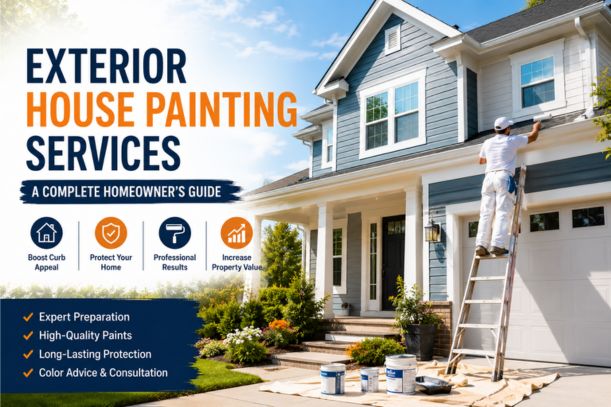
Exterior painting does more than improve curb appeal—it protects your home from weather, moisture, sunlight, and long-term structural damage. Good exterior paint acts almost like a shield. Homeowners who invest in quality materials and proper preparation usually save money on repairs later. That’s why professional Exterior House Painting Services remain one of the smartest upgrades for maintaining property value and appearance.
Still, many homeowners underestimate how much planning goes into a successful exterior paint job. Choosing colors is only part of it. Surface condition, climate, paint type, and application technique all play major roles in how long the finish actually lasts. A beautiful paint job that fails within two years is rarely a bargain.
What Are Exterior House Painting Services?
Exterior house painting services involve preparing, repairing, priming, and painting the outside surfaces of a residential property. This includes walls, siding, trim, doors, windows, garages, fences, and sometimes decks.
Professional painters typically handle:
- Surface cleaning and pressure washing
- Scraping peeling paint
- Caulking cracks and gaps
- Priming damaged surfaces
- Applying weather-resistant paint coatings
- Final inspection and touch-ups
In simple terms, exterior painting is both cosmetic and protective. A properly painted home looks fresh, but it also resists rain, heat, mold, and UV exposure far better than untreated surfaces.
Also Read: Transform Your Interiors with Long-Lasting Color Finishes
Why Exterior Paint Matters More Than Most Homeowners Think
A surprising number of homeowners wait until paint is visibly failing before taking action. By then, small cosmetic issues may already have turned into wood rot, moisture intrusion, or siding deterioration.
Think of exterior paint like sunscreen for your house. Constant exposure to sunlight, changing temperatures, and moisture slowly breaks surfaces down. Paint creates the first line of defense.
Well-maintained exterior paint can help:
- Reduce moisture penetration
- Prevent mold and mildew growth
- Extend siding lifespan
- Improve resale value
- Lower long-term maintenance costs
How Often Should a House Be Painted?
Most homes need repainting every 5–10 years, although the timeline depends heavily on material type, local climate, and paint quality.
Average Repainting Timeline by Surface
- Wood siding: Every 3–7 years
- Stucco: Every 5–10 years
- Fiber cement siding: Around 10–15 years
- Brick: Typically longer with proper sealing
- Aluminum siding: Around 5–10 years
Homes exposed to intense sunlight, coastal moisture, or heavy storms usually require more frequent maintenance. In practice, climate often matters more than the paint brand itself.
Step-by-Step: What Happens During Exterior Painting?
One reason professional paint jobs last longer is preparation. Experienced painters spend significant time getting surfaces ready before opening a single paint can.
Step 1: Inspection and Planning
Painters inspect siding, trim, cracks, peeling paint, and water damage. This helps identify repairs before painting begins.
Step 2: Cleaning the Surface
Pressure washing removes dirt, mildew, dust, and loose paint. Clean surfaces allow paint to bond properly.
Step 3: Repairs and Preparation
Damaged wood, cracks, and gaps are repaired. Sanding and scraping help create a smooth finish.
Step 4: Priming
Primer improves adhesion and blocks stains or moisture from bleeding through fresh paint.
Step 5: Painting Application
Professional painters apply multiple coats evenly using brushes, rollers, or sprayers depending on the surface type.
Step 6: Final Inspection
Touch-ups and cleanup complete the process while ensuring consistent coverage and finish quality.
Choosing the Right Paint Finish
Many homeowners focus only on color, but finish matters just as much. The wrong sheen can highlight imperfections or wear out faster in harsh weather.
Popular Exterior Paint Finishes
- Flat Finish: Hides surface flaws but may collect dirt more easily
- Satin Finish: Durable and popular for siding
- Semi-Gloss: Common for trim, doors, and accents
- Gloss Finish: Highly reflective and very durable
For most residential homes, satin finishes strike the best balance between appearance and durability.
Should You DIY or Hire Professionals?
Technically, exterior painting can be a DIY project. Realistically though, large homes, high walls, weather timing, and surface preparation make professional help worthwhile for many homeowners.
Searching for experienced Home Painters Near Me often saves time and reduces costly mistakes. Uneven application, skipped prep work, or poor paint selection can shorten paint lifespan dramatically.
Professional painters also understand:
- Local climate conditions
- Best paint brands for specific surfaces
- Safety procedures for ladders and heights
- Proper coating thickness and drying times
- How to identify hidden moisture problems
How to Choose the Right Exterior Painting Contractor
Not every painting contractor delivers the same level of workmanship. Homeowners should look beyond the lowest estimate.
What to Check Before Hiring
- License and insurance coverage
- Written project estimate
- Preparation process details
- Warranty on workmanship
- Online reviews and local references
- Paint brands being used
A contractor who spends time discussing preparation and long-term durability is usually more reliable than someone focused only on speed or price.
Common Exterior Painting Mistakes
Even expensive paint jobs can fail early if basic mistakes happen during preparation or application.
- Painting over dirty surfaces
- Ignoring moisture damage
- Skipping primer
- Using interior paint outdoors
- Painting during extreme temperatures
- Applying paint too thickly
Interestingly, poor preparation causes more failures than low-quality paint in many cases.
FAQs
How long do exterior house painting services usually take?
Most residential exterior painting projects take between 3 and 7 days depending on house size, weather conditions, and preparation requirements.
What is the best season for exterior painting?
Spring and early fall are usually ideal because moderate temperatures help paint cure properly without extreme heat or moisture issues.
How much do exterior house painting services cost?
Costs vary based on house size, paint quality, labor, repairs, and surface condition. Larger homes or extensive prep work naturally increase pricing.
Can exterior painting increase home value?
Yes. Fresh exterior paint improves curb appeal, creates a well-maintained appearance, and can positively influence buyer perception during resale.
What type of paint lasts longest outdoors?
High-quality acrylic latex paints generally offer the best durability, flexibility, and weather resistance for most exterior residential surfaces.
Conclusion
Exterior painting is one of those home projects where quality preparation truly changes everything. A carefully painted home not only looks better but also stays structurally healthier over time. Homeowners who focus on durability, proper materials, and experienced workmanship usually get far better long-term value than those chasing the cheapest quote. In many ways, exterior paint is less about decoration—and more about protection.
Also Read: Residential Painting Tips Every Homeowner Should Know
Blog Development Credits:
This blog was envisioned by Soumyajit Sardar, created with research support from advanced AI platforms like ChatGPT, Gemini, and Copilot. Final editing and SEO expertise were provided by Mister Paint.