

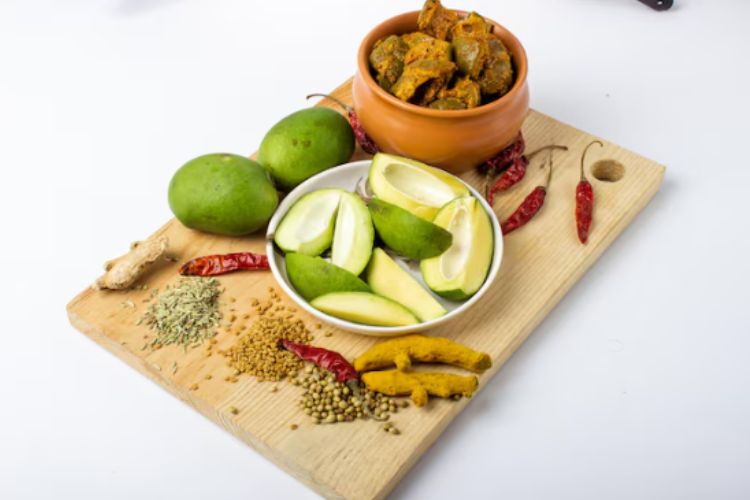
Bengali cuisine is known for its thoughtful balance of sweet, sour, spicy, and aromatic flavours. Traditional Bengali achar is a perfect example of this culinary character. Made with seasonal fruits, vegetables, mustard oil, and distinctive spice blends, these pickles are more than accompaniments they represent Bengal’s approach to preserving ingredients and creating complex flavours from simple regional produce.
What Makes Traditional Bengali Achar Different?
Traditional Bengali achar stands out because of its distinctive combination of ingredients and preparation methods. Mustard oil is particularly important in many Bengali pickle recipes, providing the sharp aroma and characteristic pungency associated with the cuisine. Spices such as mustard seeds, fenugreek, cumin, fennel, nigella seeds, turmeric, and dried chilli can add layers of flavour.
Panch phoron, the familiar Bengali five-spice mixture, is also closely associated with regional cooking. Its combination of aromatic seeds can give achar a recognisable Bengali character. Traditional recipes may also involve drying ingredients in the sun before combining them with spices and oil, allowing flavours to develop over time.
Regional Ingredients Behind Bengali Pickles
One of the most interesting aspects of Bengali achar is its reliance on locally available ingredients. Seasonal produce becomes the foundation for different varieties throughout the year.
Raw Mango
Green mango is among the most recognisable ingredients in Bengali pickle-making. Its naturally sour flavour works particularly well with mustard oil, chilli, salt, turmeric, and aromatic spices. Traditional mango achar can offer a combination of sourness, heat, pungency, and sweetness.
Jujube or Kul
Kul, also known as Indian jujube, is another ingredient associated with Bengali achar. Kul achar often combines the fruit’s sweet-sour character with sugar or jaggery and spices. It is especially associated with Bengali winter food traditions and can complement festive meals.
Tamarind
Tetuler achar uses tamarind as its primary flavouring ingredient. Its strong sourness can be balanced with sweetness and spices, producing the familiar Bengali combination of tak, jhal, mishti—sour, spicy, and sweet.
Lime and Other Citrus Fruits
Bengali-style lime or lemon achar has a bright acidity that pairs naturally with spices and mustard oil. Citrus-based pickles demonstrate how regional produce can be transformed into a condiment with a distinctive flavour profile.
The Role of Mustard Oil and Bengali Spices
Mustard oil is one of the defining elements of many Bengali pickles. Its strong flavour complements sour fruits and pungent spices, while the oil also forms an important part of traditional preservation practices.
Panch phoron can bring another layer of complexity. The combination commonly includes fenugreek, cumin, nigella, mustard, and fennel seeds. Together, these spices contribute earthy, nutty, slightly bitter, sweet, and aromatic notes.
This is why Bengali achar rarely tastes like a simple mixture of fruit and spice. The ingredients work together to create a flavour profile that develops gradually with preparation and maturation.
Traditional Preparation and Preservation
Traditional achar-making is closely connected to seasonality. Fresh produce is cleaned, cut, salted, and, depending on the recipe, dried before being combined with spices and oil. Sun-drying can help reduce moisture, while oil and salt form important parts of traditional preservation methods.
Clean, dry storage is equally important. When storing pickles, using a clean, dry utensil helps avoid introducing moisture into the jar. Airtight glass containers are commonly recommended for preserving pickle quality.
These techniques demonstrate an important principle of traditional Bengali cooking: seasonal ingredients can be carefully prepared so their flavours can be enjoyed beyond their immediate harvest period.
How to Enjoy Bengali Pickle Beyond Everyday Rice?
Bengali achar is traditionally enjoyed alongside rice, dal, khichuri, paratha, luchi, and other everyday foods. However, its bold flavour can also be used creatively.
A small amount of mango achar can add acidity and spice to a sandwich or wrap. It can also accompany roasted vegetables, grilled foods, curd-based dishes, or simple rice bowls. Contemporary food use increasingly explores pickles as ingredients rather than merely side dishes, using pickle oil, masala, and chopped pickle to add depth to modern meals.
For those looking to explore different varieties, a carefully selected Bengali Pickle can bring regional flavours to everyday meals while retaining the character of traditional Bengali cuisine.
Why Regional Ingredients Matter?
Using regional ingredients gives Bengali achar its distinctive identity. Mangoes, kul, tamarind, citrus fruits, mustard, and locally familiar spices are not random additions; they reflect Bengal’s agricultural seasons and culinary traditions.
This regional connection is also what makes achar meaningful beyond taste. A jar of traditional pickle can preserve the memory of a particular season, family recipe, or style of cooking. Different households may use different proportions of spices, sweetness, oil, or souring ingredients, creating variations within the same broad tradition.
Choosing Authentic Bengali Achar
When exploring Bengali achar, consider the ingredient list, flavour profile, preparation style, and regional character. Traditional-style products that clearly identify their principal ingredients can make it easier to understand what you are buying.
For shoppers interested in discovering Bengali food products from home or elsewhere, exploring authentic regional varieties online can also provide access to flavours that may not be readily available locally.
Frequently Asked Questions
1. What is Bengali achar?
Bengali achar is a traditional pickle or preserved condiment associated with Bengali cuisine. It can be made from ingredients such as raw mango, kul, tamarind, lime, vegetables, mustard oil, and regional spices.
2. Which ingredients are commonly used in Bengali achar?
Common ingredients include raw mango, mustard oil, mustard seeds, panch phoron, turmeric, chilli, tamarind, lime, kul, salt, and jaggery or sugar, depending on the recipe.
3. What is panch phoron?
Panch phoron is a Bengali five-spice mixture traditionally made from fenugreek, nigella, cumin, mustard, and fennel seeds. It contributes an aromatic and distinctive flavour to many Bengali dishes and pickles.
4. Is Bengali achar always spicy?
No. Bengali achar can range from strongly spicy and pungent to sweet, sour, mildly spiced, or balanced. The flavour depends on the ingredients and recipe.
5. What foods go well with Bengali achar?
Bengali achar can traditionally be served with rice, dal, khichuri, paratha, and luchi. It can also be incorporated into contemporary dishes such as sandwiches, wraps, salads, and rice bowls.
6. How should Bengali pickle be stored?
Storage depends on the product and preparation method. Generally, commercially packaged products should follow their label instructions. For opened pickles, clean and dry utensils and appropriate storage conditions help maintain quality.
Final Thoughts
Traditional Bengali achar is a celebration of regional ingredients, seasonal produce, aromatic spices, and time-tested preservation practices. Whether it is tangy raw mango, sweet-sour kul, intense tamarind, or citrus-based pickle, each variety offers a different expression of Bengali culinary heritage.
Exploring these pickles is therefore not simply about adding another side dish to a meal. It is a way to discover how Bengal transforms simple regional ingredients into flavours that remain memorable across generations.
For anyone interested in experiencing these regional flavours, exploring authentic Bengali pickles can be a simple and delicious introduction to Bengal’s rich culinary traditions.