

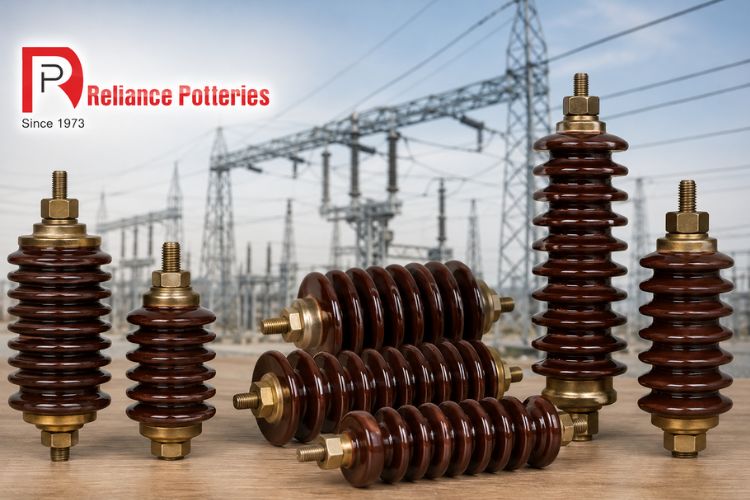
In electrical systems, reliability often comes down to components that most people never notice. Solid core insulators are a good example. They support conductors, maintain electrical isolation, and withstand demanding operating conditions. For utilities and equipment manufacturers, choosing dependable Insulators Manufacturers is therefore a practical engineering decision.
Why Solid Core Insulators Matter
A solid core insulator is designed to provide mechanical support while electrically separating energized conductors from grounded structures. That sounds straightforward, but the component may face electrical stress, mechanical loading, temperature changes, moisture, pollution, and vibration throughout its service life.
This is why buying decisions should go beyond appearance or price. A well-designed insulator needs suitable dielectric performance, mechanical strength, dimensional accuracy, and resistance to environmental conditions. In high-voltage applications, even a small weakness can become a costly problem later.
Also Read: How ESP Insulators Improve Dust Collection System Performance
What Makes a Manufacturer Reliable?
The best manufacturers usually combine material knowledge with controlled production and careful inspection. For buyers, that combination is more meaningful than a long product catalogue. A supplier should be able to understand the application’s electrical and mechanical requirements and recommend an appropriate configuration.
Key Factors Buyers Should Check
- Material quality: Ask about the insulating material, formulation, processing method, and quality controls used during production.
- Dimensional consistency: Accurate dimensions are essential when an insulator must fit precisely into electrical equipment or mounting assemblies.
- Mechanical performance: The component should be selected according to the expected cantilever, tensile, compression, or other mechanical loads.
- Electrical characteristics: Creepage distance, insulation performance, and application-specific voltage requirements should be evaluated carefully.
- Inspection and testing: Consistent testing procedures provide greater confidence in batch-to-batch performance.
Material and Design Both Influence Performance
Porcelain remains widely used for electrical insulation because of its established mechanical and dielectric characteristics. However, the correct design depends on where the component will operate and what stresses it must handle.
For example, an insulator used inside switchgear may have very different dimensional and mechanical requirements from one installed in outdoor power equipment. Pollution, humidity, temperature variation, and installation conditions can all influence the appropriate design.
That is where an experienced Solid Core Insulators Manufacturer can add real value. Instead of simply supplying a standard part, a technically capable manufacturer can help buyers match the insulator with the equipment’s operating requirements.
Standards and Testing Should Not Be an Afterthought
Electrical insulation is a safety-critical area, so recognised standards and appropriate testing matter. The International Electrotechnical Commission publishes standards covering high-voltage insulators and related testing methods. Depending on the application, buyers should identify the applicable specification before finalising a product.
For example, IEC develops international standards for electrical and electronic technologies, including requirements relevant to high-voltage equipment. Rather than assuming that every insulator follows the same testing regime, buyers should confirm which standard and test requirements apply to their particular application.
Before You Approve a Supplier
- Share the voltage, mechanical load, environmental conditions, and installation details.
- Request technical drawings and verify critical dimensions before production.
- Review relevant test reports, inspection procedures, and applicable standards.
- Evaluate sample quality before committing to a large production quantity.
- Confirm packaging and transportation arrangements, especially for fragile ceramic components.
Why Quality Control Matters in Large Orders
One excellent sample does not automatically guarantee a reliable production batch. In electrical equipment, consistency is the real test. Differences in dimensions, surface condition, material characteristics, or finishing can create installation and performance concerns.
A strong quality-control process therefore checks materials and finished products at defined stages. It also creates traceability, making it easier to investigate a problem if one appears later. For project buyers, this kind of discipline can save considerably more money than a slightly cheaper initial quotation.
Applications Across Electrical Equipment
Solid core insulators can be used in a variety of electrical assemblies where insulation and mechanical support are required. Depending on their design, they may serve in switchgear, substations, busbar systems, power distribution equipment, and other high-voltage applications.
- Supporting conductors and busbars within electrical assemblies.
- Maintaining separation between energized and grounded components.
- Providing mechanical stability in demanding equipment environments.
- Supporting reliable insulation in power transmission and distribution systems.
Frequently Asked Questions
What is a solid core insulator?
A solid core insulator is an electrical insulating component designed to provide both electrical isolation and mechanical support for conductors or electrical equipment.
What should I consider when choosing a solid core insulator?
Consider voltage requirements, mechanical loads, dimensions, creepage requirements, environmental conditions, material characteristics, applicable standards, and the manufacturer’s testing capabilities.
Are porcelain solid core insulators suitable for high-voltage applications?
Porcelain has a long history in electrical insulation and can be suitable for many high-voltage applications when the material, geometry, ratings, and applicable standards are properly matched to the operating conditions.
Why is manufacturer experience important?
Experienced manufacturers understand how material selection, forming, firing, finishing, dimensional control, and testing influence final insulator performance. That knowledge can reduce quality and compatibility risks.
Also Read: Quality Insulators Manufacturing Process
Final Thoughts
A reliable solid core insulator is not simply a ceramic component with a polished finish. It is an engineered part whose performance depends on material quality, geometry, manufacturing discipline, testing, and application suitability. For buyers, partnering with a technically capable Indian manufacturer can make sourcing more predictable—and help electrical equipment perform reliably for years.
Blog Development Credits:
This article was developed with insights from Reliance Potteries, supported by AI-assisted research and refined through professional SEO editing.